
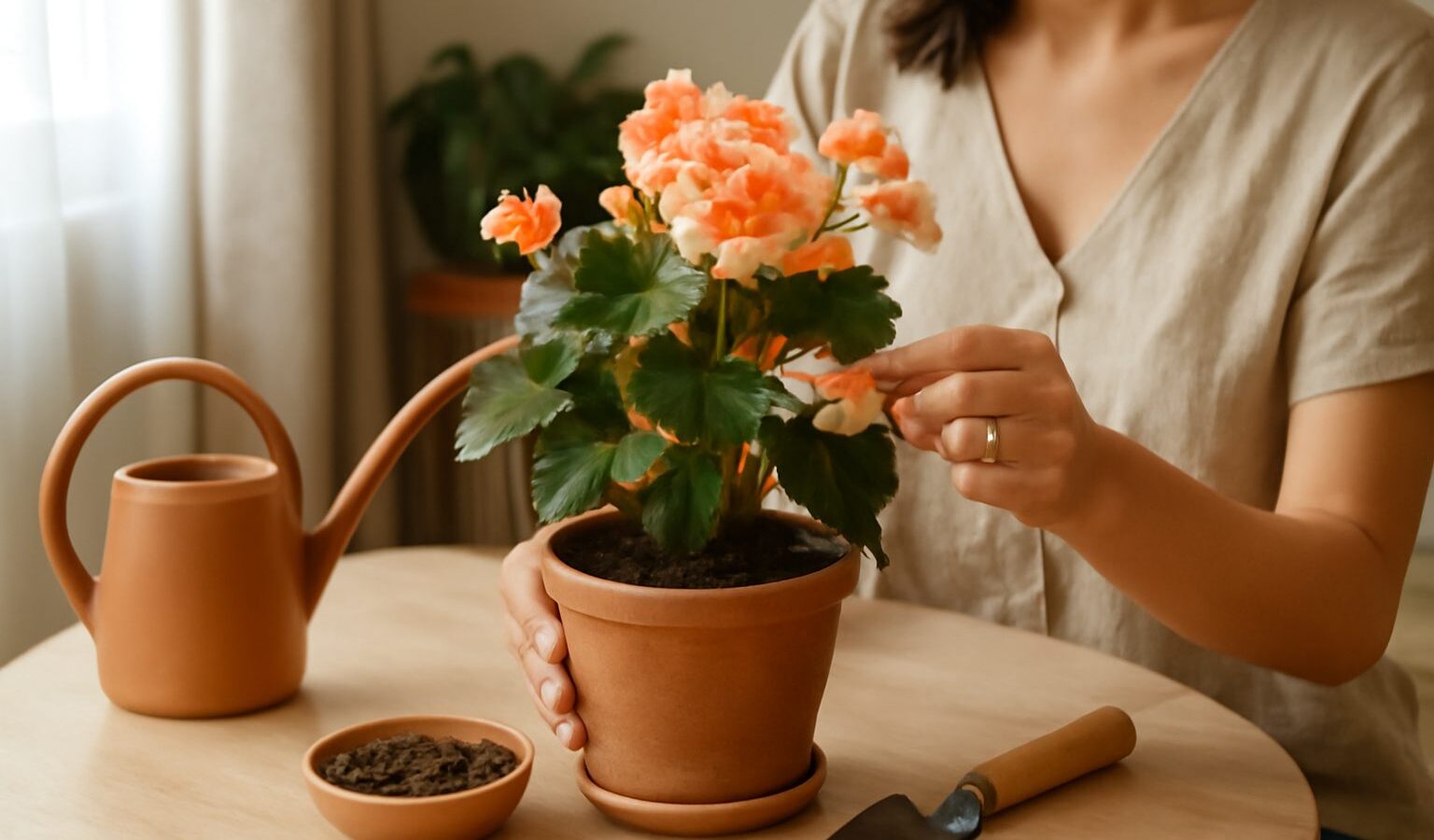
Begonias reward you with some of the most beautiful foliage you can grow indoors, from the swirled silver and burgundy of rex types to the polka-dotted wings of cane begonias. The good news is that good begonia care suits our climate well, because these plants love warmth and humidity, both of which Singapore has in abundance. The trick is getting light and watering right, and giving the leaves the airflow they need. Start with one easy plant, watch how it responds on your balcony or windowsill, and you will quickly get a feel for what keeps it happy.
Know Your Begonia Type
Begonias are a huge family, and the type you buy decides how you look after it. Knowing which one you have saves a lot of guesswork.
- Rex begonias are grown for their dramatic patterned leaves. They are the fussiest about humidity and hate soggy roots, but they are stunning on a shaded shelf.
- Cane or angel-wing begonias grow tall on bamboo-like stems with spotted leaves and clusters of flowers. They are among the toughest and most forgiving.
- Rhizomatous begonias, including the eyelash types, spread from a thick surface stem and cope well with lower light.
- Wax begonias are the compact bedding kind with glossy leaves and constant small flowers, happy in brighter spots.
If you are new to begonia care, start with a cane or wax type. They tolerate the odd missed watering and bounce back readily, which builds your confidence before you try a temperamental rex.
Light and Placement on a Balcony
Begonias want bright light but rarely direct midday sun. In Singapore, our sun is fierce, and an hour of unfiltered afternoon glare can scorch a rex leaf to a crisp. The sweet spot is bright, indirect light: near an east-facing window, under a sheer curtain, or on a balcony shaded by an overhang or a taller plant.
On an HDB or condo balcony, place begonias where they catch gentle morning light but sit out of the harsh afternoon beam and away from reflected heat off walls and glass. If leaves look bleached or develop crispy brown edges, move the plant back from the light. If the stems stretch and lean with wide gaps between leaves, it needs more brightness. Because balconies get windy, keep pots low and stable or grouped together; a toppled pot is dangerous for anyone walking below, so secure everything against gusts and mind your neighbours downstairs.
Watering, Soil and Feeding
Overwatering kills more begonias than anything else, so this is the heart of good begonia care. Begonias like their soil to dry out slightly on top between drinks. Push a finger about two centimetres in; water only when it feels dry, then water thoroughly until it runs from the drainage holes.
Use a light, airy potting mix. A standard indoor mix loosened with extra perlite or fine bark works well, because it holds a little moisture without staying swampy. Always plant in a pot with drainage holes. Never let the pot stand in a saucer of water: begonia roots rot quickly, and standing water on your balcony breeds Aedes mosquitoes. Tip out any saucer within minutes, and empty or change any standing water at least weekly, following current NParks and NEA guidance to prevent mosquito breeding.
Feed lightly during active growth with a balanced liquid fertiliser diluted to half strength, roughly every two to four weeks. Cane and flowering types appreciate a feed slightly higher in phosphorus to encourage blooms. Ease off feeding if growth slows.
Humidity and Airflow
Begonias love humidity, and Singapore delivers it for free, which is a real advantage. The catch is indoor aircon, which dries the air fast and can leave leaf edges brown and papery. If you run aircon, keep begonias out of the direct cold draught and group them with other plants to raise the local humidity. Standing pots on a tray of pebbles with a little water below the pot base helps too, but keep the water level below the pot and refresh it often so it never turns stagnant.
Airflow matters just as much as moisture. Still, damp air invites powdery mildew, a white dusty coating that plagues begonias. A gentle breeze or an open window keeps leaves dry and healthy. Avoid splashing the foliage when you water, as wet leaves in humid air are an open invitation to fungus.
Common Problems and Quick Fixes
Most begonia troubles trace back to watering, light or air. This table pairs the symptom with the likely cause and the simple fix.
| Symptom | Likely cause | Quick fix |
|---|---|---|
| Yellowing, mushy stems | Overwatering or soggy soil | Let soil dry more; check drainage; repot if roots are rotting |
| Crispy brown leaf edges | Low humidity or aircon draught | Move from the draught; group plants; raise humidity |
| White powdery patches | Powdery mildew from damp, still air | Improve airflow; remove affected leaves; avoid wetting foliage |
| Leggy, stretched stems | Too little light | Move to a brighter, shaded spot with indirect light |
| Leaf drop after a move | Shock from a sudden change | Keep conditions steady; be patient while it settles |
For pests such as mealybugs, wipe them off with a cotton bud, then treat with insecticidal soap or a neem solution if they persist. Always start with the least-toxic method, and if you use any product, follow the label exactly and keep it away from children and pets.
Propagation and Safety Notes
Begonias are satisfying to multiply. Rhizomatous and rex types grow from leaf cuttings: lay a healthy leaf on damp mix, or cut a leaf into wedges each with a vein, and press them onto the surface. Cane types root easily from stem cuttings placed in moist mix in a warm, bright spot. If you root cuttings in water, change the water often and never leave it standing to breed mosquitoes.
One important note: begonias are ornamental, not edible. The leaves and stems can irritate the mouth and skin if chewed, so keep them away from young children and pets, and wear gloves if you have sensitive skin when taking cuttings. With the right light, careful watering and a bit of airflow, your begonias will stay lush for years.
Explore more
Ready to expand your indoor collection? Pair your begonias with other beautiful foliage in our guide to caring for African violets in Singapore, and learn how to arrange them for impact in styling plants in your home. If you want a whole wall of green, our guide to creating an indoor jungle in Singapore shows you how to layer plants for a lush, humid corner they will love.