
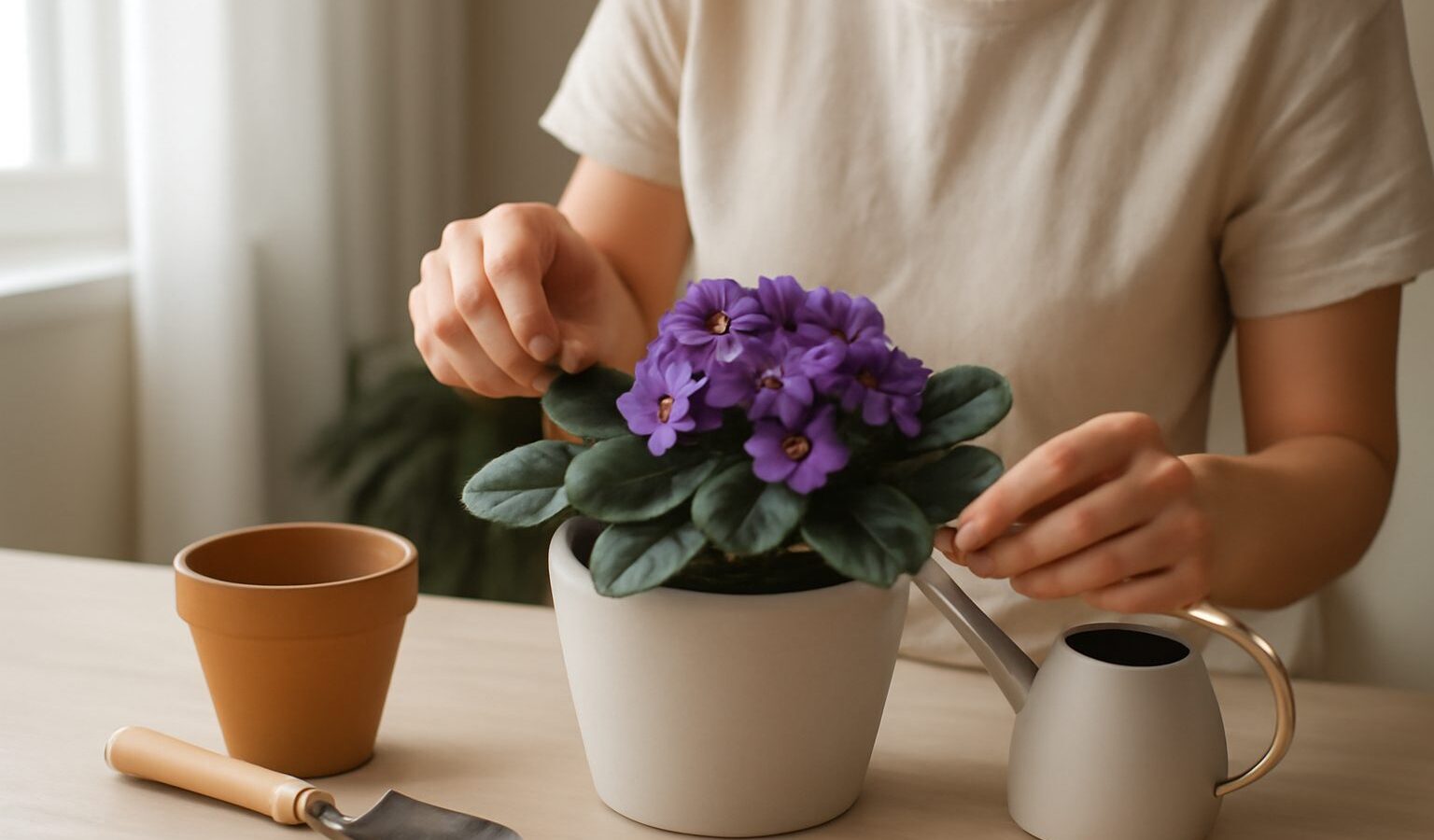
Few small plants reward a windowsill gardener as generously as African violets. These compact, fuzzy-leaved beauties, known to botanists as Saintpaulia, produce clusters of purple, pink or white blooms almost the whole year round when they are happy. They stay tidy and small, which suits a crowded HDB sill perfectly, and they ask for very little space. If you have wanted a flowering houseplant that does not need a balcony or strong outdoor sun, african violets are one of the friendliest choices you can make in Singapore.
Why African Violets Suit Singapore Homes
African violets evolved in the shaded, humid highlands of East Africa, so they are already suited to warmth and moisture rather than blazing sun. That makes them a natural fit for an indoor spot in our climate, where they can sit happily behind glass, out of the fierce midday glare. They flower in low, gentle light that would leave many other blooming plants sulking, which is exactly what most of our homes offer.
Their size is another gift. A mature plant sits comfortably in a pot the width of your palm, so a whole collection can line a single windowsill or a shelf. There is no need for ground space, no monsoon exposure to worry about, and no wind risk on a high floor. For anyone gardening in a flat, this is a plant that fits your life rather than demanding you rearrange it.
Getting the Light Right
Light is the make-or-break factor with african violets, and thankfully the sweet spot is easy to find. They want bright but indirect light, the kind you get a metre back from an east-facing or shaded window. Direct tropical sun will scorch their soft leaves within hours, leaving pale, bleached patches, so keep them off any sill that catches harsh afternoon rays.
If your plant grows lush leaves but refuses to flower, it is almost always crying out for a little more light. Move it closer to the window or to a brighter room and watch for buds over the following weeks. A plant that leans hard towards the glass simply needs turning a quarter every few days so it grows evenly. Should natural light be genuinely poor, a small grow light on for ten to twelve hours a day keeps them blooming, a common trick for interior corridors and windowless corners.
Watering Without Rotting the Roots
More african violets die from careless watering than from anything else, because their roots rot quickly if left sitting in wet soil. In our heat the temptation is to water often, but the plant prefers a rhythm of watering well, then waiting until the top of the mix feels barely dry before watering again. Poke a finger in; if it feels damp, leave it a day longer.
Cold water can mark the leaves with unsightly rings, so use water at room temperature. The fuzzy leaves also dislike sitting wet, which invites rot and mould, so water the soil directly and avoid splashing the foliage. Many growers water from below, standing the pot in a shallow dish of water for twenty minutes, then tipping away whatever is left. Never leave the pot standing in that dish afterwards, and never let the saucer collect water. Standing water in saucers and trays breeds Aedes mosquitoes, so empty any collected water straight away, at least weekly, and follow current NParks and NEA guidance to prevent breeding.
Soil, Pots and Feeding
The right home makes daily care far easier. African violets need a light, airy mix that drains freely rather than heavy garden soil, which stays soggy and suffocates the roots. A packaged violet or aroid mix works well, or you can lighten ordinary potting mix with extra perlite. The table below sums up what each element does and what to avoid.
| Element | What to aim for | What to avoid |
|---|---|---|
| Light | Bright, indirect light near a shaded window | Direct tropical sun that scorches leaves |
| Water | Barely dry top layer, room-temperature water | Constant wetness or cold water on leaves |
| Soil | Light, free-draining violet or aroid mix | Heavy garden soil that stays soggy |
| Pot | Small and snug, with drainage holes | An oversized pot holding excess wet soil |
Keep the pot small and snug, as a cramped root ball actually encourages flowering while an oversized pot holds too much wet soil. Always choose a pot with drainage holes. Feed lightly during active growth with a balanced or bloom-focused fertiliser diluted to half the label strength, roughly every couple of weeks, and skip feeding if the plant is resting. Too much fertiliser burns the roots and pushes leafy growth at the expense of flowers, so err on the gentle side.
Common Problems and Simple Fixes
Most troubles show up first in the leaves, which act as a handy dashboard for the plant’s health. Learning to read them lets you correct course early.
- Pale or bleached leaves: usually sunburn. Move the plant out of direct sun into brighter indirect light.
- Leggy growth with no flowers: too little light. Shift it closer to a window or add a grow light.
- Limp, mushy stems or a foul smell: root or crown rot from overwatering. Let it dry out and repot into fresh airy mix.
- Brown rings or spots on leaves: cold water splashes. Switch to room-temperature water on the soil only.
- Dusty or sticky leaves with tiny pests: wipe gently with a soft brush and treat mealybugs or mites first with a firm water spray or insecticidal soap.
Reach for the least-toxic option first, such as manual removal or a soap spray, before anything stronger. If you ever use a pesticide, follow the product label exactly, keep it away from children and pets, and ventilate the room.
Growing Your Collection From Leaves
The loveliest part of this hobby is how easily one plant becomes many. African violets propagate readily from a single healthy leaf, so a friend’s plant or your own can seed a whole windowsill for free. Snap off a firm, mature leaf with a short length of stalk, and let the cut end dry for an hour.
Push the stalk into a small pot of moist, airy mix at a shallow angle, keep it warm and lightly damp, and be patient. Within a couple of months tiny plantlets emerge at the base, and once they have a few leaves of their own you can gently separate and pot them up. It is a slow, satisfying process that costs nothing and teaches you a great deal about how the plant grows. A quick safety note as you handle them: african violets are grown for looks, not eating, so keep them off the table as food and away from curious young children and pets who might nibble the leaves.
Explore more
If windowsill flowering plants delight you, there is plenty more to try. Have a look at caring for begonias in Singapore for another compact, colourful indoor grower, or explore grouping plants to boost humidity to keep your violets and their neighbours thriving together. When your collection outgrows the sill, styling plants in your home helps you show them off beautifully.