
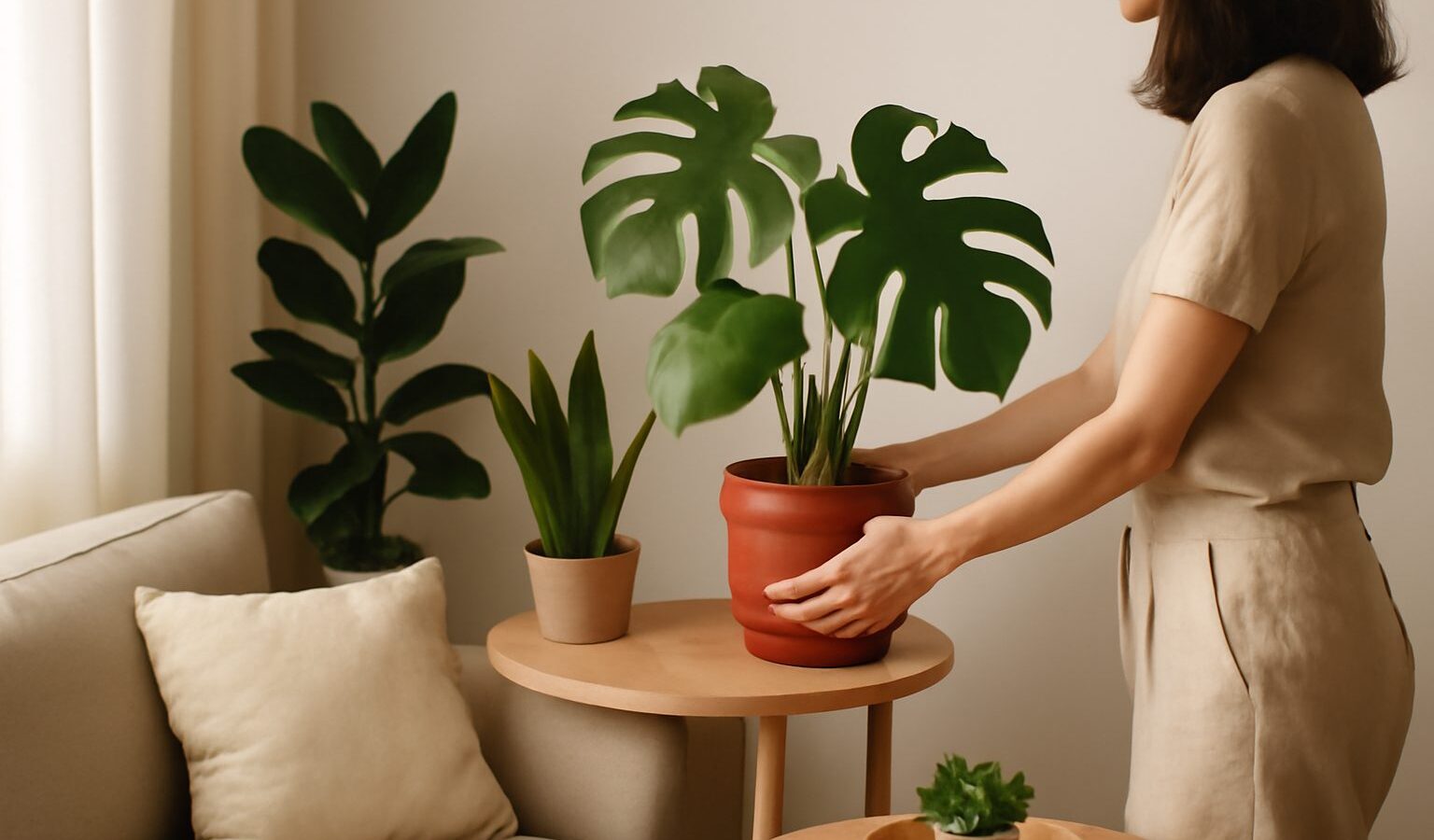
Styling plants is where gardening meets interior design: it is the difference between a few pots scattered on the floor and a home that feels calm, green and intentional. In a Singapore flat, where floor space is precious and every surface earns its keep, good styling matters even more. The good news is that you do not need many plants or expensive pots. You need a few simple principles about grouping, height, pots and light, plus plants that will actually stay healthy where you place them. This guide shows you how to style plants beautifully in a small tropical home.
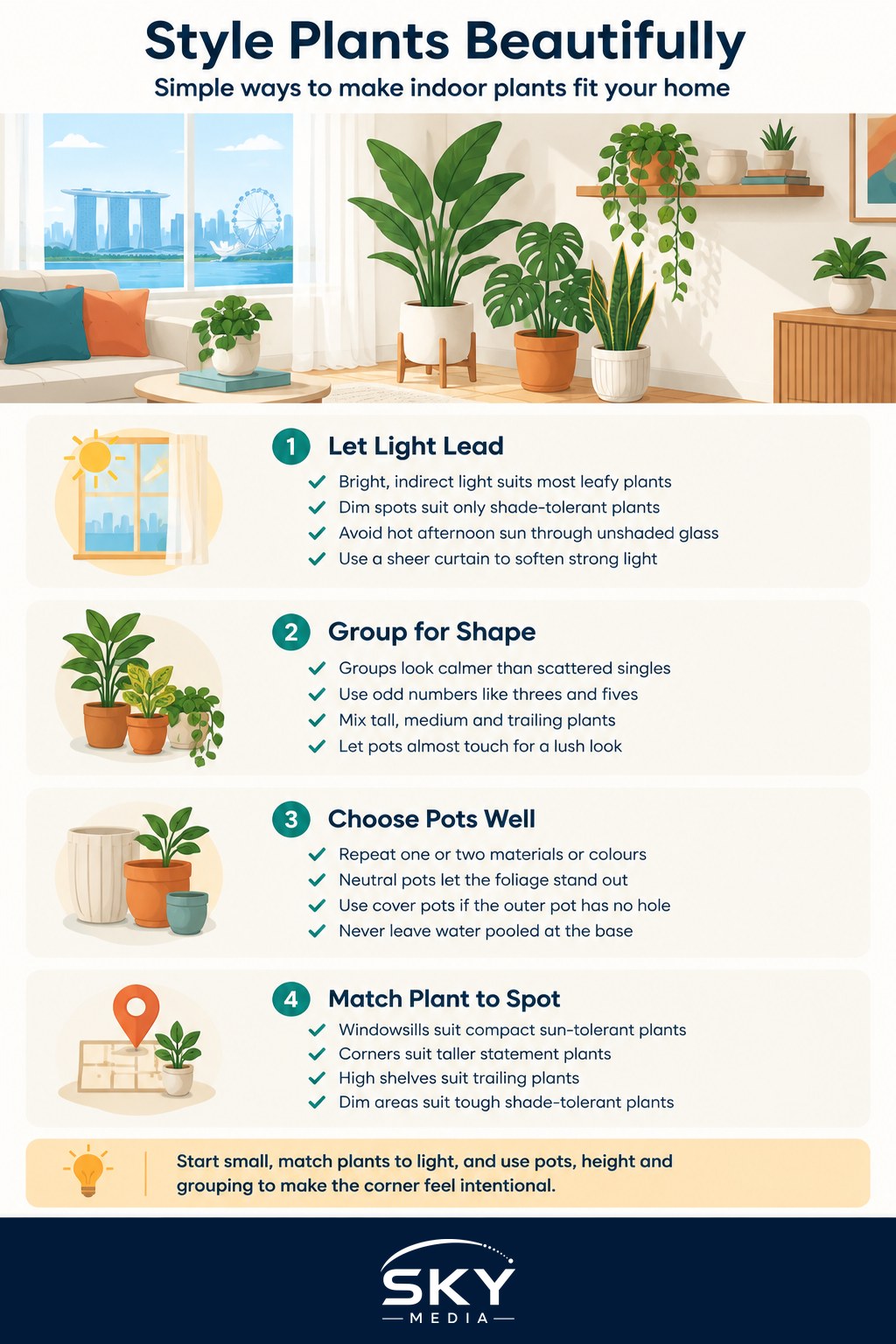
Style Around Real Light, Not Just the Look
The most common styling mistake is choosing a spot because it looks perfect, then wondering why the plant slowly declines. A styled plant only stays handsome if the light suits it, so let light lead your decisions.
Bright, indirect light near a window suits most leafy plants. A couple of metres back, light drops off sharply, and only the toughest, shade-tolerant plants will hold their shape there. If you love the idea of greenery on a dim console or bathroom shelf, plan to rotate two plants, one resting in bright light while the other takes a turn on display, so neither suffers.
Watch out for the hot afternoon sun through unshaded glass, which can scorch leaves even in an air-conditioned room. A sheer curtain softens it. Match each plant to the spot honestly, and your styling will still look good in six months.
Master Grouping, Height and Odd Numbers
Plants almost always look better in considered groups than dotted about singly. A cluster reads as a deliberate feature; scattered singles read as clutter. When you group, play with height so the eye travels up and down instead of across a flat line.
A few reliable moves:
- Work in odd numbers. Threes and fives feel more natural and relaxed than pairs or fours.
- Vary the height. Combine a tall plant, a medium one, and a low or trailing plant. Raise pots on stools, stacked books, or plant stands to build levels.
- Mix leaf shape and texture. Set a big, bold leaf beside something fine and feathery, and add a trailing plant to soften a hard edge such as a shelf corner.
- Let them overlap slightly. Pots that almost touch look lush and settled; evenly spaced pots look like a shop shelf.
Use vertical space, which Singapore flats have more of than floor space. A trailing plant on a high shelf, a hanging planter, or a tall corner plant frees the ground and draws the room upward.
Pick Pots That Pull the Room Together
Pots are the frame around your plants, and matching them is the quickest way to make a collection look styled rather than accidental. You do not need everything identical, but you do need a thread that ties them together.
Choose one or two materials or a tight colour palette and repeat it. Terracotta, natural stoneware, and neutral ceramics all read as calm and let the foliage star. Bright, clashing pots fight each other and the plants. Keeping heights and finishes in a family, even when the pots differ in size, is what makes a shelf look curated.
There is a practical layer too. Many decorative pots have no drainage hole, and leaving a plant sitting in trapped water is the fastest way to kill it. The simplest fix is to keep the plant in a plain nursery pot with drainage and slip it inside the pretty outer pot, a cover pot. Lift it out to water, let it drain fully, then return it. Never let water pool in the base.
Match the Plant to the Spot
Different corners of a home ask for different plants. This quick comparison helps you style each zone with something that will genuinely thrive there.
| Spot in the home | Light it usually gets | Style role | Good plant type |
|---|---|---|---|
| Bright windowsill | Strong, filter with sheer | Small hero plant | Compact sun-tolerant foliage |
| Living room corner | Bright to medium indirect | Tall floor statement | Palm or upright foliage plant |
| High shelf or ledge | Bright indirect nearby | Trailing accent | Hanging or cascading plant |
| Dim console or hallway | Low, may need rotating | Quiet greenery | Tough shade-tolerant plant |
Treat it as a guide, then trust what your own light and space are telling you.
Keep Styling Safe and Neighbourly
Style with safety in mind, especially in a home with children or pets. Many popular decorative plants, including pothos, philodendron, peace lily and dracaena, are ornamental only, not edible, and can irritate the mouth and stomach if chewed. Keep them off low, reachable surfaces where a toddler or curious cat might nibble, and favour high shelves or hanging spots for those. Wear gloves when pruning or repotting, as some plant sap irritates skin.
If your styling extends to a balcony or corridor, secure each pot firmly against wind so nothing can be knocked or blown down, and follow your HDB, town council, or MCST rules for shared spaces. Keep saucers from holding standing water, because stagnant water breeds Aedes mosquitoes and dengue risk; empty and refresh any water weekly and follow current NParks and NEA guidance.
Style It, Then Live With It
The best-styled plant corners are never truly finished, and that is the fun of it. Set up a grouping, live with it for a week, and notice what feels off. Maybe one pot needs lifting higher, maybe a trailing plant should move up a shelf, maybe the palette needs one fewer colour.
Keep leaves dust-free so they stay glossy, rotate pots a quarter turn now and then so plants grow evenly rather than leaning to the light, and swap a tired plant out to recover before it spoils the look. Styling plants well is really just paying attention: to light, to shape, to how a space feels. Start small, arrange with intention, and let your green corners evolve with your home.
Explore more
Ready to go bigger? Turn a styled corner into a full indoor jungle, and add texture with string of pearls and hanging plants or a graceful indoor palm. For a low-fuss, tidy setup that suits minimalist styling, see our guide to growing plants in LECA and semi-hydro.
Frequently Asked Questions
Which plants work well styled in a bathroom? Choose plants that like humidity and cope with lower light, such as ferns, peace lilies or pothos, provided the bathroom has a window or bright light. A dark, windowless bathroom suits no plant for long. Rotate them out to brighter rooms every few weeks.
Are fake plants a good alternative to real ones for styling? They suit a dark corner where nothing would grow, and they need no care. Real plants add freshness and the small daily ritual of tending them. Many people mix both, using faux pieces where light is poor and living plants in the brightest spots.
How can I style plants on a tight budget? Group a few inexpensive, easy plants, and use pots you already have, or repaint plain ones for a matching look. Propagate cuttings to fill gaps for free. Lifting pots on stacked books or stools adds height without buying stands.
How do I stop water from damaging my furniture or floor? Place waterproof saucers or trays under every pot and wipe up drips quickly. With cover pots, lift the plant out to water, drain it fully, then return it. A mat under larger planters protects timber floors, and empty trays promptly to prevent mosquito breeding.
How can I style plants in a home with a cat that chews leaves? Hang plants or place them on high shelves your cat cannot reach, and choose pet-safe types where you can, such as spider plants. Check each plant with your vet. If a cat keeps targeting a plant, move it to a room it cannot enter.