
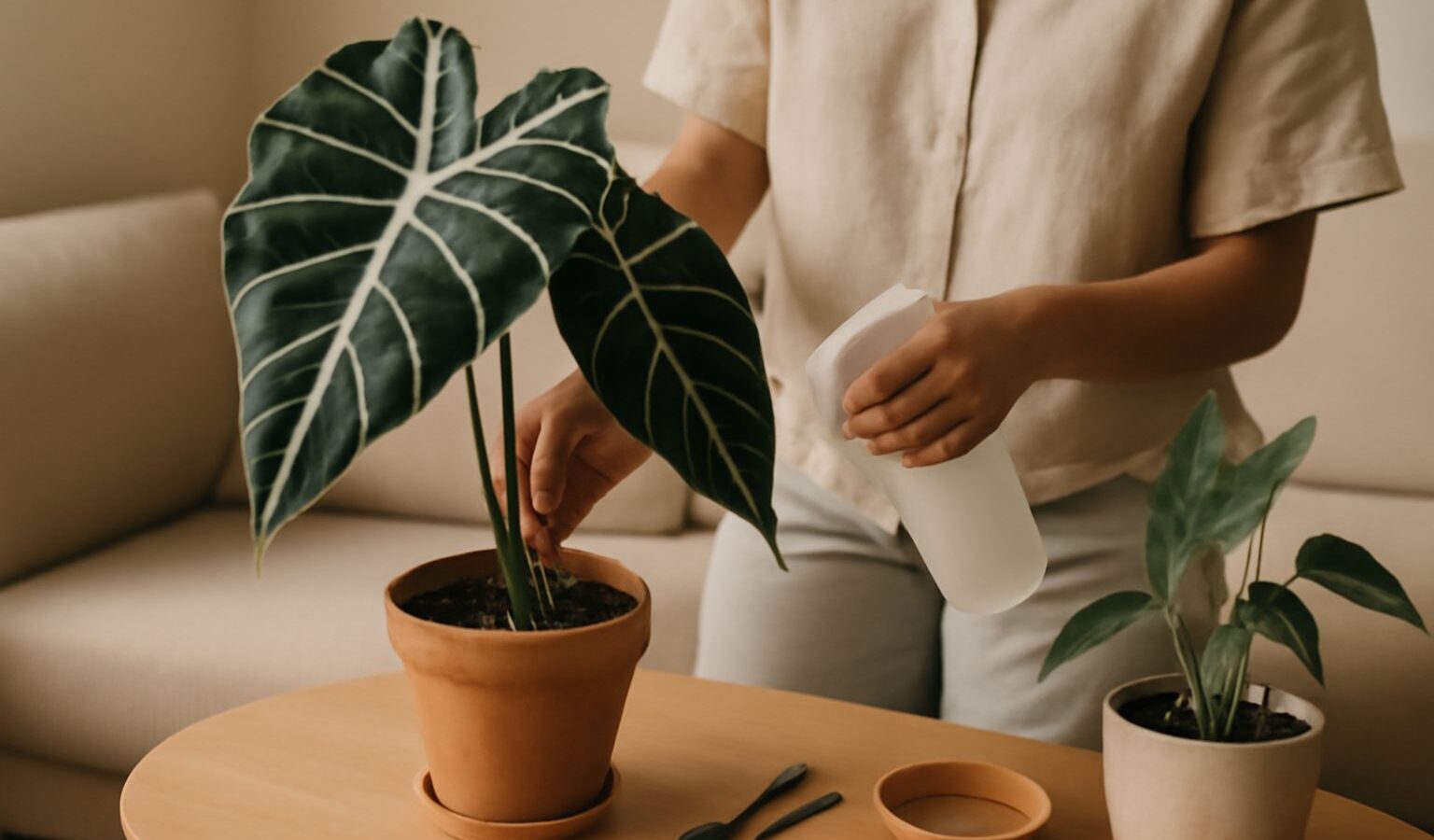
Few foliage plants make a balcony feel as lush as an alocasia. With their arrow-shaped, deeply veined leaves, alocasias and their fellow aroids bring instant drama to a small Singapore home. The good news is that solid alocasia care is really about matching them to our climate: warm, bright, humid, but never soggy at the roots. Get those basics right and these elephant ear plants will reward you with one bold new leaf after another. This guide walks you through light, watering, feeding and the common problems that trip up beginners, all in a compact HDB or condo setting.
What Aroids Are and Why They Suit Our Climate
Aroids are members of the arum family, and the group includes alocasias along with well loved houseplants such as pothos, monstera, anthurium and peace lily. They share a family look: glossy leaves and a flower shaped like a small spike wrapped in a hood. Alocasias are the divas of the group, prized for sculptural leaves in shapes from broad hearts to slim arrowheads.
What ties them to Singapore is their origin. Most alocasias come from the warm, humid understorey of Southeast Asian rainforests, so our year-round heat and moisture actually suit them better than a cold flat overseas ever could. The catch is that a rainforest floor is bright but shaded, airy and rich in leaf litter, not baking sun or a stagnant corner. Your job is to recreate that middle ground on a balcony or by a window.
Light, Heat and Humidity on a Balcony
Alocasias want bright, indirect light. On most Singapore balconies that means a spot that is well lit but shielded from harsh midday sun, which scorches those thin leaves within hours. A position behind a sheer curtain, under an overhang, or a metre back from a bright railing usually works. Indoors, an east-facing window or a bright spot near a west window with some shade is ideal. Too little light and growth slows, leaves shrink, and stems stretch and flop.
Heat is rarely a problem here, but two local factors are. First, aircon dries the air fast, and alocasias love humidity above roughly sixty per cent. Group your plants together, stand them on a tray of damp pebbles, or keep them in a naturally humid spot like a bright bathroom to raise moisture around the leaves. If you use a pebble tray, top up rather than let water sit and stagnate, since standing water breeds Aedes mosquitoes. Second, strong balcony wind tatters big leaves and dries pots quickly, so tuck plants against a wall and out of the wind tunnel.
Watering, Soil and Feeding
The fastest way to kill an alocasia is to keep it wet and airless. These aroids want a mix that holds some moisture yet drains freely. A blend of quality potting mix with added perlite, bark or coco chips gives roots the air pockets they need. Always use a pot with drainage holes.
Water when the top two to three centimetres of mix feel dry, then water thoroughly until it runs from the base. Tip away anything that collects in the saucer; never let a saucer sit full, both to protect the roots and to deny mosquitoes a place to breed. In our heat a plant in a bright spot may need water every few days, while one indoors under aircon dries more slowly, so always check the mix rather than watering on a fixed schedule. Rainwater or tap water left to stand is fine.
Feed lightly during the warm growing months, which for us is most of the year. A balanced liquid fertiliser at half the labelled strength every two to four weeks is plenty. Overfeeding scorches leaf edges and builds up salts, so err on the gentle side and flush the pot with plain water occasionally.
Keeping Alocasias and Aroids Safe
This matters for every aroid, so read it before you buy. Alocasias, caladiums and their relatives are not edible. Their leaves and sap contain sharp calcium oxalate crystals that can irritate skin and cause painful burning and swelling if any part is chewed or eaten. Keep these plants well out of reach of young children and curious pets, who may nibble the striking leaves. When you repot, divide or prune, wear gloves and wash your hands afterwards, as the sap can irritate skin and eyes. If someone does eat a piece or has a strong skin reaction, contact a doctor or vet. Treat them as beautiful to look at, never to taste.
Common Problems and How to Fix Them
Most alocasia troubles come back to water, light or humidity. Use the table to match the symptom to a likely cause, then adjust one thing at a time and give the plant a week or two to respond.
| Symptom | Likely cause | What to do |
|---|---|---|
| Yellowing lower leaves | Overwatering or soggy mix | Let mix dry more, check drainage, ease off watering |
| Brown, crispy leaf edges | Low humidity or dry air from aircon | Raise humidity, move away from aircon draught |
| Pale, faded or bleached patches | Too much direct sun | Shift to bright indirect light |
| Drooping despite moist soil | Root rot from staying wet | Unpot, trim mushy roots, repot in fresh airy mix |
| Fine webbing under leaves | Spider mites, common in dry air | Rinse leaves, raise humidity, treat with insecticidal soap |
For pests, start with the least harsh method: wipe or rinse the leaves, then use insecticidal soap or a neem-based spray if needed. If you ever use a stronger product, follow the label exactly, keep it away from children, pets and any edibles, and ventilate the space. Do not forget that alocasias naturally drop older leaves as they push new ones, so the odd yellow leaf at the base is normal, not a crisis.
Propagation and Next Steps
Alocasias grow from underground corms and clumps, so the easiest way to make more is by division. When you repot a mature, crowded plant, gently tease the root ball apart into sections, each with roots and at least one growing point, then pot them up separately. You may also spot small offset bulbs around the base that can be potted on. Do this during the warm months for the fastest recovery, keep the divisions warm, humid and out of strong sun, and be patient while they settle.
Once you are comfortable with one alocasia, the wider aroid family is a natural next step, from easy pothos to statement anthuriums, all sharing similar likes for warmth, bright shade and airy roots. Start with one plant, watch how it responds to your particular balcony, and build from there. Remember to keep pots secured against wind on high floors, and follow your HDB, town council or condo rules on shared corridors and railings.
Explore more
If you enjoy dramatic foliage, keep learning with our guides to growing caladiums in Singapore and caring for anthuriums, two more aroids that thrive in our climate. For a gentler leafy companion, try caring for peace lilies next.