
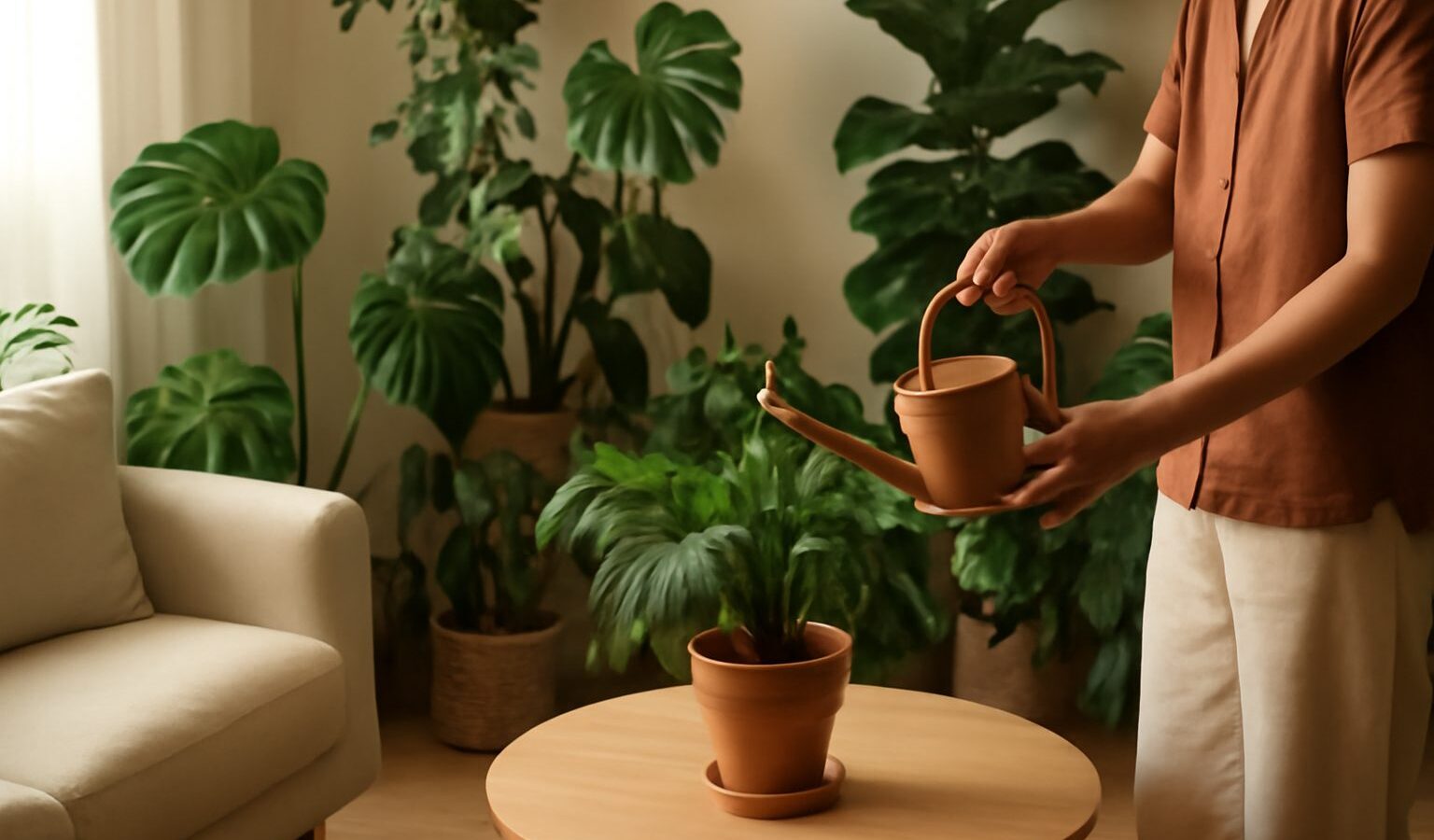
An indoor jungle is simply a room where plants are grouped closely enough to feel like a living, leafy world rather than a few pots on a shelf. In Singapore that dream is very achievable, because our warm, humid climate suits the tropical foliage most jungle looks are built from. The trick is not buying fifty plants at once. It is layering the right plants in the right light, keeping the air and water in balance, and letting the collection grow with you. This guide walks you through building a believable indoor jungle in a flat or condo, even if all you have is a corner and a sunny window.
Start With Your Light, Not Your Wishlist
Before you buy anything, spend a few days watching how light moves through the space you have in mind. Most HDB and condo interiors sit somewhere between bright indirect light near a window and quite dim a couple of metres back. That reality should shape your plant list, not the other way round.
A window that gets strong midday sun through clear glass can scorch delicate leaves, so filter it with a sheer curtain. A north-facing or shaded balcony door often gives lovely, even, indirect light that foliage plants adore. If your chosen corner is genuinely dark, be honest with yourself: no amount of styling turns a gloomy spot into a jungle. In that case, either move the display closer to the light or add a simple grow light on a timer.
Group plants loosely by their light needs so you can water and rotate them together. Keep the thirstier, brighter-loving plants near the glass and the tougher, shade-tolerant ones deeper in the room.
Layer Plants Like a Real Forest
A real jungle has a canopy, a middle storey, and a forest floor, and copying that structure is what makes a small collection read as lush. You are creating depth, not just quantity.
Think in three layers:
- Tall structure plants give height and a backbone. A palm, a dracaena, or a tall foliage plant anchors the corner and draws the eye up.
- Mid-height fillers sit on plant stands, stools, or a shelf to bridge the gap. Bushy foliage and broad-leaved plants work well here.
- Trailing and floor plants soften the edges. Hanging plants spilling from a shelf or a macrame hanger add that overgrown, tumbling feel, while a low, spreading plant covers the base of taller pots.
Vary the leaf shapes too. Put a plant with big, dramatic leaves next to one with fine, feathery foliage and a third with a trailing habit. That contrast tricks the eye into seeing a rich, wild planting even when there are only six or seven pots. Cluster them so the pots almost touch and the foliage overlaps slightly. Gaps between evenly spaced pots read as a shop display; overlap reads as a jungle.
Get the Humidity and Airflow Right
Singapore hands you high outdoor humidity for free, but the moment you switch on the aircon, indoor air dries out fast, and that is where jungle plants suffer. Crispy leaf tips and edges are almost always an air problem, not a watering one.
Grouping plants together is the easiest fix, because they release moisture and raise the humidity around each other. A pebble tray, a shallow dish of water with pebbles under the pots so roots never sit in it, adds a little more. Keep displays away from the direct blast of an aircon vent or a fan.
Airflow matters just as much as moisture. Crowded, still, damp foliage invites mould, fungal spots, and pests. Leave a little breathing room between the densest clumps, open a window when you can, and let the surface of the soil dry before you water again. A gentle breeze keeps leaves dry and stems sturdy.
One firm caution on the pebble tray and any decorative water: standing water breeds Aedes mosquitoes, which spread dengue. Never let saucers or trays collect and hold open water for long. Empty and refresh them at least weekly, keep pebbles above the waterline, and follow current NParks and NEA guidance on preventing mosquito breeding at home.
Choose Layers That Suit a Singapore Flat
Here is a simple way to match each jungle layer to conditions and effort, so you can build a balanced collection rather than a random one.
| Jungle layer | Best light in a flat | Care effort | Watch out for |
|---|---|---|---|
| Tall structure (palm, dracaena) | Bright indirect, near glass | Low to medium | Brown tips from dry aircon air |
| Mid-height filler (bushy foliage) | Bright to medium indirect | Medium | Overwatering in low light |
| Trailing (hanging foliage) | Bright indirect, off a shelf | Low | Tangling and dust on leaves |
| Floor cover (low spreading plant) | Medium to shade | Low | Slow growth if too dark |
Use it as a starting frame, then adjust to what your window actually offers.
Keep Everyone Safe Around the Jungle
Many classic jungle plants are ornamental only and mildly toxic if chewed. Dracaena, pothos, philodendron, peace lily and similar foliage plants can irritate the mouth and stomach and are not edible. Treat none of them as food, and keep the display where curious young children and pets cannot nibble fallen leaves. When you prune or repot, wear gloves, as some sap irritates skin.
If your jungle spills onto a balcony or corridor, secure every pot against wind and knocks so nothing can fall, and follow your HDB, town council, or MCST rules on shared and communal space. Keep water and soil runoff off your neighbours below.
Grow It Slowly and Let It Fill In
The most convincing indoor jungles are built over months, not in one shopping trip. Start with three or four healthy, easy plants you can actually keep alive, learn their rhythm, and add more only once the first group settles. Propagate from cuttings to multiply what already works in your home for free, and let trailing plants lengthen instead of trimming them short.
Rotate pots a quarter turn every week or two so all sides get light and grow evenly. Wipe dust off big leaves so they can breathe and shine. As your plants thicken and spill over their pots, the corner stops looking arranged and starts looking alive. That patient, observant approach is what turns a handful of houseplants into a real indoor jungle you will be proud of.
Explore more
Once your jungle takes shape, deepen it with a few specialists: try string of pearls and hanging plants for the trailing layer, and indoor palms for height. For a denser, healthier canopy, read our guide to grouping plants to boost humidity, then move on to styling plants in your home to pull the whole look together.