
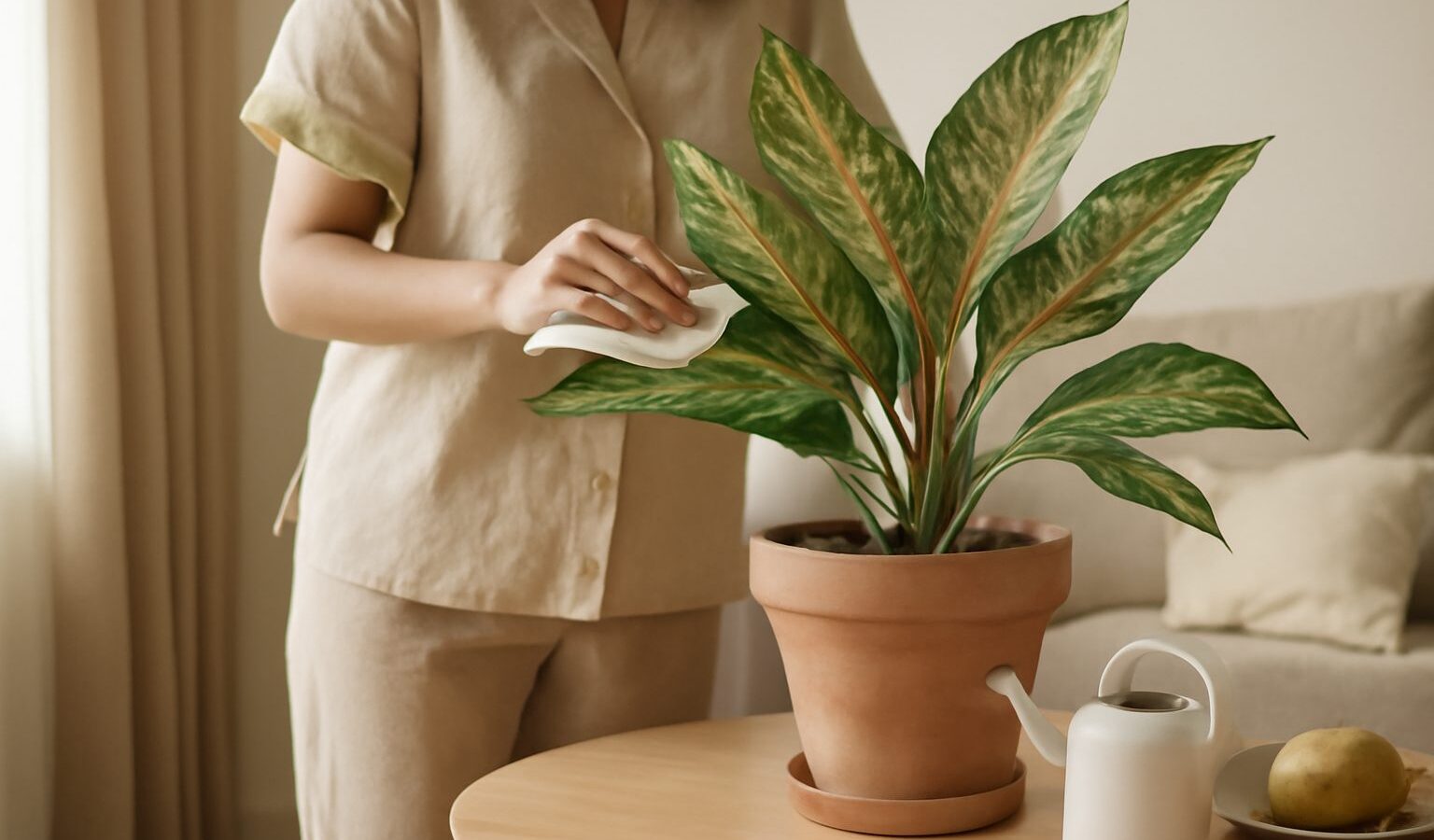
If you want a plant that brings colour to a shadier corner and asks very little in return, the aglaonema chinese evergreen is hard to beat. Its broad leaves come splashed and streaked in silver, green, cream, red and pink, and it stays neat and bushy rather than sprawling, which suits compact HDB living. Known simply as the Chinese evergreen, it is one of the most tolerant houseplants around, forgiving of low light and irregular watering. It is, however, a toxic aroid, so this guide pairs its easy care with the safe-handling basics.
Why the Chinese Evergreen Suits Local Homes
The aglaonema earns its place through sheer toughness. It handles the medium and lower light found away from a window better than most colourful plants, and it copes with the odd missed watering. That combination makes it a genuine option for a shadier flat, a north-facing room or a spot deeper inside the home where fussier plants sulk.
The colour range is the other draw. Green and silver varieties are the toughest and take the least light, while the vivid red and pink types are stunning but need brighter, indirect light to keep their colour rich. For anyone who has struggled to grow colour indoors, the aglaonema is often the plant that finally works.
A Toxic Aroid: Handle With Care
The aglaonema chinese evergreen belongs to the aroid family, alongside the syngonium arrowhead plant and the dieffenbachia dumb cane. Its sap is toxic to people and pets, can irritate skin and eyes, and eating any part can cause painful burning and swelling of the mouth and throat.
- Keep it out of reach of young children and pets, ideally on a shelf or plant stand.
- Wear gloves when cutting stems or taking cuttings, and wash your hands afterwards, keeping the sap away from your eyes and mouth.
- If a person or animal swallows any part, seek medical or vet help promptly.
In a home with a leaf-nibbling pet or a curious toddler, a non-toxic plant such as a pilea chinese money plant is a gentler choice.
Light and Placement
The aglaonema is famous for tolerating low light, but tolerating and thriving are different things.
- Bright, indirect light: the ideal, especially for red and pink varieties, which hold their colour best here.
- Medium light: perfect for green and silver types, such as a spot a couple of metres from a window.
- Low light: the plainer green forms genuinely cope in a dim corner or a shaded corridor, though growth slows.
- Direct sun: avoid harsh afternoon sun through glass, which scorches and bleaches the leaves.
If a colourful variety starts looking dull and greenish, it is asking for more light, so shift it nearer a bright window.
Watering and Humidity in Our Climate
The aglaonema likes to dry out a little between waterings, and in Singapore’s humidity that takes longer than a temperate plant tag suggests. Overwatering, not neglect, is the usual cause of trouble.
- Water only when the top few centimetres of soil feel dry.
- Water thoroughly until it drains from the bottom, then empty the saucer.
- In a shaded or air-conditioned room the soil dries slowly, so check before watering rather than following a fixed day.
Yellowing lower leaves and a soft base usually mean the soil has stayed too wet, while drooping that recovers after watering means the plant was thirsty. Never leave the pot sitting in a filled saucer, both for the roots and because standing water breeds Aedes mosquitoes and dengue, so tip out saucers after watering and after rain, in line with NEA and Mozzie Wipeout habits.
Humidity is rarely a concern here, as our air is naturally moist and suits the plant well. The main exception is a long run of aircon, which dries the air and can brown the leaf tips. Grouping plants or using a tray of damp pebbles helps without any need to mist.
Feeding and Everyday Care
Feed lightly during the growing period, which for us is most of the year, with a balanced liquid fertiliser at the strength on the label, roughly once a month. This plant is a slow, steady grower, so it does not need heavy feeding, and too much fertiliser browns the leaf tips.
Wipe the broad leaves with a damp cloth every couple of weeks. This clears the dust that dulls the colours and blocks the leaf pores, and it lets you catch pests such as mealybugs and spider mites early. Snip off any yellowed or tatty leaves at the base to keep the plant looking fresh. Repot only every couple of years, moving up just one pot size, as aglaonemas are happy staying a little snug.
How the Aglaonema Compares for Beginners
| Plant | Light tolerance | Watering | Toxic? | Best for |
|---|---|---|---|---|
| Aglaonema Chinese evergreen | Low to bright indirect | Let top dry out | Yes, aroid | Shadier corners with colour |
| Syngonium arrowhead | Medium to bright indirect | Keep lightly moist | Yes, aroid | Fast growth, climbing or trailing |
| Pilea Chinese money plant | Bright indirect | Let top dry out | No | Bright windowsills, sharing pups |
As the table shows, the aglaonema is the one to reach for when a spot is too shady for most colourful plants but you still want more than plain green.
Propagating the Chinese Evergreen
Aglaonemas grow more slowly than trailing plants, so propagation is a patient job, but it is straightforward. The two reliable methods are division and stem cuttings, both best done wearing gloves.
- Division: at repotting time, gently separate a clump that has its own roots and shoots, and pot it up on its own. This is the quickest way to a full new plant.
- Stem cuttings: cut a healthy stem section with a few leaves, and root it in water or straight into moist soil. If rooting in water, change it every couple of days so it stays fresh, then pot up once roots form. Wash your hands afterwards.
With its easy temperament, tolerance of shade and beautiful leaves, caring for an aglaonema chinese evergreen is a genuinely low-stress way to add colour to a Singapore home. If you want to round out a low-light collection, browse the best air-purifying plants for your home for more hardy options. This is general guidance for home gardeners rather than professional horticultural, medical or veterinary advice, so watch how your plant responds and keep the safety points in mind.