
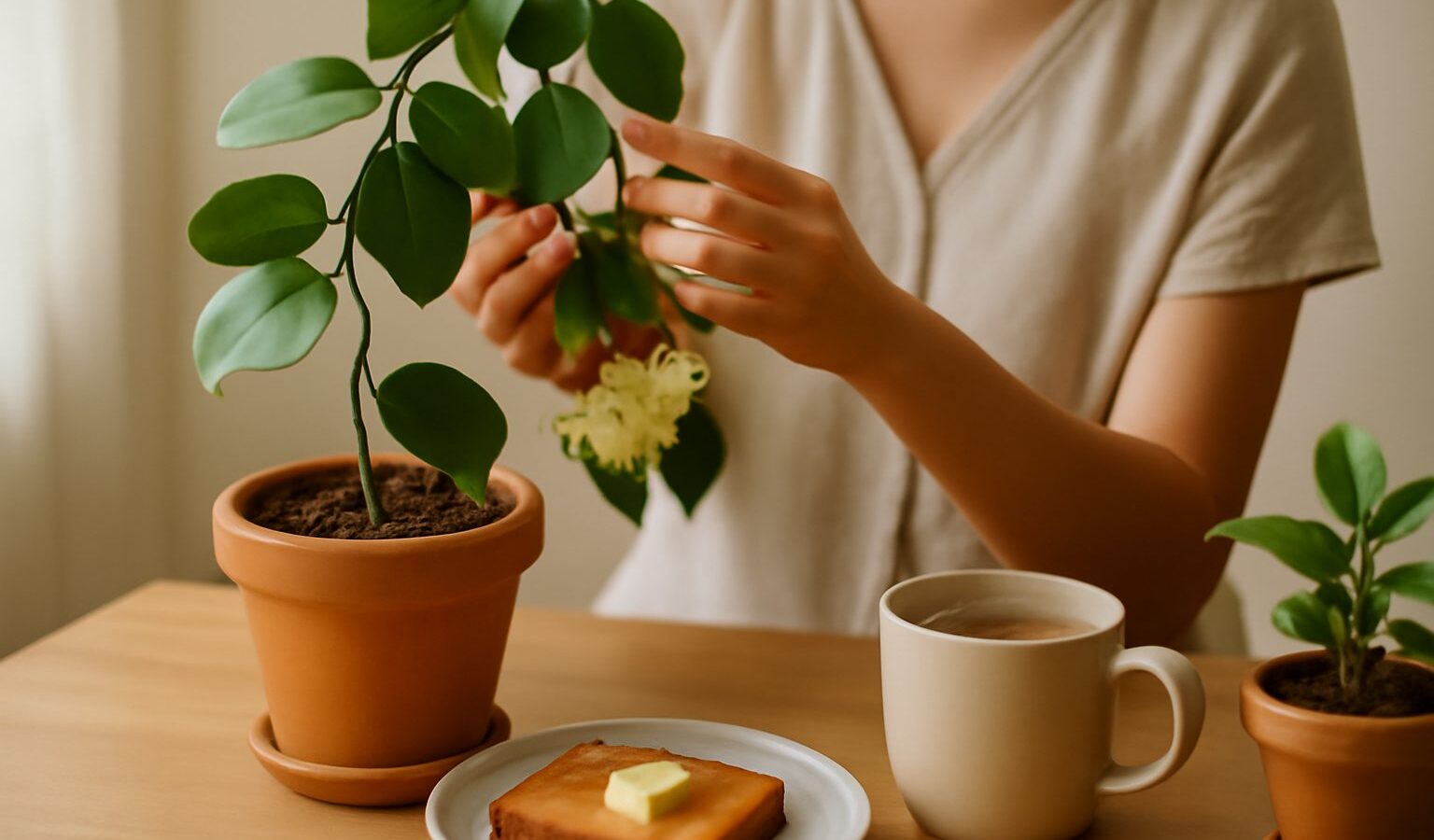
Hoyas, often called wax plants, could have been designed for Singapore. These trailing, climbing plants come from tropical Asia, so they genuinely enjoy our year-round heat and humidity instead of merely tolerating it. They give you thick, glossy leaves, long trailing vines for a hanging pot or a balcony trellis, and, once settled, clusters of star-shaped, sweetly scented flowers that look almost too perfect to be real. Good hoya care is refreshingly light-touch, which makes them ideal for a busy home gardener who wants beauty without a daily chore.
This guide walks through choosing a hoya, giving it the right light and water, coaxing out those famous blooms, and making more plants for free.
Why Hoyas Suit Our Climate
Most popular hoyas are semi-succulent, meaning their fleshy leaves store water. That single trait makes them forgiving in a way ferns and calatheas are not: they cope with the odd missed watering and actually prefer to dry out a little between drinks. Combine that with a love of warmth and humidity, and you have a plant that thrives on a sheltered HDB balcony or a bright corridor with very little intervention.
They are also flexible in habit. Let a hoya trail from a hanging basket, train it up a small trellis or moss pole, or let it scramble along a shelf. A few common, easy-to-find types are worth knowing:
- Hoya carnosa. The classic wax plant, vigorous and tough, with the well-known pink and red flower clusters. The best first hoya.
- Hoya pubicalyx. Fast growing with speckled leaves and dusky flowers, very forgiving of beginner mistakes.
- Hoya kerrii. The “sweetheart” hoya sold as a single heart-shaped leaf. Slow, but charming and drought tough.
- Hoya carnosa ‘Krimson’ types. Grown for variegated cream, pink or green foliage as much as for the blooms.
Start with a carnosa or pubicalyx while you learn the rhythm, then collect the fussier types later.
Light, Water and Feeding for Healthy Hoyas
Light is the single biggest lever for hoyas, and it decides whether you ever see flowers. They want bright, indirect light, and plenty of it. A spot near a bright window, a balcony shaded from the fiercest midday sun, or an airy corridor with good ambient light is ideal. A little gentle morning sun is welcome and encourages blooming. What they dislike is deep shade, where they grow leggy and refuse to flower, and harsh, all-day direct sun, which can scorch and bleach the leaves.
Watering is where their semi-succulent nature makes life easy. Let the top few centimetres of mix dry out, then water thoroughly until it drains from the bottom, and empty the saucer afterwards. In our heat a hoya in a bright spot might want water once or twice a week, but always check the mix first rather than watering on a fixed day. When in doubt, wait: hoyas forgive a little dryness far more readily than soggy roots, which quickly rot. Do not let the pot sit in a filled saucer, both to protect the roots and because standing water breeds Aedes mosquitoes. Tip saucers out, keep any humidity trays shallow and refreshed at least weekly, and follow current NParks and NEA guidance on preventing mosquito breeding.
Feeding is light work too. During the warm, active growing months, a balanced liquid fertiliser at half strength every three to four weeks is plenty. When you want to encourage flowering, a feed higher in phosphorus can help, but healthy light is far more important than any fertiliser. The sap of hoyas can irritate skin, so wear gloves when pruning, and note that these are ornamental plants, not something to eat. Keep them out of reach of young children and curious pets who might chew the leaves.
Getting Your Hoya to Bloom
Blooming is the part that mystifies new growers, so it deserves its own attention. Hoyas flower from small stalks called spurs, and here is the key point: those spurs bloom again and again, season after season. Never cut off the old flower stalk after the blooms fade, because next season’s flowers come from the very same spot. Snipping them away is the most common reason a hoya stops flowering.
Beyond that, three things bring on blooms: enough bright light, a little maturity, and a slightly snug pot. Hoyas often flower better when a touch root-bound, so resist the urge to move yours into a huge pot. Be patient, too, since a young or recently repotted plant may spend a season settling before it blooms. Once it starts, a happy hoya on a bright Singapore balcony can flower repeatedly through the year, filling the evening air with scent.
Soil, Potting and Propagation
Hoyas are often epiphytes in the wild, clinging to trees rather than sitting in heavy ground soil, so they want an airy, fast-draining mix. A blend of quality potting mix with plenty of bark, coco chips or perlite keeps roots aerated and prevents the wet, stagnant conditions that cause rot. A pot with good drainage holes is essential. Repot only when truly crowded, and only up one size.
Propagation is easy and satisfying. Take a stem cutting with two or three leaves, ideally including a node, the point where leaves join the stem, since roots form there. You can root cuttings in a jar of water or straight into damp, airy mix. If you root in water, change the water every few days to keep it fresh and, importantly, to stop it becoming a still pool where mosquitoes breed. Once roots are a few centimetres long, pot the cutting up gently. The table below compares the two methods so you can pick what suits you.
| Method | Best for | Watch out for | Rough timing |
|---|---|---|---|
| Water rooting | Beginners who like to see roots form | Change water often so it does not stagnate and breed mosquitoes | Roots in two to four weeks |
| Rooting in mix | Stronger, transplant-ready roots | Keep mix just damp, not soggy, to avoid rot | Roots in three to six weeks |
| Whole-leaf (kerrii) | Novelty single-leaf pots | A lone leaf rarely grows into a full vine | Very slow, may not vine |
Whichever route you choose, keep new cuttings in warm, bright, indirect light and be patient. On a balcony or corridor, secure hanging pots and trellises well against wind, avoid any drips onto neighbours below, and follow your HDB, town council or MCST rules for shared spaces.
Explore more
Hoyas pair beautifully with other easy-care tropical foliage. If you are building a low-fuss green collection, see our guides to growing air plants (tillandsia) and caring for spider plants, or add some drama with caring for alocasia and other aroids in Singapore.