
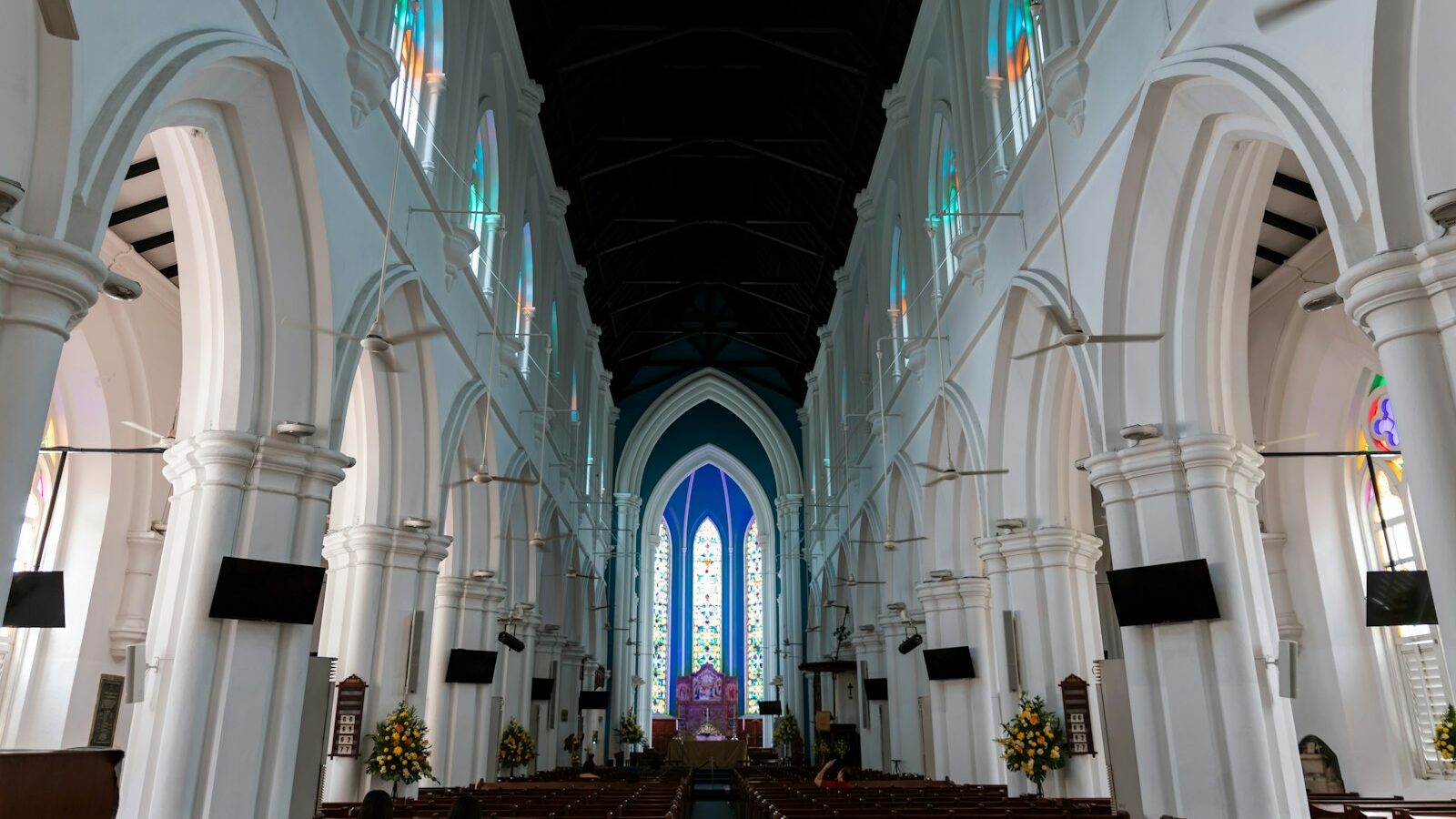
The Cathedral of the Good Shepherd is Singapore’s oldest Roman Catholic church and the mother church of the Catholic community here, a serene white landmark in the city’s civic and heritage district. Set near Victoria Street and Queen Street, it combines dignified architecture with a living tradition of worship. This guide explores its story and how to visit thoughtfully.
Significance and history
As the cathedral of the Catholic Archdiocese of Singapore, the Cathedral of the Good Shepherd holds a special place as the seat of the local Church and a spiritual home for generations of Catholics. It stands among Singapore’s most historic places of worship, a witness to the growth of the faith in the country from its early days.
The church takes its name from the image of the Good Shepherd, a tender and enduring symbol of care and guidance in Christian tradition. Rather than fix precise founding dates from memory, treat the cathedral’s own records and Singapore’s heritage authorities as the reliable source for its history. It has been recognised as a national monument, reflecting both its architectural and its cultural importance.
Situated in the heart of the old civic district, close to other historic institutions, the cathedral is part of a cluster of heritage buildings that tell the story of colonial and modern Singapore side by side.
What to see
The cathedral’s calm white exterior, with its classical proportions and a tower that rises gently above the surrounding greenery, makes a graceful first impression. It is a building that invites quiet rather than awe, in keeping with its role as a place of prayer.
Step inside and you find a spacious, light filled nave, the long central hall where the congregation gathers. The eye is drawn towards the sanctuary and altar, the focus of Catholic worship, framed by columns and gentle detailing. The overall effect is one of restraint and peace rather than heavy ornament.
Look for the devotional features that mark it as a living Catholic church, such as statues, side chapels and spaces for private prayer. As with any place of worship, appreciate these quietly and remember that the cathedral is used for daily Mass and other services, not only sightseeing.
The grounds around the cathedral are worth a slow walk too. Set back a little from the street, the church sits within a green compound that offers a welcome pause from the surrounding traffic. From here you can appreciate the building’s balanced proportions and its relationship to the wider civic district, which includes some of Singapore’s oldest schools, museums and public buildings. Arriving on foot and taking a moment in the grounds before you enter helps you settle into the quieter frame of mind the cathedral asks for, and lets you see how carefully this house of prayer has been preserved amid the changing city around it.
Architecture
The cathedral is built in a classical, Renaissance influenced style that was popular for grand civic and religious buildings in its era. Symmetry, columns and clean white surfaces give it a sense of order and calm, while the tower provides a vertical accent that helps it stand out among later buildings.
Because it remains a working cathedral, its layout follows liturgical use. The long nave leads the congregation towards the altar and sanctuary, the heart of Catholic worship, in a clear and dignified progression. Notice how the architecture supports the rhythm of the liturgy, gathering people together and drawing their attention forward.
Worship and observances
Catholic life centres on the Mass, celebrated daily and with particular solemnity on Sundays and major feast days. The great seasons of the Christian year, especially Christmas and Easter, are marked with special services, and the cathedral can be very busy at these times. As the mother church of the archdiocese, it also hosts significant diocesan occasions.
| Aspect | Cathedral of the Good Shepherd | General visitor note |
|---|---|---|
| Tradition | Roman Catholic cathedral | Active place of worship |
| Role | Mother church of the archdiocese | Seat of the local Church |
| Heritage status | National monument | Protected building |
| Style | Classical, Renaissance influenced | Calm white exterior |
| Central act | The Mass | Daily and on Sundays |
| Peak seasons | Christmas and Easter | Verify service times |
Service times and access can vary, so check the cathedral’s own notices before you visit, especially around major feasts.
Visiting etiquette
Churches welcome respectful visitors, and a few simple courtesies help. Dress modestly, covering shoulders and knees, as you would for any place of worship. On entering, lower your voice and move gently, remembering that people may be at prayer or that a service may be about to begin.
If a Mass or other service is in progress, it is best either to join quietly and follow along or to wait until it has finished before exploring. Do not walk about, take photographs or talk during worship. Take a seat in the pews rather than wandering through the sanctuary, and follow any guidance from staff or ushers about where visitors may go.
Photography is often permitted in a quiet, considerate way when no service is on, but ask before photographing worshippers, avoid using flash, and put your camera away the moment a service begins. Switch your phone to silent. If you wish to light a candle or spend a moment in prayer, you are usually welcome to do so quietly. Treating the cathedral as a house of prayer first, and a monument second, is the surest sign of respect.
A place of peace in the city
The Cathedral of the Good Shepherd offers a haven of stillness amid the bustle of central Singapore, its white walls and quiet nave holding centuries of prayer. As the mother church of the local Catholic community, it remains very much alive. Visit with courtesy, check its own guidance on hours and services, and let its calm and grace stay with you.
Explore more: Heritage churches of Singapore · Religious harmony and festivals in Singapore · Temple worship etiquette for newcomers