

If you have walked past a fruit stall in Singapore and caught a heavy, sweet, almost boozy smell that was not durian, there is a good chance it was chempedak. Chempedak in Singapore is a much-loved local fruit, but newcomers often confuse it with its bigger cousin, the jackfruit. They belong to the same plant family, they look alike on the shelf, and both have golden pods hiding inside a bumpy green skin. Yet they taste, feel and behave quite differently once you get them home.
This guide focuses on the practical side: how to tell the two apart, how to pick a good one, how to open it without gluing your hands together, and how to fry chempedak the way many Singapore families do.
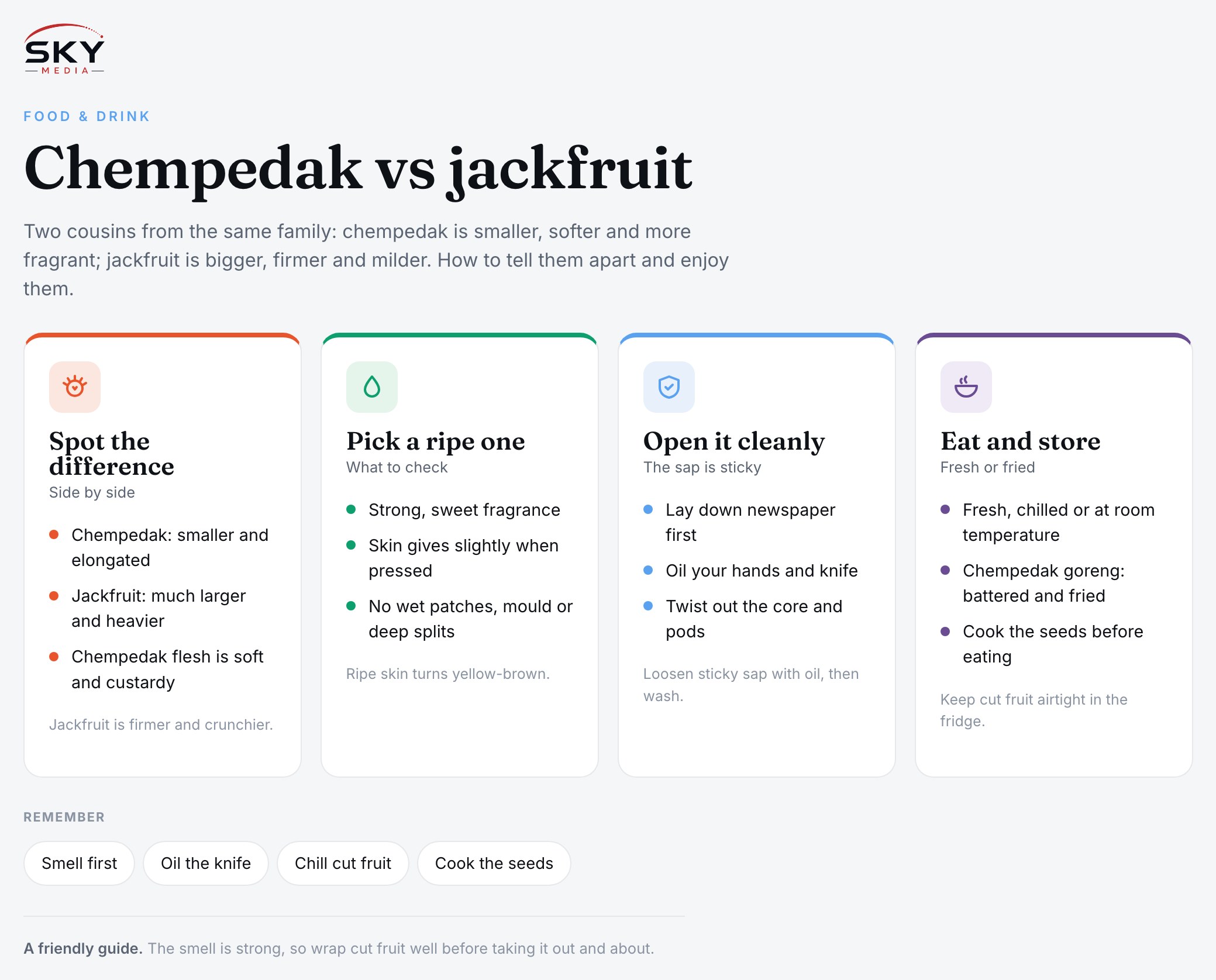
Chempedak vs Jackfruit: The Quick Side-by-Side
The easiest way to learn the difference is to compare them directly. Use this as a cheat sheet the next time you are at a wet market or supermarket.
| Feature | Chempedak | Jackfruit |
|---|---|---|
| Size and shape | Smaller and more elongated, often like a long rugby ball | Much larger and heavier, can be enormous when whole |
| Skin | Thinner, with flatter bumps that soften as it ripens | Thicker, with pointed, spiky bumps |
| Smell | Strong, sweet and pungent, noticeable from a distance | Fruity and sweet, milder than chempedak |
| Flesh texture | Soft, slippery and custardy, clings to the core | Firmer and crunchier, separate bulbs |
| Colour of flesh | Deep yellow to orange | Pale to bright yellow |
| How it is usually sold | Mostly whole, sometimes in packed pods | Often sold already cut into bulbs on trays |
| Best known use | Eaten fresh or battered and fried | Eaten fresh, in desserts, or cooked young as a vegetable |
A simple memory trick: jackfruit is the big, spiky, crunchy one, and chempedak is the smaller, smelly, soft one. If a stallholder is selling neat boxes of yellow bulbs, they are usually jackfruit, because its large size makes whole fruit impractical for most households.
How to Pick a Ripe Chempedak or Jackfruit
Neither fruit is great when underripe, so it is worth taking a moment to choose well.
For chempedak:
- Follow your nose. A ripe chempedak announces itself. If there is barely any scent, it probably needs more time.
- Press gently. The skin should give slightly, a bit like a ripe avocado. Rock-hard means unripe.
- Look at the skin. Ripe fruit often turns from green towards yellow-brown, and the bumps flatten out.
- Check for damage. Avoid fruit with large wet patches, mould or deep splits, which can mean it is past its best.
For jackfruit bulbs (the usual way to buy it):
- Choose bulbs that are bright yellow and plump, not dull, brownish or dried at the edges.
- They should smell sweet and fresh, never sour or fermented.
- Buy what you will eat in a day or two. Cut fruit does not keep long in Singapore’s heat, so refrigerate it promptly.
Supply varies from year to year with the weather. If you do not see chempedak, ask a fruit stall when they expect more. Many stallholders will pick a ripe one if you say when you plan to eat it.
How to Open a Chempedak Without the Sticky Mess
The biggest surprise for first-timers is the sap. Both fruits, and especially the stem and core, release a white latex that turns into a stubborn glue on hands, knives and boards. A little preparation saves a lot of scrubbing.
Prepare first:
- Lay newspaper or a plastic sheet on your work surface.
- Rub a thin layer of cooking oil on your hands and your knife. Some people wear disposable gloves instead.
- Keep a paper towel with oil nearby to wipe the blade as you go.
Opening a whole chempedak:
- A ripe chempedak is often soft enough that you can tear it open by hand. Start by pressing your thumbs into the skin near the stem end and pulling it apart along its length.
- If the skin is firmer, make a shallow cut lengthways with an oiled knife, cutting only through the skin, then pry it open with your hands.
- Grip the stem and twist or pull. The whole cluster of pods attached to the central core should lift out in one piece.
- Pull the pods off the core one by one. Each pod contains a seed, which slips out easily.
Cleaning up: soap and water do little against the sap. Rub oil onto the sticky spots first, then wash with dish soap. The same trick works for knives and chopping boards.
Jackfruit is opened in a similar way but is much harder work because of its size and thick skin. That is why most people simply buy it pre-cut.
Eating Chempedak Fresh and Frying It at Home
The simplest way to enjoy chempedak is fresh, at room temperature or slightly chilled. The flesh is soft and sweet with a flavour some people describe as a mix of banana, mango and a hint of durian. Eat around the seed rather than biting straight through it.
The local favourite, though, is chempedak goreng, which simply means fried chempedak in Malay. Pods are coated in a light batter and deep-fried until crisp outside and molten inside. You will often find it at pasar malam (night market) stalls and some hawker stalls when the fruit is in season.
A basic home method:
- Mix a simple batter from plain flour or rice flour, a pinch of salt, a little sugar if you like, and cold water, until it coats a spoon thinly. Some cooks add a spoonful of cornflour for extra crunch.
- Leave the seeds in the pods if you want them to hold their shape, or remove them carefully. Many families leave them in and warn diners.
- Heat enough oil for deep frying in a wok or heavy pot.
- Dip each pod in batter and fry in small batches until golden.
- Drain on paper towels and eat while hot. Chempedak goreng goes soft quickly, so it is best straight out of the wok.
Take the usual care with hot oil, keep children away from the stove, and never leave the pot unattended.
Do not throw away the seeds. Both chempedak and jackfruit seeds are commonly boiled or roasted and eaten as a starchy snack, with a texture similar to chestnuts. They should be cooked, not eaten raw.
Other Ways Jackfruit Turns Up in Singapore Food
Jackfruit is more versatile than chempedak:
- In desserts: strips of jackfruit appear in some local and Thai-style sweets.
- Young jackfruit as a vegetable: unripe jackfruit is cooked in curries and stews, and its stringy texture makes it a popular meat substitute in vegetarian cooking.
- Dried jackfruit chips: sold in snack packs at supermarkets and Asian grocers.
Chempedak is mostly enjoyed fresh or fried, which is part of what makes it feel special when it appears.
Storing, Smells and Etiquette
Because chempedak smells strong, a few practical points help:
- Storage: eat a whole ripe chempedak within a day or two. Once opened, keep the pods in an airtight container in the fridge and finish them soon.
- Smell at home: the aroma lingers. Use a sealed container and wrap the skin and core in a bag before throwing them away.
- Public transport: durians are not allowed on MRT trains and buses, and strong-smelling fruit like chempedak is best avoided too. Check the operator’s current rules, and if in doubt, carry it home by car or eat it at the stall.
- Allergies: some people react to the latex or the fruit itself. If you have a latex allergy or feel unwell after eating, stop and speak to a doctor.
Exploring local food is an easy way to feel at home in Singapore, much like finding new ways to enjoy familiar meals, such as hotpot without beef. Start with a few jackfruit bulbs, work up to a whole chempedak, and you will soon be the one recommending chempedak goreng to friends.
Frequently Asked Questions
Is chempedak healthy, and can people with diabetes eat it? Chempedak is a sweet fruit that contains natural sugars, so portion size matters, especially for people managing blood sugar. Eating it fresh is lighter than chempedak goreng, which adds batter and frying oil. If you have diabetes, ask your doctor or a dietitian how much fruit suits you.
Can I freeze chempedak pods to eat later? Freezing is a common way to keep chempedak beyond a day or two. Remove the pods from the skin and core, pack them in an airtight container or bag so the strong smell stays contained, and thaw in the fridge. The flesh softens after thawing, so it suits frying or eating cold better than showing off its original texture.
Can I make goreng with jackfruit if I cannot find chempedak? You can, though the result is different. Jackfruit bulbs are firmer and less pungent, so the fritter will taste milder and have more bite than the molten, custardy chempedak version. Pat the bulbs dry first so the batter clings, and fry in small batches as you would for chempedak.
Is chempedak related to durian? No, chempedak is not a type of durian, even though the aroma can remind people of it. Chempedak belongs to the jackfruit family, while durian is a separate fruit with its own spiky husk and creamy pods. The overlap people notice is mostly in the strong, sweet smell.
When is chempedak in season, and where can I buy it? Supply changes from year to year with the weather, so there is no fixed month to rely on. Fruit stalls, wet markets and pasar malam vendors are the usual places to look. Ask the stallholder when the next batch is due and when you plan to eat it, so they can set aside a ripe one.
Further reading: Rambutan and Longan in Singapore: Seasons and How to Choose Them