
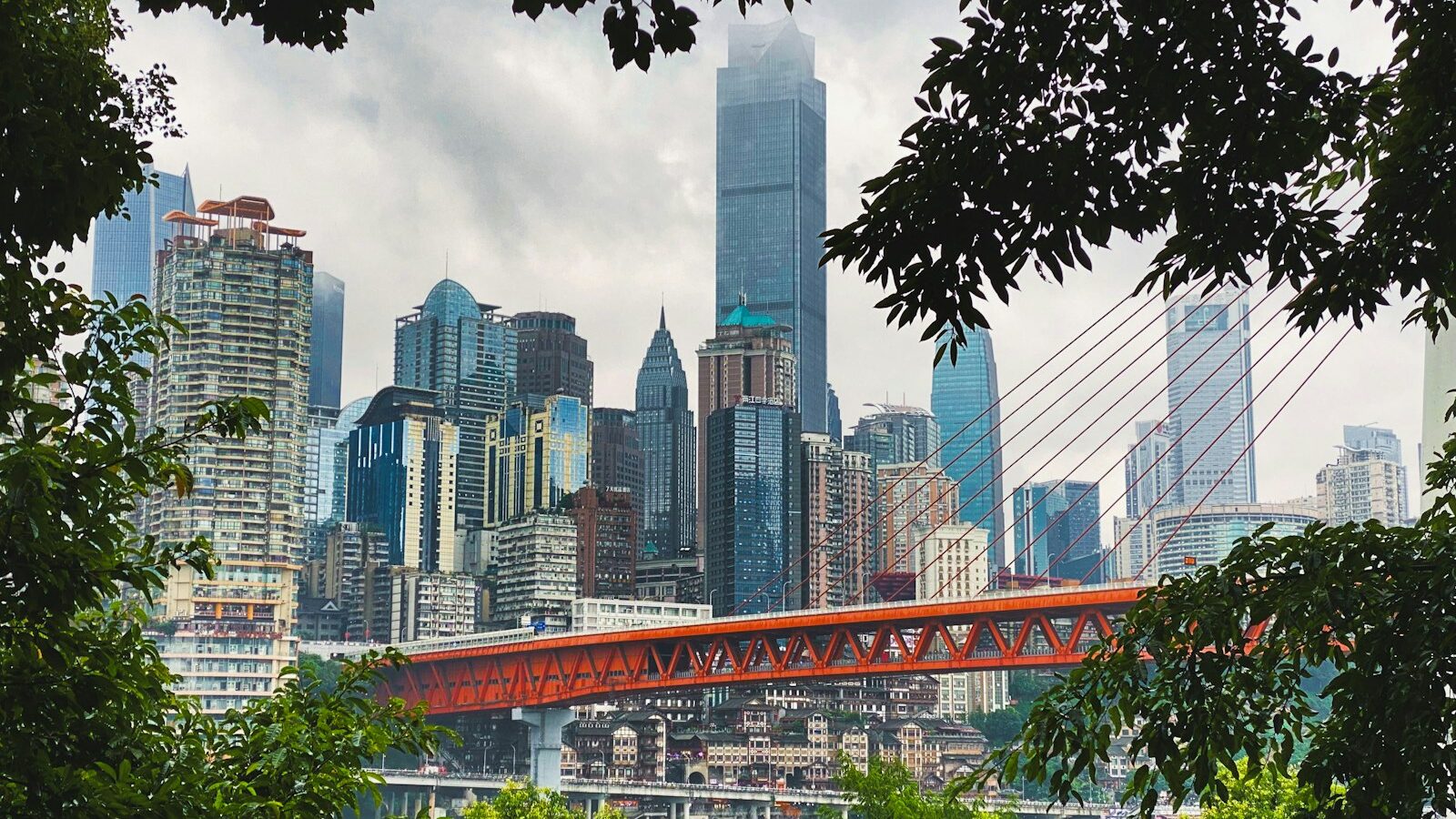
Chongqing is like nowhere else in China: a vast mountain city stacked on steep hillsides above the meeting of the Yangtze and Jialing rivers, where roads run over rooftops and a monorail slices through an apartment block. It is the spiritual home of fiery mala hotpot and the usual gateway to a Yangtze cruise through the Three Gorges. For Singaporeans craving drama, spice and something genuinely different, planning a trip to Chongqing from Singapore delivers a megacity unlike any other. This guide covers getting there, when to go, what to see, what to eat and the practical details.
Getting to Chongqing From Singapore
Chongqing lies deep in southwest China, so it is a longer travel day than the coastal cities. Direct flights between Changi and Chongqing Jiangbei International Airport do appear on some schedules, with a flying time usually in the region of four to five hours, while other itineraries route through a hub such as Guangzhou, Shenzhen or another gateway. Direct services fluctuate with demand, so compare current schedules and fares, and leave a sensible buffer for any transit stop.
Chongqing is also a major high-speed rail hub linking the southwest, so it combines well with other inland cities. For a scenic pairing, our Kunming from Singapore guide covers the milder neighbouring province, and the Cantonese south is easy to reach via Guangzhou from Singapore.
On entry rules, do not rely on old tips. Requirements for Singapore passport holders have changed in recent years, and a Singapore passport and a China passport can face very different rules for the same trip. Confirm your own case with the Chinese embassy or consulate, and cross-check ICA for Singapore re-entry, before you book.
When to Go and How Long to Stay
Chongqing has a humid subtropical climate and a reputation as one of China’s furnace cities, with hot, sticky summers and frequent fog and cloud. The tropical warmth Singaporeans are used to will not shock you in summer, but the cooler months are far more comfortable for all the stair-climbing this vertical city demands.
| Season | Months | What to expect |
|---|---|---|
| Spring | Mar to May | Mild and often misty, with rising warmth; a pleasant window |
| Summer | Jun to Aug | Very hot and humid, one of China’s hottest cities |
| Autumn | Sep to Nov | Cooler, comfortable and a good time to visit |
| Winter | Dec to Feb | Cool, grey and foggy but rarely freezing |
Spring and autumn are the most comfortable. Two to three days covers the city itself; add several more if you plan a downstream Yangtze cruise.
Top Things to See and Do
Chongqing is a feast for the eyes, best enjoyed on foot and by cable car:
- Marvel at Hongyadong, a warren of traditional stilt buildings clinging to the cliff by the river, spectacular when lit up at night and a genuine icon of the city.
- Watch the Liziba light-rail line famously pass straight through a residential tower, one of the quirks that made Chongqing internet-famous.
- Ride the Yangtze River cable car across the water for classic views of the hilly skyline.
- Wander Ciqikou, an atmospheric old town of narrow lanes, teahouses, snacks and craft shops.
- Take in the neon of the Jiefangbei area around the Liberation Monument, the city’s buzzing central square.
- With more time, consider a day trip to the Dazu Rock Carvings, a UNESCO-listed set of exquisite cliffside Buddhist sculptures a couple of hours away.
What and Where to Eat
Chongqing hotpot is the main event, a cauldron of chilli and numbing Sichuan pepper in beef-tallow broth, into which you dip thin meats, tripe, vegetables and more. It is fiercely spicy by Singaporean standards, so ask for a milder or split pot if you are unsure, and pace yourself. Beyond hotpot, the local xiaomian, a punchy bowl of chilli noodles, is a beloved breakfast, and the wider Sichuan-style cooking brings dishes rich with chilli, garlic and that signature tingle. Street snacks abound in areas like Ciqikou. If you keep halal or vegetarian, options exist but are limited given the meat-and-chilli focus, so check ingredients and plan ahead.
Where to Stay and Getting Around
The most convenient base is the central Jiefangbei and Jiangbei area on the peninsula, close to Hongyadong, the riverside and the main shopping and dining, with good metro links. Areas near the main railway stations suit those planning rail day trips or a cruise departure. Because the city is so vertical, staying near a metro or monorail station saves a lot of climbing.
Getting around, the metro and monorail network is modern, cheap and genuinely part of the sightseeing, threading over rivers and through hills. Taxis and ride-hailing fill the gaps, though the layered geography can make short trips longer than the map suggests. As across the mainland, daily payment runs on mobile apps, so set that up beforehand and keep some cash as backup, and save destinations in Chinese on an offline map.
Practical Tips
- Currency: the renminbi (yuan). Arrange mobile payment where possible and carry some cash.
- Language: Mandarin with a strong local dialect; English is very limited, so translation and offline map apps are essential.
- Connectivity: many familiar apps and sites are restricted in China, so arrange a reliable data or roaming option before you fly.
- Budget: Chongqing is generally good value, with cheap, memorable food and low transport fares, though cruises and smart hotels cost more.
- Safety: the city is broadly considered safe for visitors; mind your footing on steep, uneven streets and check the latest MFA travel advisory before you go.
- Health: for any vaccinations or precautions, see a doctor or travel clinic before departure and buy suitable travel insurance; this is general information, not medical advice.
Chongqing is one of the most memorable cities in China, a spicy, cinematic, vertical megacity that feels like a world of its own, and a bold, rewarding choice for anyone flying from Singapore.
Explore more
Chongqing pairs well with the gentler southwest in our Kunming from Singapore guide, or contrast its mountains with the Cantonese coast via Guangzhou from Singapore. For classical gardens and canals far downstream, see our Suzhou from Singapore guide.