
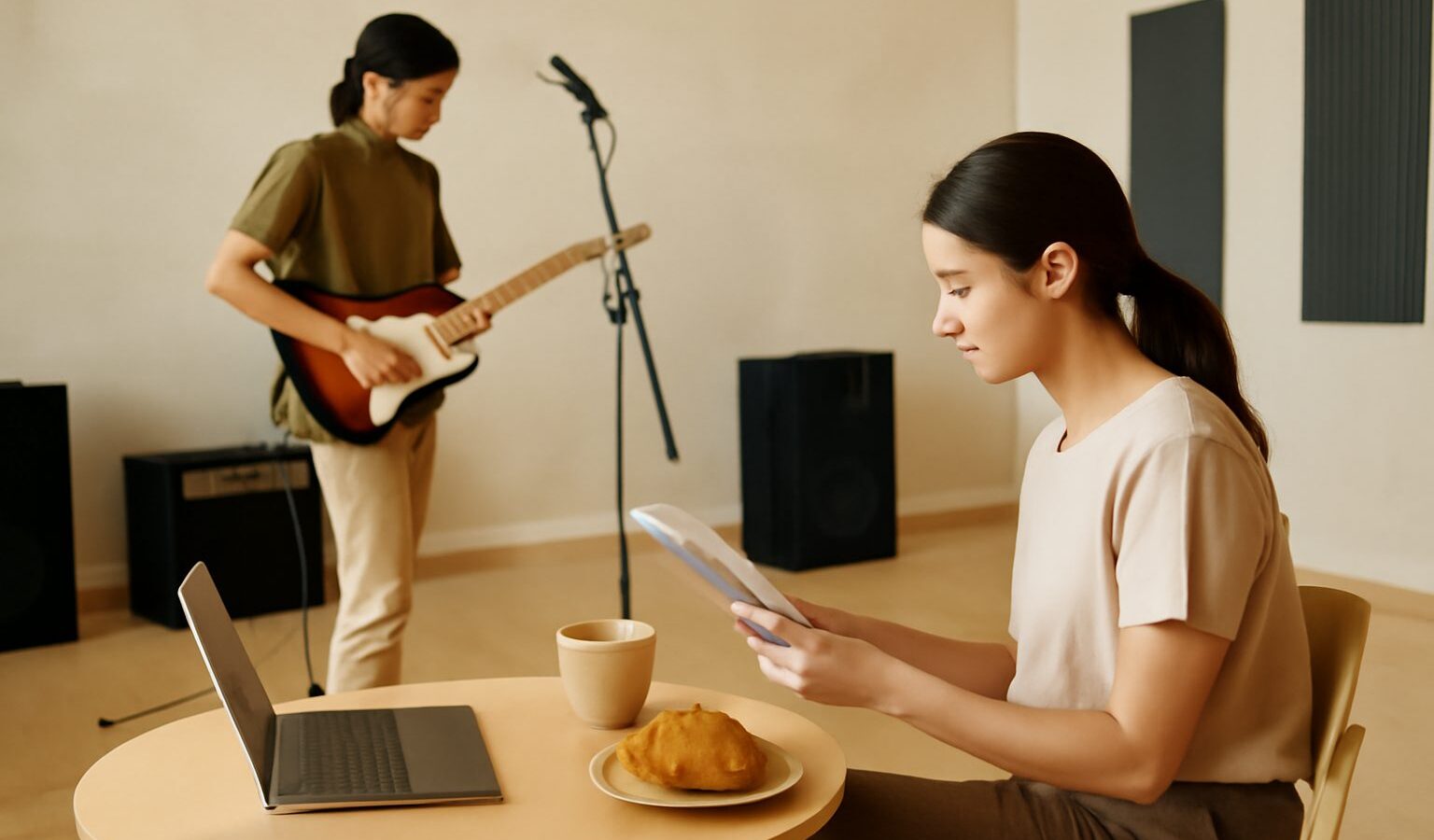
Most bands in Singapore cannot rehearse at home. Flats share walls, condo by-laws frown on drum kits, and a full band at volume will test the patience of any neighbour. That makes the rehearsal studio, often called a jamming studio locally, the default place to practise. The trouble is that two rooms with similar hourly rates can feel completely different once you plug in. This guide to choosing a rehearsal studio in Singapore focuses on the things that actually change the quality of a session: room size, the gear provided, how the room sounds, the booking rules and where it sits on your map.

Match the Room Size to Your Line-Up
Studios usually offer a mix of small, medium and large rooms, and the right one depends on how many people and instruments you bring.
- Duo or acoustic set: a small room is usually enough, and it is often the cheapest slot. Two guitars and vocals do not need a big space.
- Four or five piece rock or pop band: a medium room gives the drummer space to set up without the guitarist standing inside the bass amp. Check that there is room for a keyboard stand if you use one.
- Large ensembles, horns or dance rehearsals: look for the biggest room on offer and confirm the actual floor space, not just the number of people the studio says it holds.
A room that is too small for your band is not just cramped. Volume builds up quickly in a tight space, everyone turns up to hear themselves, and the session turns into a loud blur where nobody can hear mistakes. When you call or message the studio, describe your exact line-up and ask which room they would recommend.
Check the Backline Before You Book
Backline is the shared equipment that stays in the room: drum kit, guitar and bass amplifiers, keyboard, PA system and microphones. It is the single biggest factor in whether a session runs smoothly.
Questions worth asking before you commit:
- Drum kit: Which cymbals are included, and are they in good condition? Many drummers bring their own cymbals, snare and kick pedal because shared ones take a beating. Ask whether that is allowed and whether there is a stand for each.
- Amps: What guitar and bass amps are in the room? If your guitarist relies on a particular type of amp sound, a mismatch can waste the first half hour on tone hunting.
- PA and mics: How many vocal mics and channels are there? A three-vocal band with a two-channel mixer will struggle.
- Keyboard: Is a keyboard provided, or only a stand? Is there a sustain pedal?
- Cables and stands: Are instrument cables, mic stands and music stands included, or should you bring your own?
It also helps to ask how often the gear is maintained. Crackling cables and a broken hi-hat clutch can cost you 15 minutes of every booking. If the studio posts photos of each room, compare them with what you hear on the phone. If you also produce at home, our guide to choosing studio monitors explains why a rehearsal PA and a mixing setup are built for very different jobs.
Listen to the Acoustics, Not Just the Soundproofing
Soundproofing and acoustic treatment are two different things. Soundproofing keeps noise in so the studio does not upset neighbours. Acoustic treatment controls how sound behaves inside the room, so you can hear each other clearly.
A well treated rehearsal room usually has absorption panels on the walls, something to tame the corners where bass builds up, and a ceiling that does not ring. A poorly treated room might be perfectly soundproof yet sound harsh and boomy, with cymbals drowning out vocals.
Signs of a room that will work for your band:
- You can talk at a normal level without an echo.
- Clapping your hands produces a short, dull sound rather than a long ring.
- The bass guitar sounds defined, not like a muddy hum.
- The vocals cut through when the PA is at a reasonable level.
If you can, ask to look at the room before your first booking, or book a single short slot as a trial. Bring earplugs regardless.
Compare Booking Terms Side by Side
Booking terms vary more than most bands expect, and they are where hidden costs tend to sit. Rates, packages and rules change, so always confirm the current terms with the studio directly before paying.
| What to check | Why it matters | What a band-friendly policy looks like |
|---|---|---|
| Minimum booking length | Some rooms require two hours or more at peak times | Clear minimums, with shorter slots allowed off-peak |
| Peak and off-peak pricing | Evenings and weekends are usually the most expensive | Transparent rate card that shows both |
| Cancellation and rescheduling | Bands often lose a member to work or illness at short notice | A fair notice period and the option to shift the slot |
| Setup and pack-down time | Some studios count this inside your paid hour | Clear rules on when you may enter and must leave |
| Packages or prepaid hours | Can lower the hourly cost for regular bands | Reasonable expiry dates and transferable slots |
| Recording add-ons | Useful for rough demos of rehearsals | Option to record a stereo mix without a full studio session |
Pay close attention to the setup rule. If your drummer needs 15 minutes to set up cymbals and your hour starts the moment you walk in, a one hour booking becomes 40 minutes of actual playing. For bands that rehearse weekly and want a fixed space with storage, a monthly room lease may make more sense than hourly booking, and the questions overlap with those in our guide to renting an art studio in Singapore: access hours, shared facilities, notice periods and what happens to your gear.
Weigh Location Against Convenience
Studios cluster in industrial estates, older shopping centres and commercial buildings, because these spaces tolerate noise better than residential areas. That creates a few trade-offs.
- Near MRT versus easy parking: A studio near an MRT station is convenient for members who travel light. A drummer hauling cymbals or a bassist with a heavy amp may prefer a place with a loading bay or nearby carpark, even if it is a longer walk from the train.
- Central versus fair for everyone: A studio in the centre may feel fair if members live in different corners of the island. If most of the band lives in the east, a studio there saves everyone time each week.
- Late hours: Some studios open late into the night, which suits members who work office hours.
- Lifts and access: Older buildings sometimes have small lifts or long corridors, which matters when you are moving gear.
A practical approach is to map where each member lives and works, then shortlist two or three studios that minimise total travel time. The studio that is ten minutes cheaper per session may cost the band far more in commuting.
Make the Most of Every Booked Hour
Once you have picked a studio, a little preparation makes paid time count.
- Send a set list in advance. Everyone should know which songs you are working on before arriving.
- Arrive a few minutes early so you are ready to set up the moment your slot begins.
- Record the session on a phone placed in the middle of the room. Listening back later is the fastest way to find tempo problems and weak transitions.
- Split costs fairly. Agree up front how the fee is shared, including for members who miss a session.
Choosing a rehearsal studio in Singapore is less about finding the cheapest hourly rate and more about finding a room where your band can hear itself, set up quickly and keep coming back. Spend a little time testing two or three options, and your rehearsals will become noticeably more productive.
Further reading: How to Book a Recording Studio Session in Singapore