
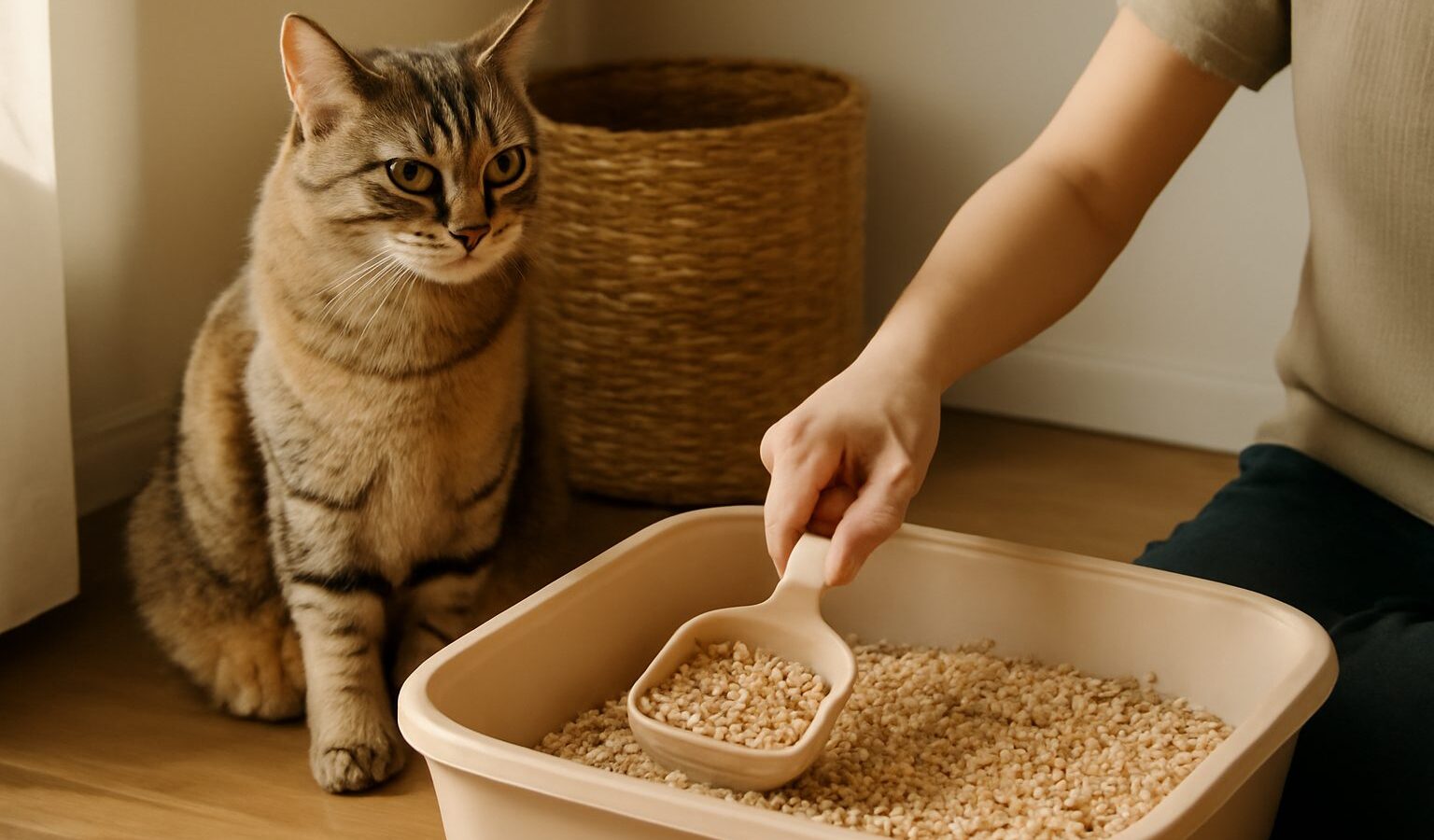
Walk down the pet aisle and the sheer number of litter options can be overwhelming: clay, silica crystals, tofu, paper, wood, scented, unscented, clumping, non-clumping. Choosing cat litter in Singapore is partly about odour and cleaning, but it is just as much about what your cat will actually use, because a litter your cat dislikes leads to accidents around the home. Our warm, humid climate also plays a role, since heat can intensify smells and dampness can affect how some litters perform. This guide breaks down the main types so you can pick sensibly for your cat, your home and your budget.
What matters when you choose
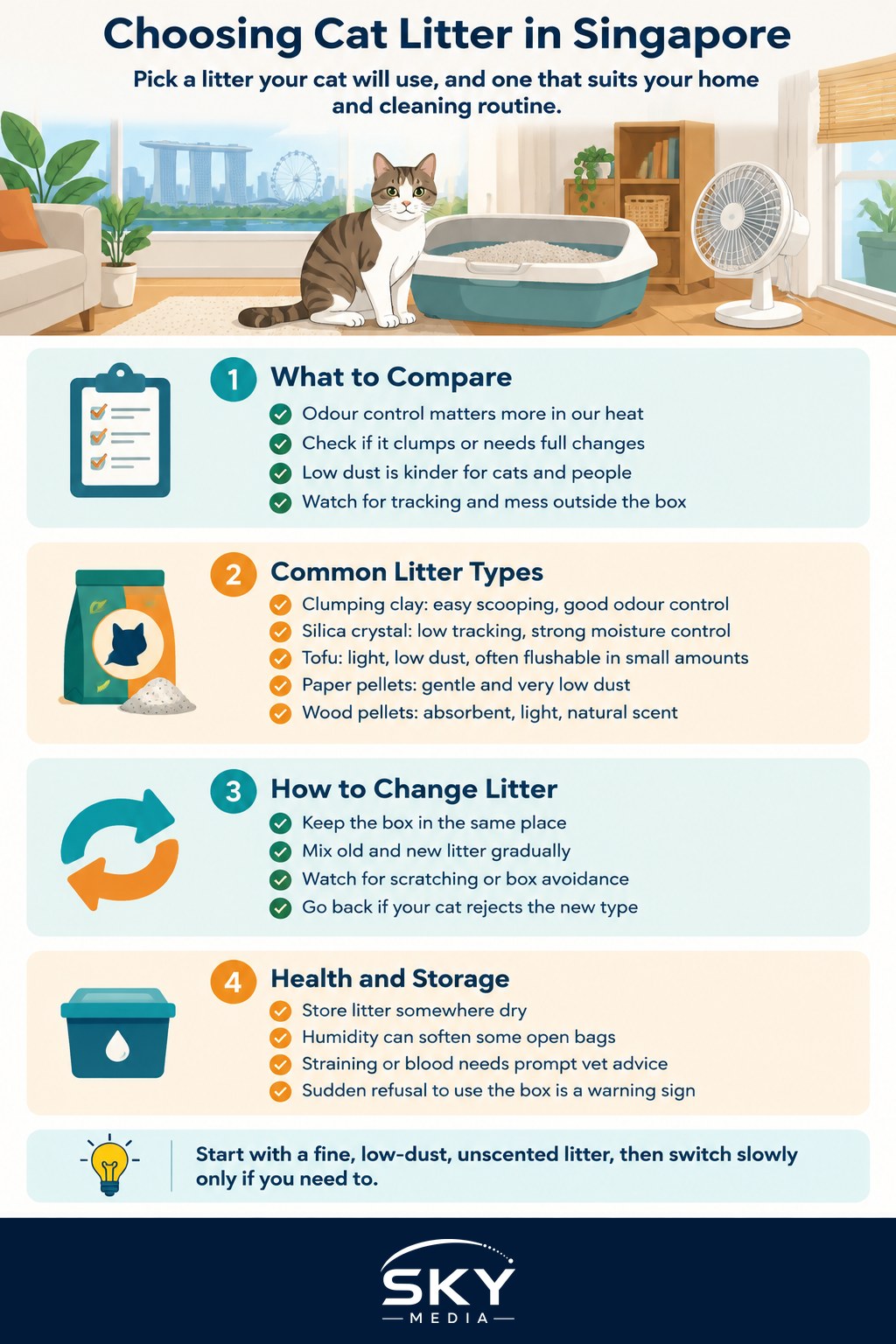
Before comparing brands, it helps to know what you are actually judging a litter on. Different households weigh these factors differently, and the right choice for a small HDB flat may differ from a larger home.
- Odour control: how well it traps smell between cleans, which matters more in our heat.
- Clumping: whether it forms firm clumps that are easy to scoop, or must be changed wholesale.
- Dust: low-dust litters are kinder to your cat’s airways and to yours, and keep surfaces cleaner.
- Tracking: how much litter your cat carries out of the box on its paws.
- Weight and disposal: heavier litters are harder to carry home and store.
- Cost over time: cheap litter that needs frequent full changes can cost more than it seems.
Your cat’s preference outranks all of these. Cats often favour a fine, soft, unscented litter underfoot, and many dislike strong perfumes even when humans like them. If in doubt, unscented and fine-grained is a safe starting point.
The main types compared
Each litter type has a personality. Clumping clay is popular for a reason, but it is far from the only good option, and several alternatives suit small flats and sensitive noses well.
| Litter type | Strengths | Watch-outs |
|---|---|---|
| Clumping clay | Firm clumps, easy scooping, good odour control | Can be dusty and heavy; not flushable |
| Silica crystal | Strong odour and moisture control, low tracking | Pricier; some cats dislike the texture |
| Tofu | Clumps well, low dust, light, often flushable in small amounts | Can soften in high humidity; costs more |
| Paper pellets | Very low dust, gentle, good after vet procedures | Weaker odour control; needs frequent changes |
| Wood pellets | Natural pine scent, absorbent, light | Breaks into sawdust; some cats dislike pellets |
There is no single winner. Many owners land on clumping clay or tofu for daily convenience, while paper is a common vet recommendation for kittens or a cat recovering from surgery, since it is soft and low-dust. Whatever you pick, store it somewhere dry, as our humidity can cause open bags of some litters to clump or soften before you even use them.
Switching litter without a protest
Cats are creatures of habit, and a sudden litter change is a common reason a cat starts toileting elsewhere. If your current litter works and your cat is happy, there is little reason to switch. When you do need to change, whether for cost, availability or dust, do it gradually.
- Mix a small amount of the new litter into the old, increasing the ratio over a week or two.
- Keep the box in the same place and at the same depth during the switch.
- Watch for signs your cat is unhappy, such as scratching at the floor instead of digging, or avoiding the box.
- If your cat rejects the new litter, go back to the old one and try a different alternative later.
Getting the litter right is only half the picture; how you set up and place the box matters just as much. See cat litter box setup and placement in Singapore for the other half, and litter training your cat in Singapore if you are starting from scratch.
Health notes and getting started
A litter box is a surprisingly useful health window. This is general information, not veterinary advice, but changes in what you scoop are worth noticing. Straining, blood, going far more or far less often, or a sudden refusal to use the box can point to a urinary or other medical problem, and a cat that cannot pass urine is an emergency. If you see these signs, contact a licensed vet promptly, and read common cat health issues in Singapore to know what to watch for.
If you are still cat-proofing and settling a new arrival, choosing a cat or kitten in Singapore helps with the bigger picture. In the end, choosing cat litter in Singapore is a balance of your cat’s preference, your home’s size and your cleaning routine, with your cat’s comfort leading the way. Start with a fine, low-dust, unscented option, change it gradually if you must, and let your cat’s habits tell you whether you got it right.
Frequently Asked Questions
How often should I change all the litter in the box? It depends on the litter type, the number of cats and how often you scoop. Scooping every day keeps things fresher for longer, and a full change with a wash of the box follows on a regular cycle. If the box smells strong despite scooping, change it sooner.
What is the best litter for a kitten? Gentle, low-dust litters such as paper pellets are often suggested for kittens, since young ones may nibble or swallow what they play with. Clumping litters are sometimes discouraged for very young kittens for the same reason, so ask your vet which type suits your kitten.
Can scented cat litter make a cat avoid the box? Yes, it can. Cats have a far keener sense of smell than people, and strong perfume can put them off using the box. An unscented, fine-grained litter is the safest starting point, and a plain litter is also kinder to cats with sensitive airways.
How can I cut down on litter tracking and dust around my flat? Choose a low-dust litter with larger granules or a less tracking-prone type, and place a mat under and in front of the box to catch stray bits. Keeping the litter at a sensible depth and sweeping the area regularly also helps keep a small flat tidy.
Further reading: Are Automatic Litter Boxes Worth It? Pros, Cons and Safety