
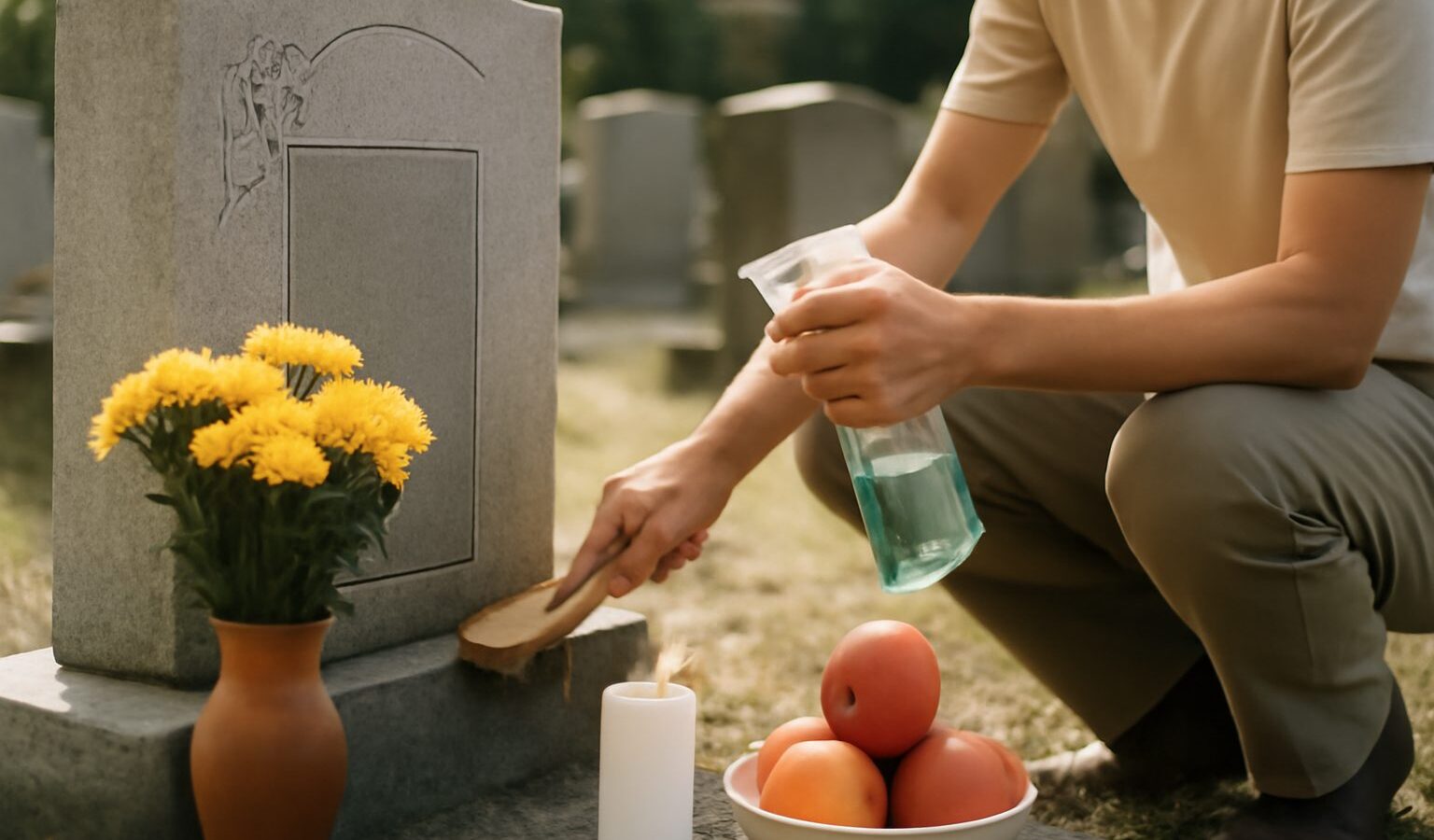
For many families, the yearly visit to clean a family grave in Singapore is the heart of Qing Ming, the season of tomb sweeping that falls in early April. It is a quiet act of respect, but it is also real physical work: scrubbing stone in the heat, clearing weeds, touching up faded inscriptions and doing it all without damaging something that cannot easily be replaced.
This guide focuses on the hands-on side. It covers what to bring, how to clean different grave materials gently, simple upkeep between visits, and how to keep everyone safe and comfortable on the day. Practices vary from family to family, so treat this as a practical checklist rather than a set of rules.
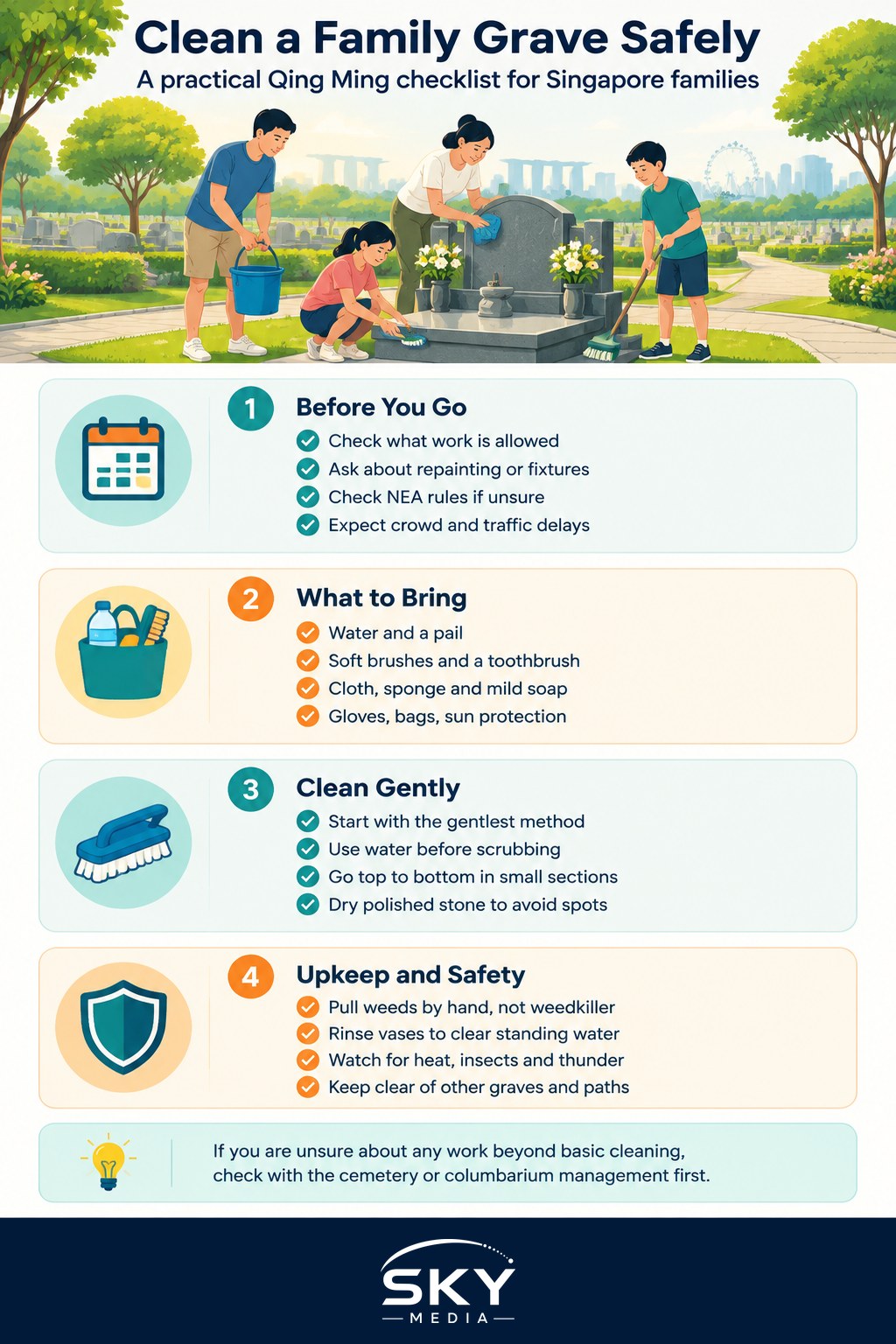
Before You Go: Check the Rules and Plan the Visit
Most graves that families still visit in Singapore are in government cemeteries managed by the National Environment Agency (NEA), with Choa Chu Kang Cemetery being the main one still in use. Some families also have ancestors in private or clan cemeteries, or in columbarium niches at temples and government columbaria.
Before you start any work beyond basic cleaning, check what the cemetery or columbarium management allows. This matters most for:
- Repainting or re-engraving inscriptions, which may need permission or an approved contractor.
- Adding fixtures such as new vases, tiles or decorative items.
- Burning offerings, which is usually limited to designated burners or areas.
- Burial period rules, since graves in government cemeteries are held for a fixed period before exhumation. Check the current policy with NEA if you are unsure how long your family’s plot will remain.
Qing Ming weekends are very crowded. Expect heavy traffic near cemeteries, packed car parks and longer walks from where you can park. Many families go on a weekday morning or spread visits across the weeks around the festival date. Check NEA or the operator’s website for any special traffic arrangements or shuttle services announced for the season.
What to Pack for a Grave Cleaning Visit
A little preparation saves a lot of frustration once you are standing in the sun. A typical cleaning kit includes:
- Water, in large containers if the site has limited taps, plus a pail.
- Soft brushes such as a nylon scrubbing brush and an old toothbrush for engraved characters.
- Sponges and microfibre cloths for wiping and drying.
- A mild, pH-neutral cleaner or a few drops of gentle dish soap.
- Gardening gloves, a hand trowel and a small rake for weeds and debris.
- Rubbish bags to take away weeds, old flowers and packaging.
- Touch-up paint and fine brushes, only if your family normally refreshes inscriptions and the rules allow it.
- Sun protection and drinks: hats, umbrellas, sunscreen, plenty of water for everyone, and insect repellent.
Wear covered shoes with good grip. Grave surfaces and paths can be uneven and slippery once wet.
How to Clean Different Grave Materials Safely
The golden rule is to start with the gentlest method and only step up if needed. Harsh chemicals and abrasive tools can etch stone, fade photos and loosen lettering in a single visit.
| Material or feature | Safe cleaning method | What to avoid |
|---|---|---|
| Polished granite headstone | Rinse, wash with water and mild soap using a soft brush, rinse again, dry with a cloth | Wire brushes, scouring powder, bleach |
| Marble or softer stone | Water and a soft brush, very little soap, rinse well | Vinegar, lemon, acid-based cleaners, which can etch the surface |
| Glazed tiles and cement surrounds | Soapy water and a stiff nylon brush, rinse thoroughly | Pressure washers at close range, which can crack old grout |
| Ceramic or enamel portrait | Damp microfibre cloth, gentle wipe only | Scrubbing, solvents, any abrasive pad |
| Engraved and painted characters | Toothbrush with plain water, light strokes along the grooves | Scraping out old paint unless you plan to repaint properly |
A simple cleaning sequence
- Clear debris first. Remove fallen leaves, old flowers, joss stick stubs and litter so you can see the surface.
- Wet the stone. Pouring water over the surface before scrubbing softens dirt and stops the brush from scratching.
- Scrub from top to bottom with a soft brush and mild soapy water, working in small sections.
- Use a toothbrush on the inscriptions, following the direction of each stroke.
- Rinse thoroughly so no soap residue is left to attract dirt or leave streaks.
- Wipe dry with a clean cloth, especially on polished granite, to avoid water spots.
For black or green patches of algae and moss, repeated gentle scrubbing over several visits is safer than strong chemicals. If staining is severe or the stone is cracked, ask the cemetery management about qualified stone maintenance contractors rather than attempting repairs yourself.
Weeding, Touch-Ups and Simple Upkeep
Singapore’s heat and rain mean grass and weeds grow back quickly around a plot. Pull weeds by hand or with a trowel, getting the roots where you can. Avoid spraying weedkiller, as it can stain stone, harm neighbouring plots and may not be permitted.
If your family refreshes the painted characters, common practice is to use red or gold paint on the engraved text. Clean and dry the grooves completely first, then use a fine brush and steady, thin strokes. Wipe any paint that strays onto the polished surface immediately with a damp cloth before it dries. Check the rules before you begin, since some sites restrict this kind of work.
Other upkeep tasks worth doing on each visit:
- Check for cracks, loose tiles or sinking edges, and note them for the management office.
- Empty and rinse vases so stagnant water does not breed mosquitoes. This is an important point in Singapore, where NEA regularly reminds the public to remove standing water.
- Take a photo of the grave each year so you can spot gradual changes.
Caring for a columbarium niche
If your loved one rests in a columbarium, upkeep is lighter but still needs care. Wipe the plaque and photo gently with a soft damp cloth, avoid spraying liquids that could seep behind the plaque, and follow the venue’s rules on flowers, food offerings and incense. Many columbaria have specific areas for offerings and burning.
Staying Safe and Respectful on the Day
Qing Ming visits often involve older relatives and young children, so plan around the heat. Go early in the morning, take breaks in the shade, and make sure elders sit down and drink water regularly. Watch for signs of heat exhaustion such as dizziness, nausea or heavy sweating, and stop work if anyone feels unwell.
Other safety points:
- Fire: burn joss paper and offerings only in designated burners or permitted spots, keep children back, and never leave anything smouldering.
- Insects: cemeteries can have ants, wasps and mosquitoes, so check before putting hands into dense grass.
- Weather: afternoon thunderstorms are common. Leave open ground if you hear thunder.
- Footing: wet stone and slopes are slippery, so carry heavy pails between two people.
Respect also extends to neighbouring graves. Avoid stepping on other plots, keep noise down, take all your rubbish home and leave shared taps and paths clean for the next family.
Making Grave Upkeep a Shared Family Tradition
Cleaning a family grave together is one of the few times relatives of every generation work side by side. Sharing out the jobs helps: younger family members can carry water and do the scrubbing, while older relatives explain who the ancestor was and how the family has honoured them over the years.
Some families keep a simple shared note listing the plot location, what was cleaned or repaired, and supplies to bring next time. That small record makes it easier to hand the responsibility to the next generation, and it keeps the tradition going even when the people who usually organise it are no longer able to.
With gentle methods, a bit of planning and attention to safety, the yearly visit can leave the grave well cared for and the family a little closer.
Explore more: The Qing Ming Festival, Columbarium and Ancestor Worship Options in Singapore and Funeral Customs by Community.
Further reading: Visiting Family Graves on Hari Raya: Ziarah Kubur Etiquette in Singapore