
A baby blocked nose is one of the most common worries for new parents. Young babies mostly breathe through their noses, especially while feeding, so even a little mucus can make them snuffly, fussy at the breast or bottle and restless at night. The good news is that most stuffiness is caused by mild colds, dry air or simply tiny nasal passages, and it can usually be eased gently at home. This guide focuses on the practical steps: saline drops, nasal aspirators, safe sleep and the red flags that mean you should see a doctor.
This is general information, not medical advice. If you are unsure, speak to your paediatrician, GP or polyclinic. HealthHub, run by Singapore’s health authorities, also has reliable child health information.
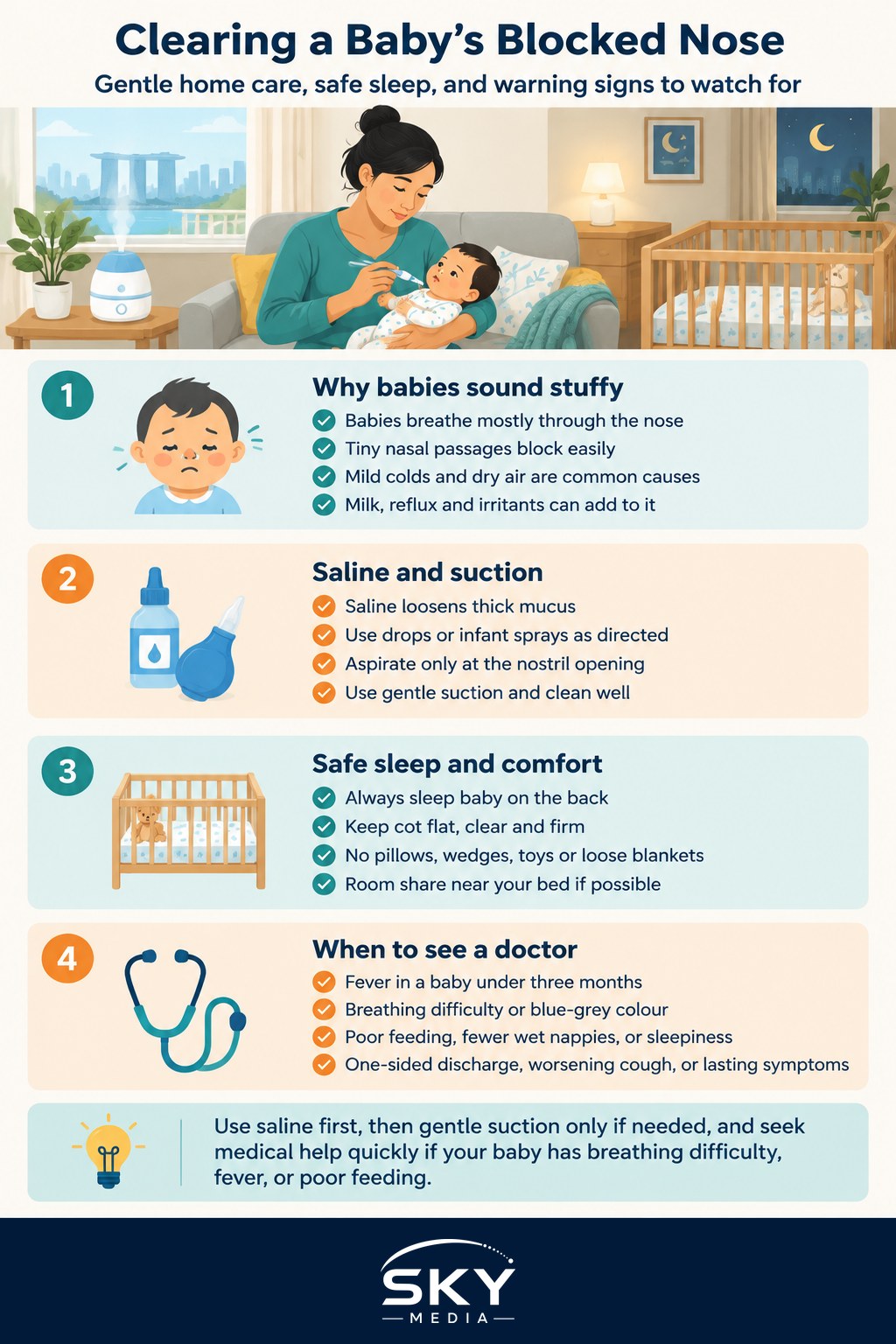
Why Babies Get So Stuffy
Newborns and young infants have very narrow nasal passages. A small amount of mucus, milk that comes back up through the nose, or dry air from air conditioning can make them sound congested even when they are otherwise well. Common causes include:
- Viral colds, which are frequent once babies start meeting more people or go to infant care.
- Air conditioning, which dries the air and can thicken mucus overnight.
- Reflux, where milk travels up the back of the throat and irritates the nose.
- Irritants such as cigarette smoke, haze, strong fragrances or dust.
A newborn who sounds snuffly but is feeding well, breathing comfortably and growing normally often needs nothing more than gentle care and time.
Using Saline Drops or Spray
Saline is simply salt water. It loosens thick mucus so your baby can sneeze it out or you can remove it more easily. Pharmacies in Singapore sell saline drops and gentle sprays made for infants. Ask the pharmacist to recommend one suitable for your baby’s age and how often to use it.
How to use saline drops:
- Wash your hands.
- Lay your baby on their back, or hold them in a slightly reclined position with their head supported.
- Put the recommended number of drops into one nostril, following the product instructions.
- Wait a short moment for the mucus to soften. Your baby may sneeze, which is helpful.
- Gently wipe away anything that comes out, or use an aspirator if needed.
- Repeat on the other side.
Tips:
- Saline works well about 15 to 20 minutes before a feed or before sleep, when a clear nose matters most.
- Keep the dropper clean and avoid sharing bottles between children.
- Do not use homemade salt solutions, since the concentration and cleanliness can be wrong.
- Do not use adult nasal sprays, decongestants or cold medicines on babies unless a doctor specifically advises it. Many over-the-counter cold products are not suitable for young children.
Choosing and Using a Nasal Aspirator
A nasal aspirator gently sucks mucus out of the nostril. There are a few main types, and each has pros and cons.
| Aspirator type | How it works | Pros | Things to watch |
|---|---|---|---|
| Bulb syringe | Squeeze the bulb, place the tip at the nostril, release to draw mucus | Cheap, simple, often given in hospital | Hard to see inside and clean thoroughly |
| Manual tube (mouth suction) | Parent sucks through a tube with a filter that stops mucus reaching you | Good control over suction strength | Filters must be replaced as directed |
| Battery or electric | Motor creates suction at the push of a button | Easy one-handed use | Costs more, can be noisy, follow settings carefully |
| Nasal wipes and soft cotton | Wipe visible mucus at the nostril opening | Very gentle | Only for the outside of the nose, never insert cotton buds |
How to use an aspirator safely:
- Use saline first so the mucus is looser.
- Place the tip at the opening of the nostril only. Never push it deep inside.
- Use gentle suction. Strong or repeated suction can irritate the lining of the nose and make swelling worse.
- Limit use to when your baby genuinely seems blocked, such as before feeds and sleep, rather than many times an hour.
- Clean the aspirator after every use according to the manufacturer’s instructions, and let it dry fully.
If your baby fights the aspirator, try again later or ask a second adult to help hold them calmly. It is fine to skip it when the mucus is not bothering them.
Safe Sleep When Your Baby Is Congested
Parents are often tempted to prop a stuffy baby up so they breathe better. However, safe sleep guidance is clear and applies even when your baby has a cold:
- Always put your baby to sleep on their back, on a firm, flat mattress.
- Do not use pillows, wedges, rolled towels or inclined sleepers to raise the head. These increase the risk of suffocation and sudden unexpected infant death.
- Keep the cot clear of loose blankets, bumpers and soft toys.
- Avoid letting a congested baby sleep in a car seat, bouncer or swing outside of travel.
- Room sharing, with the baby in their own cot near your bed, makes it easier to check on them at night.
You can make the room more comfortable by keeping air conditioning at a moderate temperature rather than very cold, and by not pointing fans or vents directly at the cot. Some parents use a cool-mist humidifier; if you do, keep it out of reach, clean it frequently as instructed, and do not add oils. If you swaddle, make sure it follows the guidance in our piece on how to swaddle your baby safely.
Other Ways to Ease Stuffiness
- Offer feeds little and often. A blocked nose makes feeding tiring, so shorter, more frequent feeds help. Keep an eye on wet nappies as a sign your baby is getting enough.
- Sit in a steamy bathroom. Running a warm shower and sitting with your baby in the bathroom (never in the hot water) for a few minutes can loosen mucus.
- Hold your baby upright when awake. Cuddling upright after feeds can help with reflux related snuffles.
- Keep the air clean. Keep smoke away from your baby completely, and close windows on haze days.
- Wash hands often, especially before handling your baby, to limit the spread of colds at home.
Do not apply vapour rubs, menthol or essential oils to babies unless a doctor has said they are suitable, as some can irritate breathing in young children.
Red Flags: When to See a Doctor Urgently
Most blocked noses clear within a week or so. Seek medical help promptly if you notice any of the following:
- A baby under three months with a fever. Any fever at this age needs to be checked by a doctor the same day.
- Breathing difficulties, such as very fast breathing, flaring nostrils, grunting, or the skin pulling in between or under the ribs.
- Bluish or grey colour around the lips or face. Call 995 for an ambulance.
- Poor feeding, refusing several feeds, or noticeably fewer wet nappies.
- Unusual sleepiness, floppiness or being hard to wake.
- Ear pulling with fever, a cough that keeps getting worse, or symptoms lasting longer than about ten days.
- Thick discharge from one nostril only, especially if smelly, which can occasionally mean something is stuck in the nose.
- Sticky, red eyes with fever. Gooey eyes without other symptoms may be something else, covered in our guide to blocked tear ducts and sticky eyes in newborns.
Trust your instincts. If your baby simply seems unwell to you, it is always reasonable to see your GP, polyclinic or a paediatrician, or to go to a children’s emergency department.
Quick Recap for Tired Parents
- Snuffles are common in young babies and usually harmless.
- Use infant saline drops first, then gentle suction only if needed.
- Keep your baby on their back on a flat, clear surface for every sleep.
- Avoid adult medicines, decongestants and oils unless a doctor advises them.
- Watch for breathing difficulty, fever in young babies and poor feeding, and act quickly if you see them.
Frequently Asked Questions
How long does a baby’s blocked nose usually last? Most blocked noses clear within a week or so. If symptoms last longer than about ten days, or a cough keeps getting worse, see a GP, polyclinic or paediatrician to rule out something else.
Is it normal for my newborn to sound snuffly but breathe fine? Yes, it is common. Newborns have very narrow nasal passages, so a little mucus, milk coming back up or dry air can make them sound congested. If they feed well, breathe comfortably and grow normally, gentle care and time are usually enough.
Can I use homemade salt water or a vapour rub on my baby? Avoid both. Homemade solutions can have the wrong concentration or be unclean, so use infant saline made for babies. Vapour rubs, menthol and essential oils can irritate breathing in young children unless a doctor says they are suitable.
Is the air conditioner making my baby’s stuffy nose worse? It can. Air conditioning dries the air and may thicken mucus overnight. Keep the temperature moderate rather than very cold and do not point fans or vents straight at the cot. A cool-mist humidifier is an option if kept clean and out of reach.
When is a baby’s cold an emergency? Get urgent help for fast or laboured breathing, grunting, flaring nostrils, bluish or grey lips, or unusual floppiness. Call 995 for bluish or grey colour, and see a doctor the same day for any fever in a baby under three months.
Official sources: HealthHub
Further reading: How to Cut Your Baby’s Nails Safely · Birthmarks and Haemangiomas in Babies: Which Ones Need Treatment