
Buying a finished painting is simple: you see it, you like it, you pay. A commission is different. You are paying for something that does not exist yet, so the result depends on how well you choose the artist, explain what you want and agree the terms before any paint touches the canvas. If you are planning a commission portrait in Singapore, whether of a parent, a couple, a child, a pet or a family home, this guide walks you through the buyer’s side of the process, step by step.
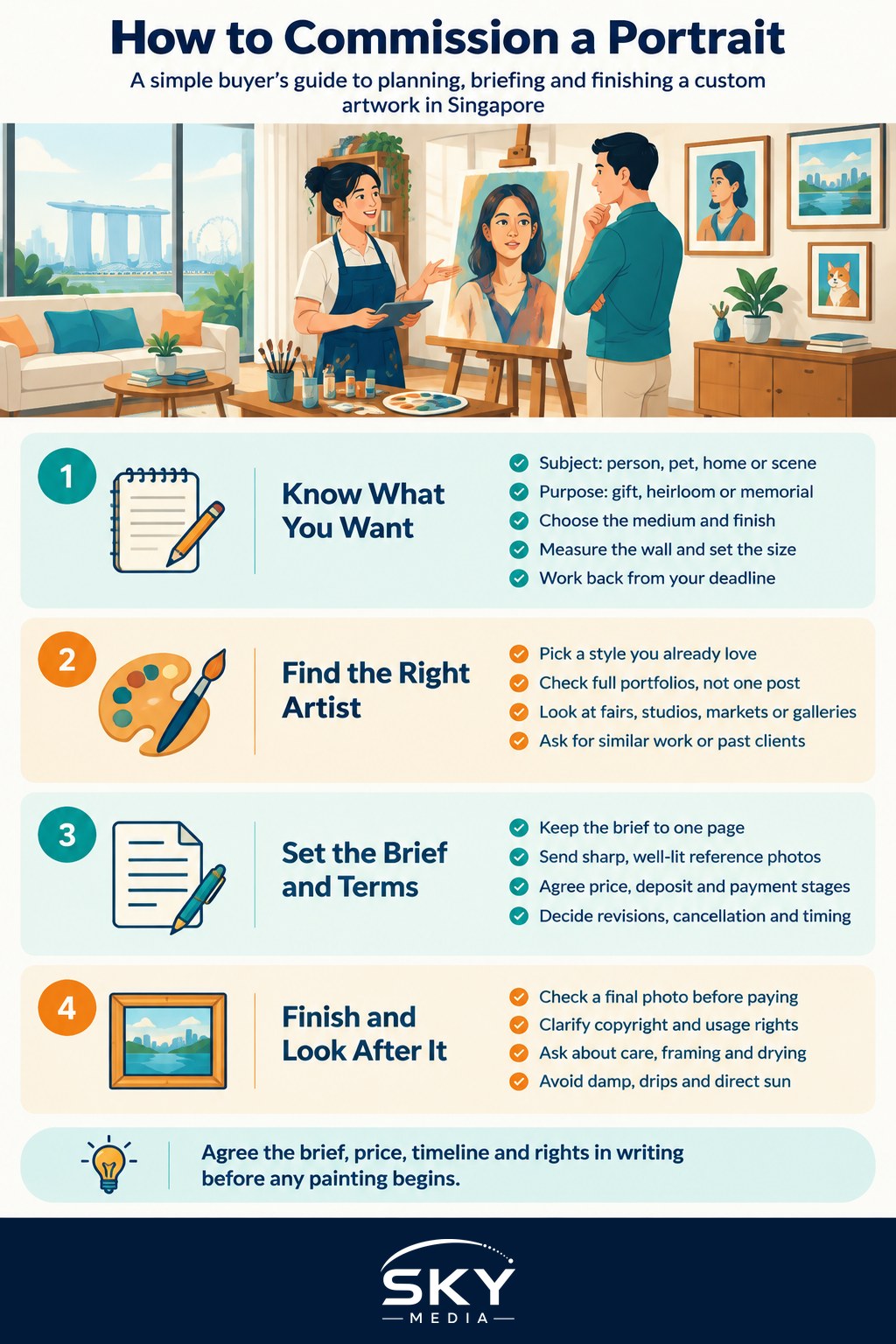
Start With What You Actually Want
Before you contact anyone, spend ten minutes answering a few questions for yourself. The clearer you are, the easier it is to find the right person and the fewer surprises later.
- Subject: one person, a group, a pet, a building, a scene from a memory?
- Purpose: a gift, a memorial, a wedding or anniversary piece, a family heirloom, a piece for an office?
- Medium: oil, acrylic, watercolour, gouache, charcoal, pencil, or digital art printed later.
- Size and placement: measure the wall. A portrait that looks generous on a phone screen can feel small above a sofa.
- Deadline: if it is for a birthday, Chinese New Year or a wedding, work backwards and leave a buffer. Good artists often have a queue.
- Budget range: have a rough figure in mind, but expect prices to depend on size, medium, number of subjects and the artist’s experience.
If you are unsure about medium, our beginner guide to oil painting explains its look and feel, which makes it easier to describe what you want.
How to Find the Right Artist
The most important decision is choosing an artist whose existing style you already love. A commission is not the time to ask a loose, expressive painter to produce photorealism, or the other way round.
Places people in Singapore commonly look include:
- Instagram and online portfolios: search hashtags for portrait, pet portrait or the medium you want, then look at the artist’s full grid, not just the best post.
- Art fairs, open studios and markets: you can see work in person and talk to artists directly.
- Art school graduate shows: graduating students and recent alumni sometimes take commissions, often with fresh energy and flexible approaches.
- Galleries: some galleries represent painters who accept commissions and can act as the go-between.
When you shortlist someone, check that their portfolio includes the kind of subject you want. Painting a lifelike dog is a different skill from painting a group of five people. Ask whether they have done similar commissions before and whether you can see examples or speak to past clients.
Comparing the Main Commission Routes
Different routes suit different budgets and expectations. Here is how they generally compare.
| Route | What to expect | Best for |
|---|---|---|
| Established independent painter | Strong, consistent style, longer waiting list, formal terms | Heirloom portraits and larger works |
| Gallery-represented artist | Gallery handles contract and payment, adds its own margin | Buyers who want a middleman and paperwork |
| Emerging artist or recent graduate | More flexible on scope, style still developing | Smaller pieces, gifts, trying commissioning for the first time |
| Online or overseas portrait service | Fast, often digital or printed, little direct contact | Quick gifts where originality matters less |
Whatever route you choose, be wary of anyone who cannot show consistent past work or who pressures you to pay in full immediately.
Writing a Clear Brief
A brief is a short written summary of what you are asking for. It protects both of you, because it turns a vague conversation into something you can refer back to. A good brief usually covers:
- Subject and composition: who or what is in the picture, how many figures, head and shoulders or full length, plain or detailed background.
- Reference photos: send several sharp, well-lit photos, ideally taken in natural light at eye level. Blurry phone snaps from a dim restaurant make the artist’s job much harder. If you are taking new photos, our tips on taking better portraits on your phone and how to pose people for portraits are useful here.
- Combining photos: if you want relatives who were never photographed together, say so clearly. Composites take more work and may cost more.
- Mood and colour: formal or relaxed, warm or cool, a background colour that suits your room.
- Must-haves and must-avoids: a favourite piece of jewellery, glasses on or off, a hairstyle from a particular year.
- Size, medium and finish: canvas or paper, framed or unframed, varnished or not.
- Deadline and delivery: collection or delivery, and whether you need it ready to hang.
Keep the brief to a page. Then leave room for the artist’s judgement. You chose them for their eye, so micromanaging every brushstroke usually produces a weaker painting.
Deposits, Payments and Revisions
Most artists ask for a deposit before starting. This is normal: it secures your slot and covers materials and early work. The exact amount and structure vary, so agree them in writing. Common arrangements include a deposit upfront with the balance due on completion, or staged payments for larger pieces.
Before paying anything, make sure you both agree on:
- Total price and what it includes, such as framing, delivery and any shipping.
- Payment schedule and accepted methods. Keep receipts and records of PayNow or bank transfers.
- Approval stages: many artists share a rough sketch or composition first for your approval, then progress photos.
- Revisions: how many rounds of changes are included, and at which stages. Changes to composition are easy at sketch stage and difficult once the painting is well advanced.
- Cancellation: what happens to the deposit if you cancel, or if the artist cannot complete the work.
- Timeline: an estimated completion date, with the understanding that oil paintings in particular need drying time, which humidity can affect.
A simple written agreement, even a clear email thread or messaging chat that both of you confirm, is far better than nothing. For larger or high-value commissions, a proper contract is worth considering.
Understanding Rights and Usage
Many buyers are surprised to learn that buying a painting does not automatically mean owning every right to it. In general, the artist keeps the copyright in the artwork unless you agree otherwise in writing, while you own the physical painting. This is general information, not legal advice; for anything important, check the Intellectual Property Office of Singapore (IPOS) website or speak to a lawyer.
Points worth agreeing upfront:
- Can the artist post the work? Most artists want to share commissions on social media or in their portfolio. If it is a private family portrait and you would rather it stayed private, say so before work begins.
- Can you make prints or use it online? If you want to print copies for relatives, put the image on a memorial card or use it on a business website, ask for permission in writing.
- Reference photos: if you send professional photographs, make sure you have the right to use them as reference. A photographer may hold copyright in a studio portrait.
Collection, Care and Final Checks
When the painting is finished, ask for a clear photo before final payment if you cannot inspect it in person. On collection, check the surface, edges and frame. Ask the artist how to care for it: oil paintings may need time before varnishing, and works on paper should be framed behind glass and kept away from direct sun.
In Singapore’s heat and humidity, avoid hanging artwork in bathrooms, above aircon units that drip or on walls that get afternoon sun. Good airflow helps prevent mould on the back of canvases.
Finally, if you enjoyed the experience, tell the artist. Reviews and referrals matter a great deal to independent painters.
Explore more: if the process makes you want to try painting faces yourself, start with portrait and figure drawing basics.