
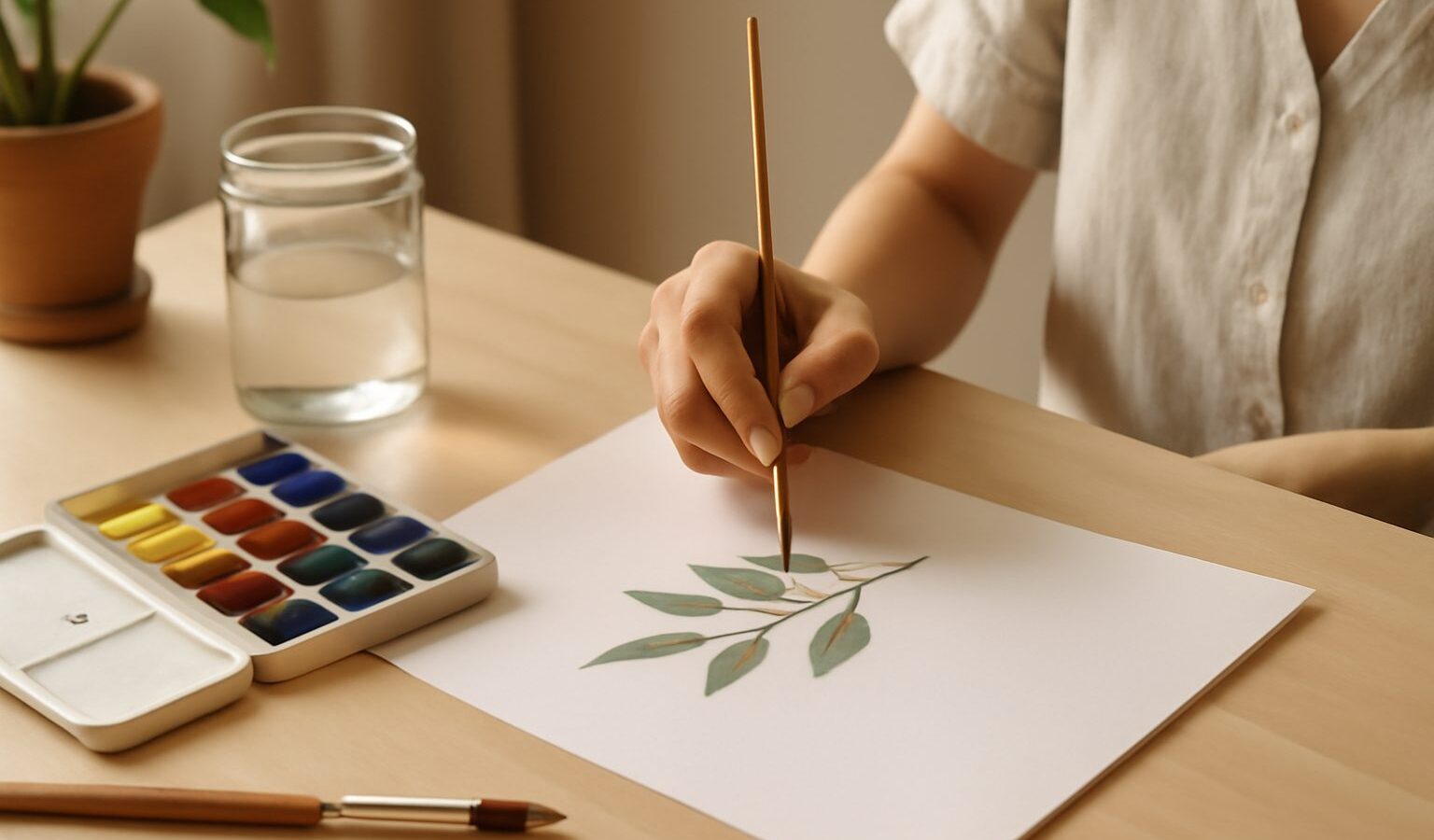
If you have ever admired a soft wash of colour on paper and thought “I could never do that”, this guide is for you. Watercolour painting is one of the friendliest ways into art: the kit is small, the mess is manageable, and you can make something you like on your very first afternoon. In Singapore, where flat living means space is precious, a compact set of paints and a pad of paper is far easier to keep than an easel and tubes of oils. This is a warm, no-pressure introduction for total beginners who simply want to start.
The truth that trips up newcomers is that watercolour rewards a light touch and a bit of letting go. The water does much of the work for you, blending and drifting in ways you cannot fully control. Once you stop fighting that and start playing with it, the medium becomes a real joy. Let us walk through what to buy, how to make your first marks, and where to keep learning nearby.
Why Watercolour Suits Beginners in Singapore
Watercolour has a low barrier to entry, which is exactly what you want when you are testing whether a hobby will stick. A starter set, a couple of brushes, a pad of paper and a jar of water are enough to begin, and all of it fits in a drawer. There are no fumes, no solvents and very little to clean up, so it works well on a kitchen table or a small balcony.
The humid local climate is worth a mention. Paint dries a little more slowly here than in drier places, which is actually forgiving for beginners because you have more time to blend before an edge sets. If you paint in an air-conditioned room, things dry faster, so keep that in mind when you plan a wash. Storing paper flat in a folder or a zip bag helps it stay smooth, since paper can absorb moisture and cockle in damp weather.
There is also a lovely local tradition of urban sketching, where people paint shophouses, hawker centres, void decks and greenery on the go. A small travel set and a sketchbook turn a quiet morning at a park or a heritage neighbourhood into a gentle creative outing. You do not need talent to enjoy that; you only need to show up and look closely.
The Beginner Kit: What to Actually Buy
You can spend a fortune on art supplies, but you should not, at least not yet. Buy modest, usable materials, learn what you like, and upgrade later. Here is a sensible first shopping list you can find at most art supply shops and larger bookshops in Singapore.
- Paints: a small set of pans (the solid blocks in a tin) is tidy and travel friendly. Tubes give stronger colour but need a palette. Either is fine to start.
- Brushes: one round brush in a medium size and one smaller round for detail will cover most needs. A synthetic brush is affordable and perfectly good.
- Paper: this matters more than anything. Use paper labelled for watercolour, ideally around 300gsm, so it does not buckle or tear when wet. Cheap printer paper will only frustrate you.
- Extras: two jars of water (one to rinse, one clean), a rag or paper towel, a pencil, and a plastic palette or an old white plate for mixing.
Do not feel you must own dozens of colours. A warm and a cool version of red, yellow and blue, plus perhaps an earth tone, will mix into almost anything. Learning to mix greens and greys yourself teaches you more than buying them ready made.
First Techniques to Try This Week
The best way to lose the fear of the blank page is to make deliberate practice marks with no picture in mind. Give yourself a scrap sheet and try these in order. Each takes minutes and builds a real skill.
- Flat wash: load your brush and pull an even layer of colour across a small square. Aim for smooth, not perfect.
- Graded wash: start dark and keep adding water so the colour fades to nothing across the square.
- Wet on wet: dampen the paper first, then drop in colour and watch it bloom and spread on its own.
- Wet on dry: paint onto dry paper for crisp, controlled shapes and edges.
- Lifting: while a wash is damp, press a clean, thirsty brush or tissue to lift colour back out for highlights.
Two habits will improve your work quickly. First, let layers dry before painting over them, unless you want them to blend. Patience prevents muddy results. Second, keep your lightest areas by leaving the white of the paper untouched, because watercolour has no true white paint; the paper is your brightest light. Work from light to dark, not the other way round.
Wet on Wet or Wet on Dry: Which to Reach For
Beginners often ask which approach is “correct”. Neither is; they simply do different jobs, and most paintings use both. This quick comparison shows when each shines so you can choose with intention rather than by accident.
| Aspect | Wet on Wet | Wet on Dry |
|---|---|---|
| What it does | Colours flow and merge softly | Shapes stay crisp and defined |
| Best for | Skies, mist, soft backgrounds, blooms | Buildings, edges, details, lettering |
| Control level | Low, the water leads | High, the brush leads |
| Drying speed needed | Work fast before it sets | Wait for each layer to dry |
| Beginner feel | Playful and a little unpredictable | Reassuring and precise |
A friendly way to practise both is to paint a simple scene: a soft wet on wet sky at the top, then let it dry and add wet on dry rooftops and windows beneath. You will feel the two techniques doing their separate work in a single small painting.
Building a Habit and Learning Nearby
Skill in watercolour comes from small, frequent sessions, not rare marathon ones. A fifteen minute daily square of colour teaches your hands more than one long, frustrating Sunday. Keep your kit somewhere visible so starting is easy, and keep every attempt, even the ugly ones, so you can see your progress over the months.
When you want company or guidance, Singapore has plenty of accessible options. Community clubs run affordable introductory art classes, arts schools and neighbourhood studios offer beginner watercolour courses, and public libraries sometimes host free or low cost sessions and stock instructional books you can borrow. Urban sketching groups welcome newcomers and often meet in public, so you can simply turn up with a pad. Always check the organiser or venue directly for the current schedule and fees, since these change from term to term.
Above all, be kind to yourself. Watercolour is meant to be enjoyed, not conquered. Some paintings will surprise you and some will not work, and both outcomes are completely normal. Keep the water flowing, keep it light, and let the colour do its quiet magic.
Explore more
Ready to widen your creative circle? If drawing skills feel like a natural companion, start with our guide to learning to draw as an adult in Singapore. You might also enjoy exploring printmaking in Singapore for another hands on medium, or try digital art and illustration for beginners if you fancy painting on a screen too.
Related across Sky Media: Getting Started With Watercolour Painting · Oil Painting for Beginners: A Singapore Starter Guide