
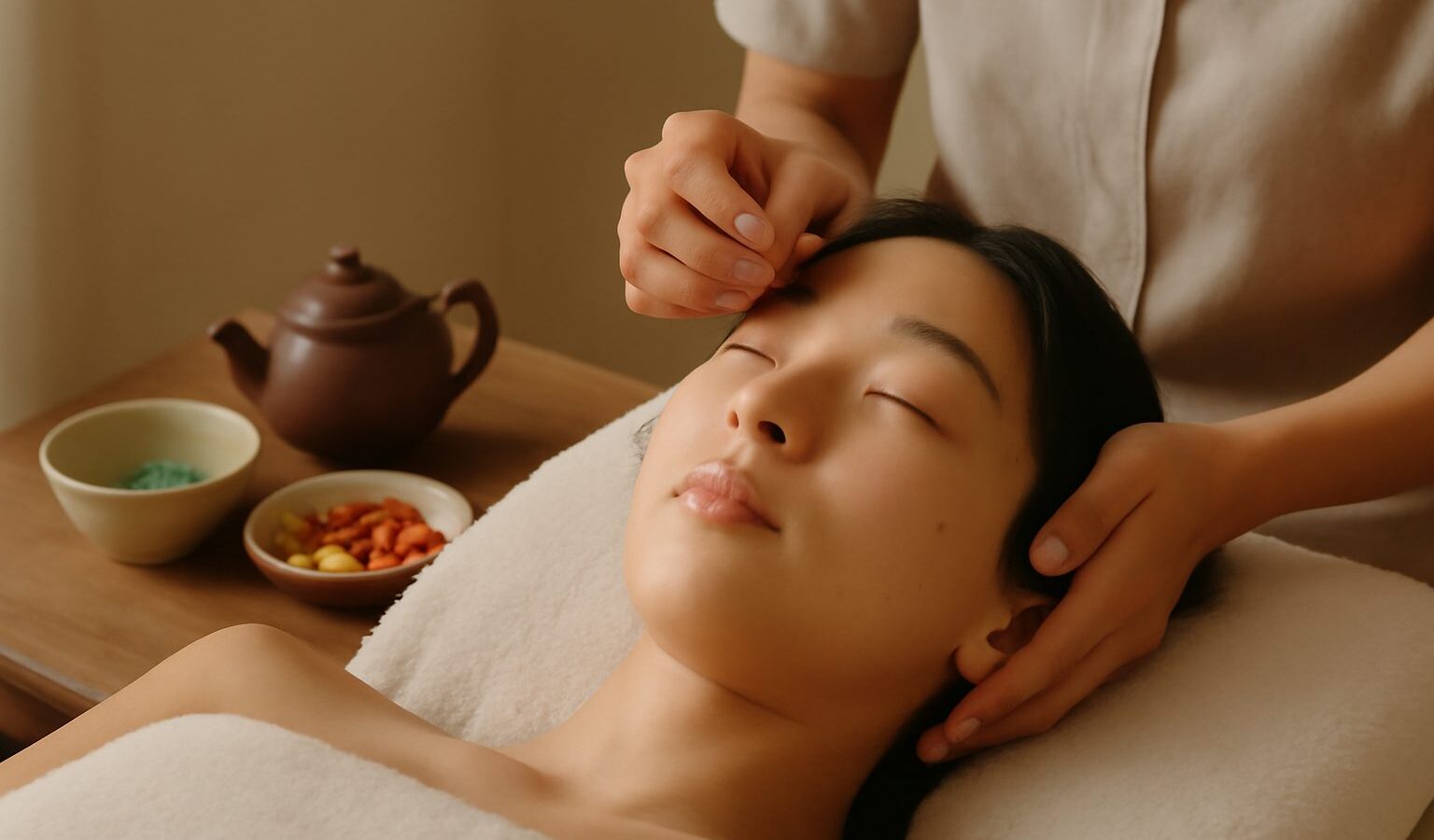
Cosmetic acupuncture in Singapore has moved from a niche offering at a few traditional clinics to something you will now see on menus at TCM centres, wellness studios and some beauty spas. It promises a different route to healthier looking skin: fine needles placed on the face and body, often paired with gua sha, facial cupping or herbal masks, rather than lasers, injectables or chemical peels.
This guide focuses on facial acupuncture for skin specifically. For the broader picture of TCM and acupuncture for pain, digestion or general health, see our guide to TCM and acupuncture in Singapore.
This article is general information, not medical advice. Speak to a doctor or a registered TCM practitioner about your own skin and health before starting any treatment.
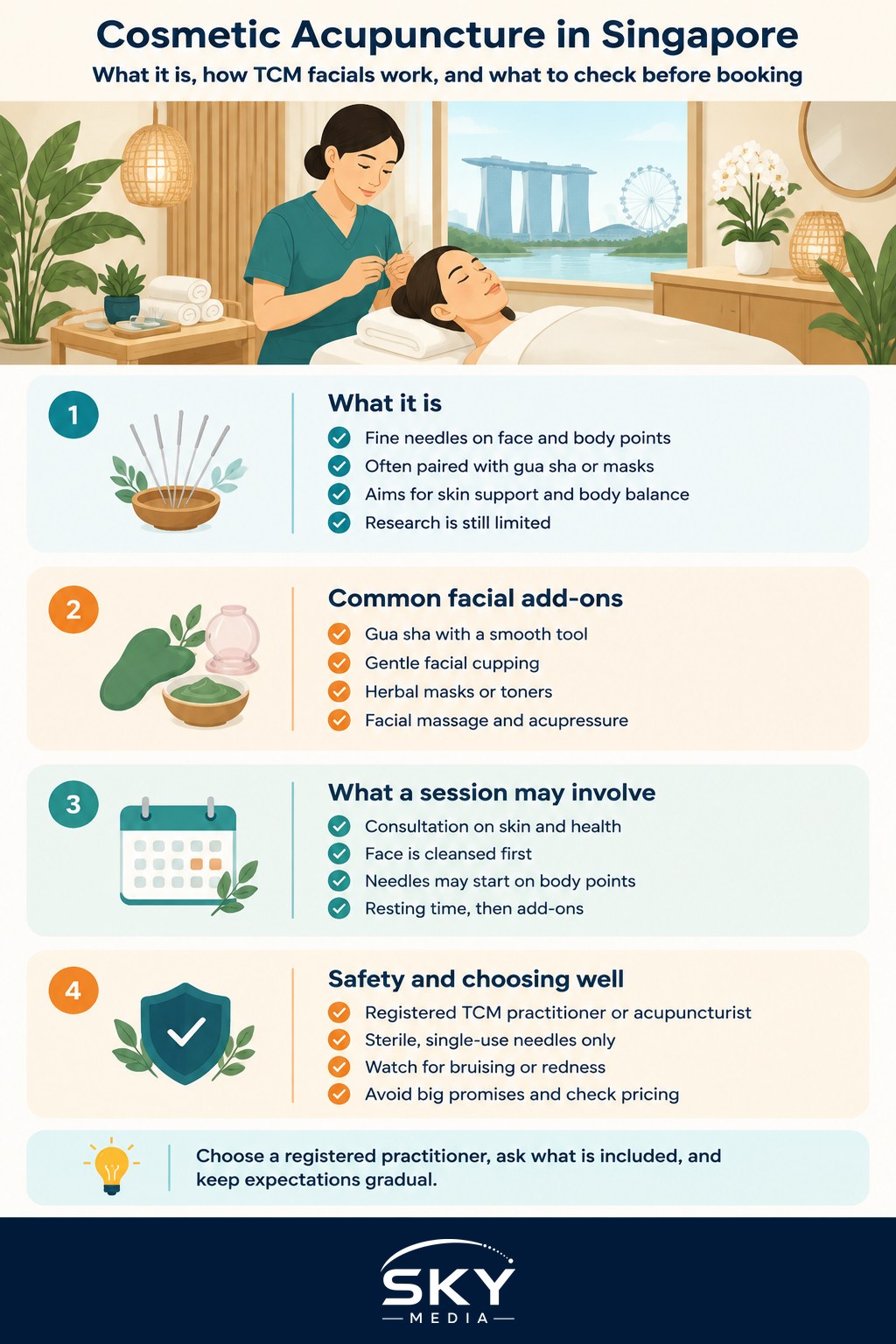
What Cosmetic Acupuncture Actually Is
Cosmetic acupuncture, also called facial acupuncture, uses very fine, sterile, single-use needles inserted shallowly into points on the face, neck and often the body. Practitioners usually describe two aims:
- Local effects on the skin. Tiny needles create small points of stimulation in the skin. Supporters say this may encourage circulation and the skin’s own repair processes, which is why it is sometimes compared loosely to microneedling, although the technique and depth are different.
- Whole body balance. In TCM thinking, the condition of the skin reflects what is happening inside the body. So a practitioner will often add needles on the hands, arms, legs or abdomen, chosen after asking about your sleep, digestion, stress and menstrual cycle.
Scientific research on cosmetic acupuncture is still limited and results vary from person to person. It is best seen as a gentle, gradual approach rather than an instant fix, and it is not a substitute for medical treatment of skin conditions.
TCM Facials: The Wider Menu
Facial acupuncture is often one part of a broader TCM facial. Common elements include:
- Gua sha. A smooth tool, often jade or stone, glides over oiled skin in strokes intended to relieve tension and puffiness. On the face it is done much more lightly than body gua sha, so it should not leave marks.
- Facial cupping. Small silicone or glass cups create gentle suction and are moved across the face. This is different from static body cupping, which can leave round marks.
- Herbal masks and toners. Some clinics use preparations based on traditional herbs. Ask what is in them if you have allergies or sensitive skin.
- Facial massage and acupressure. Pressing on points by hand, without needles, for people who are nervous about needles.
How It Compares to Other Facial Treatments
The table below gives a broad comparison. Individual results, suitability and costs vary, so discuss your goals with a qualified professional.
| Treatment | How it works | Who usually performs it | What to expect |
|---|---|---|---|
| Cosmetic acupuncture | Fine needles on face and body points | Registered TCM practitioner or acupuncturist | Gradual, subtle changes over a course of sessions |
| TCM facial without needles | Gua sha, cupping, acupressure, herbal masks | TCM clinic or trained therapist | Relaxing, may reduce puffiness temporarily |
| Standard beauty facial | Cleansing, extraction, masks, massage | Beauty therapist | Fresh, clean skin, short term glow |
| Medical aesthetic treatments | Lasers, injectables, peels, microneedling | Doctor or under medical supervision | Targeted, often faster results, with more downtime and risk |
If you are weighing up options, our guide to the best facials in Singapore looks at mainstream choices in more detail.
What Happens During a Session
Clinics differ, but a typical first visit looks something like this:
- Consultation. The practitioner asks about your skin concerns, medical history, medicines, allergies and general health. Many will also look at your tongue and take your pulse, which is standard in TCM diagnosis.
- Cleansing. Your face is cleaned so needles go into clean skin.
- Body points. Needles may first be placed on the limbs or abdomen to address what the practitioner sees as underlying imbalance.
- Facial needles. Very fine needles are placed along the forehead, around the eyes, cheeks, jaw and neck. Many people feel only a slight prick or nothing at all.
- Resting time. You lie still while the needles stay in, often for 20 to 30 minutes, though this varies.
- Add-ons. After the needles are removed, there may be gua sha, a mask or a light massage.
Practitioners usually suggest a course of sessions rather than one visit, followed by occasional maintenance. Ask how many sessions they recommend, why, and what the total cost will be before you commit to a package.
Safety, Side Effects and Who Should Be Careful
When done by a properly trained and registered practitioner using sterile single-use needles, acupuncture is generally considered low risk. Possible side effects include:
- Small bruises, especially around the delicate eye area
- Brief redness or tiny pinpoint bleeding at needle sites
- Feeling lightheaded or tired after a session
Be extra careful, and speak to your doctor first, if you:
- Are pregnant or trying to conceive, as certain points are traditionally avoided
- Take blood thinners or have a bleeding disorder
- Have active acne, eczema flare-ups, infections or open wounds on the face
- Have had recent fillers, threads or other cosmetic procedures
- Have diabetes, a heart condition, or a pacemaker or other implant
- Have a sensitive skin condition such as rosacea, where triggers vary from person to person
Always tell the practitioner about medicines, supplements and recent treatments. If anything feels wrong during a session, say so straight away.
Choosing a Practitioner in Singapore
In Singapore, TCM practitioners and acupuncturists must be registered with the TCM Practitioners Board (TCMPB), which regulates TCM practice under the Ministry of Health. A beauty therapist at a spa is not the same as a registered acupuncturist, so check before you book any treatment that involves needles.
When choosing where to go:
- Check registration. Ask for the practitioner’s full name and confirm it on the TCMPB’s public register of practitioners.
- Ask about hygiene. Needles should be sterile, single use and opened in front of you, then disposed of properly.
- Look for clear pricing. Ask what is included, whether body points are extra, and what the cancellation and package refund terms are.
- Avoid big promises. Be wary of anyone guaranteeing dramatic or permanent results, or pressuring you into a long package on your first visit.
- Consider insurance. Coverage for TCM varies between plans and rarely extends to cosmetic treatments. Check your policy wording, and see our explainer on whether TCM and acupuncture are covered by insurance.
Aftercare and Setting Realistic Expectations
After a session, keep things simple for the rest of the day:
- Avoid heavy makeup for a few hours so needle points can settle.
- Skip strenuous exercise, saunas and very hot showers on the same day.
- Drink water and rest if you feel tired.
- Use gentle skincare and sunscreen, and avoid strong actives such as exfoliating acids or retinoids for a day or so unless your practitioner says otherwise.
- Contact the clinic, or see a doctor, if bruising, swelling or redness gets worse rather than better.
Cosmetic acupuncture works best as part of a broader routine: good sleep, sun protection, a sensible skincare regime and managing stress. Some people enjoy the calm of the sessions as much as any visible change to their skin. Go in curious, ask questions, and judge it over several weeks rather than one appointment.
Further reading: Mesotherapy and PRP Facials Explained