
Cycling is one of the cheapest and healthiest ways to get around, but sharing paths and roads means you owe it to yourself to be seen and protected. Good cycling safety gear singapore riders can rely on does not need to be expensive or fussy. A helmet, decent lights and a few visibility basics cover most of what you need, whether you ride to work at dawn or head home after dark.
The goal is simple: reduce the chance of a crash, and reduce the harm if one happens. Being visible to others does most of the first job, and a helmet does much of the second.
Protect your head first
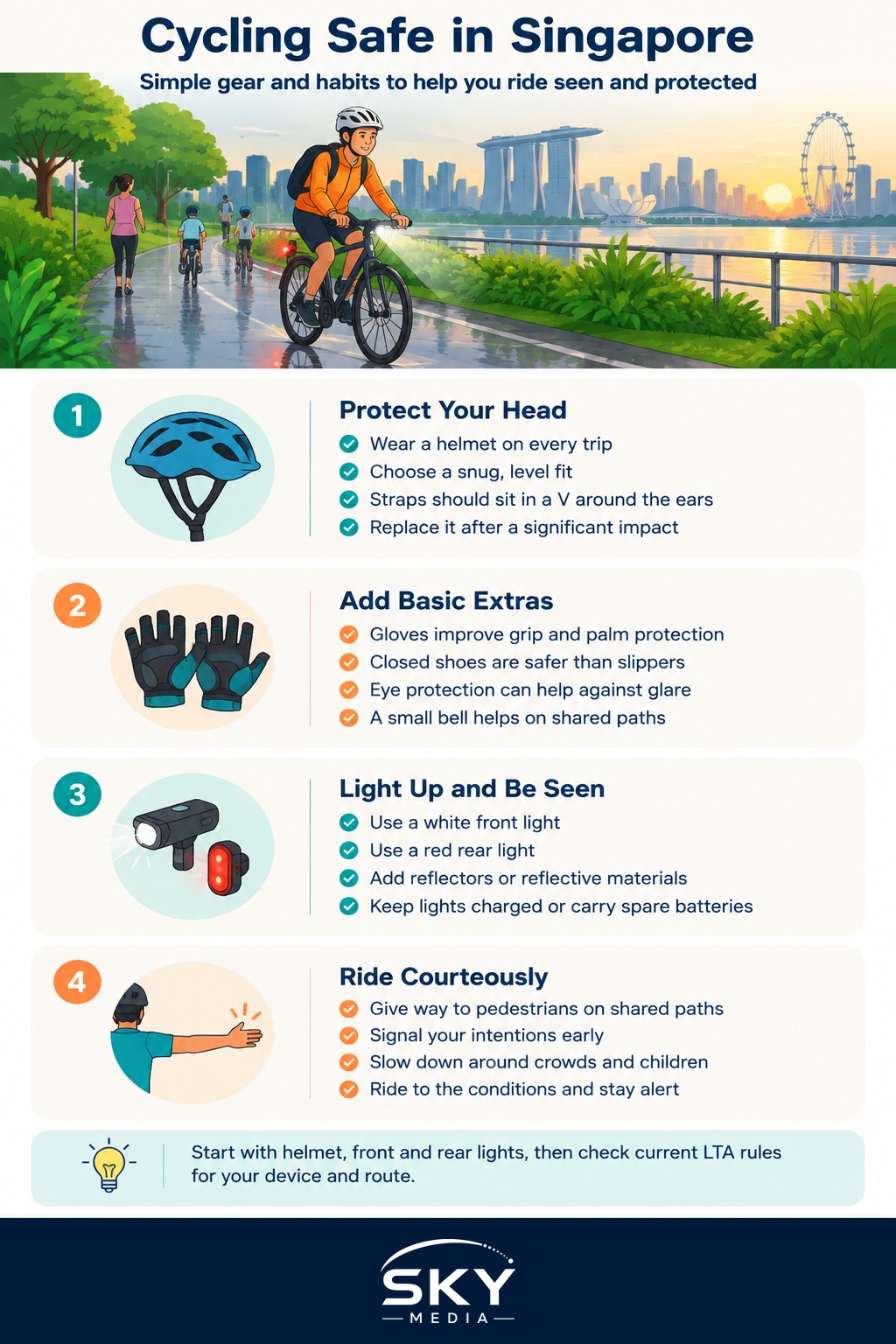
A helmet is the single most valuable piece of gear you can wear. It is strongly encouraged for every rider, on every trip, no matter how short. Under the Active Mobility Act, lights and helmet expectations can vary by device and where you ride, so treat wearing one as a personal safety habit rather than something to skip on a quick errand, and confirm current requirements with LTA.
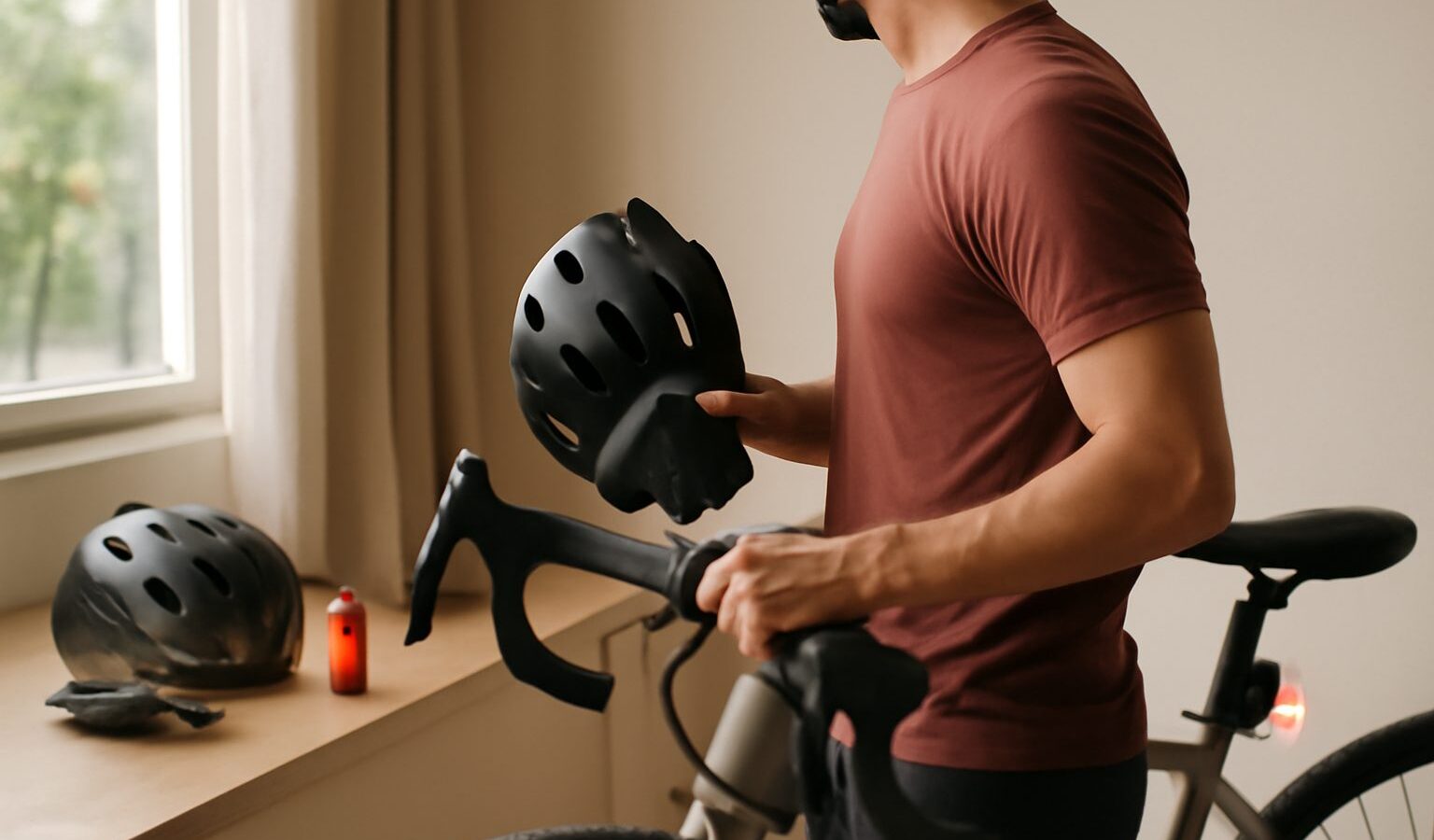
When choosing a helmet, focus on fit. It should sit level on your head, cover your forehead, and feel snug without pinching. The straps should form a comfortable V around each ear and buckle so you can fit a couple of fingers under the chin strap. A helmet that is too loose or perched too far back offers far less protection. Replace a helmet after any significant impact, even if it looks fine, because the protective foam is designed to crush once.
Beyond the helmet, gloves improve grip and protect your palms in a fall, while closed shoes keep your feet safer than slippers. If you ride hard or on rougher terrain, some riders add eye protection against glare, dust and insects. None of these extras are a substitute for the helmet, but each one shaves a little risk off a fall, and they cost little compared with the protection they offer.
A small bell is worth adding too. On busy shared paths, a friendly ring warns pedestrians you are approaching from behind, which is safer and more courteous than surprising them or swerving at the last moment.
Lights and being seen after dark
Being visible is the heart of staying safe, and it matters most in the dark and in our sudden tropical downpours. Front and rear lights are strongly encouraged, and are expected for riding at night, so fit them before you need them rather than after a close call. Confirm the current lighting rules for your device and route with LTA.
A sensible lighting setup is straightforward:
- A white front light so you can see the path and be seen by people ahead of you.
- A red rear light so traffic and other path users approaching from behind notice you early.
- Reflectors and reflective materials on the bike, your bag or your clothing, which bounce back car headlights and add cheap, battery-free visibility.
Keep your lights charged or carry spare batteries, and check them as part of your pre-ride routine. Wearing bright or light-coloured clothing during the day and reflective gear at night makes a real difference. All of this pairs well with a well-kept bike, so see our guide to basic bicycle maintenance, which includes checking that lights and brakes work.
Ride courteously and know the rules
Gear keeps you safe, but so does how you ride. Where each type of bicycle or device may be used, along with speed limits and night-lighting expectations, is set out under the Active Mobility Act and enforced by LTA. Rules can change, so check the current position with LTA rather than relying on old advice or hearsay. As a general principle, ride to the conditions, give way to pedestrians on shared paths, signal your intentions, and slow down around crowds, children and the elderly.
Choosing the right bike for your journey also feeds into safety, so our guides to choosing a commuter bicycle and cycling for transport in Singapore are worth a read alongside this one.
Small habits, big payoff
You do not need to kit yourself out like a professional to ride safely. Start with a well-fitting helmet, add a front and rear light, make yourself visible, and keep everything in working order. Ride predictably, stay alert in the rain, and follow current path and road rules and signage. These small, consistent habits are what keep everyday cycling in Singapore both enjoyable and safe, trip after trip.
Frequently Asked Questions
How do I know my helmet fits properly? It should sit level on your head, cover your forehead and feel snug without pinching. Straps should form a comfortable V around each ear, with a couple of fingers fitting under the chin strap. A loose helmet perched too far back protects far less.
Should I replace a helmet after a minor fall? Yes, replace it after any significant impact, even if it looks fine, because the protective foam is designed to crush once. A damaged helmet may not protect you the second time.
What lights do I need for riding at night? A white front light and a red rear light are the sensible setup, with reflectors on the bike, bag or clothing as cheap extra visibility. Check current lighting requirements for your device with LTA, and keep batteries charged.
Do I need a bell on shared paths? A small bell is worth adding. A friendly ring warns pedestrians that you are approaching from behind, which is safer and more courteous than surprising them or swerving at the last moment.
What should I wear when cycling in the rain? Choose bright or reflective clothing so drivers see you, and closed shoes rather than slippers for a safer grip. Visibility drops in downpours, so check your lights and ride to the conditions, giving yourself extra braking distance.
Official sources: Land Transport Authority (LTA)
Further reading: Cycling With a Toddler: Child Bike Seats and Trailers in Singapore