
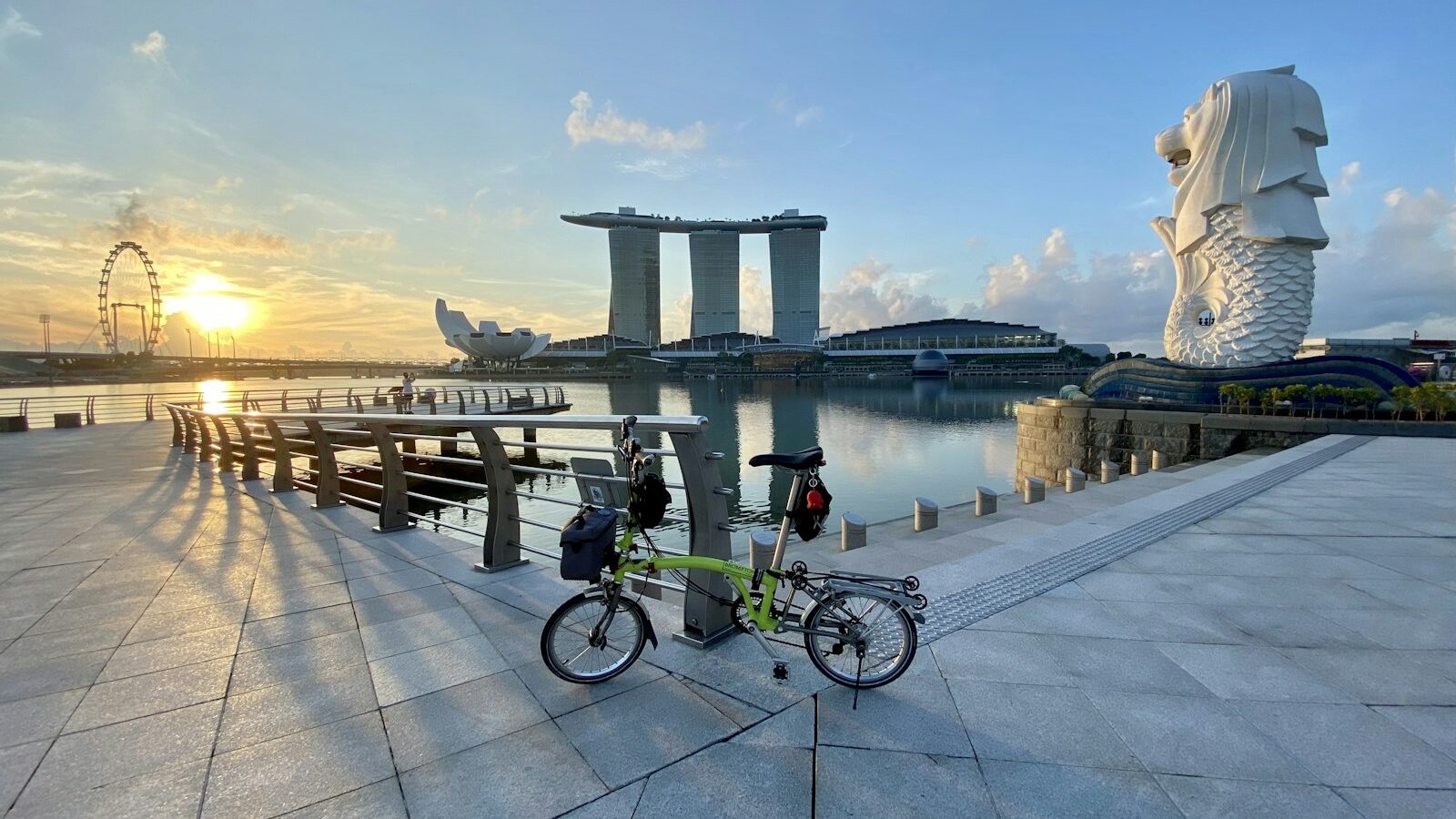
Cycling to work in Singapore is more realistic than many people assume. Towns are compact, the park connector and cycling path networks keep growing, and more offices now offer showers and secure bike parking. The real obstacles are usually practical: which route to take, where to clean up, where to leave the bike and how to arrive without looking like you ran a marathon. This guide covers those everyday details so you can decide whether bike commuting fits your routine.
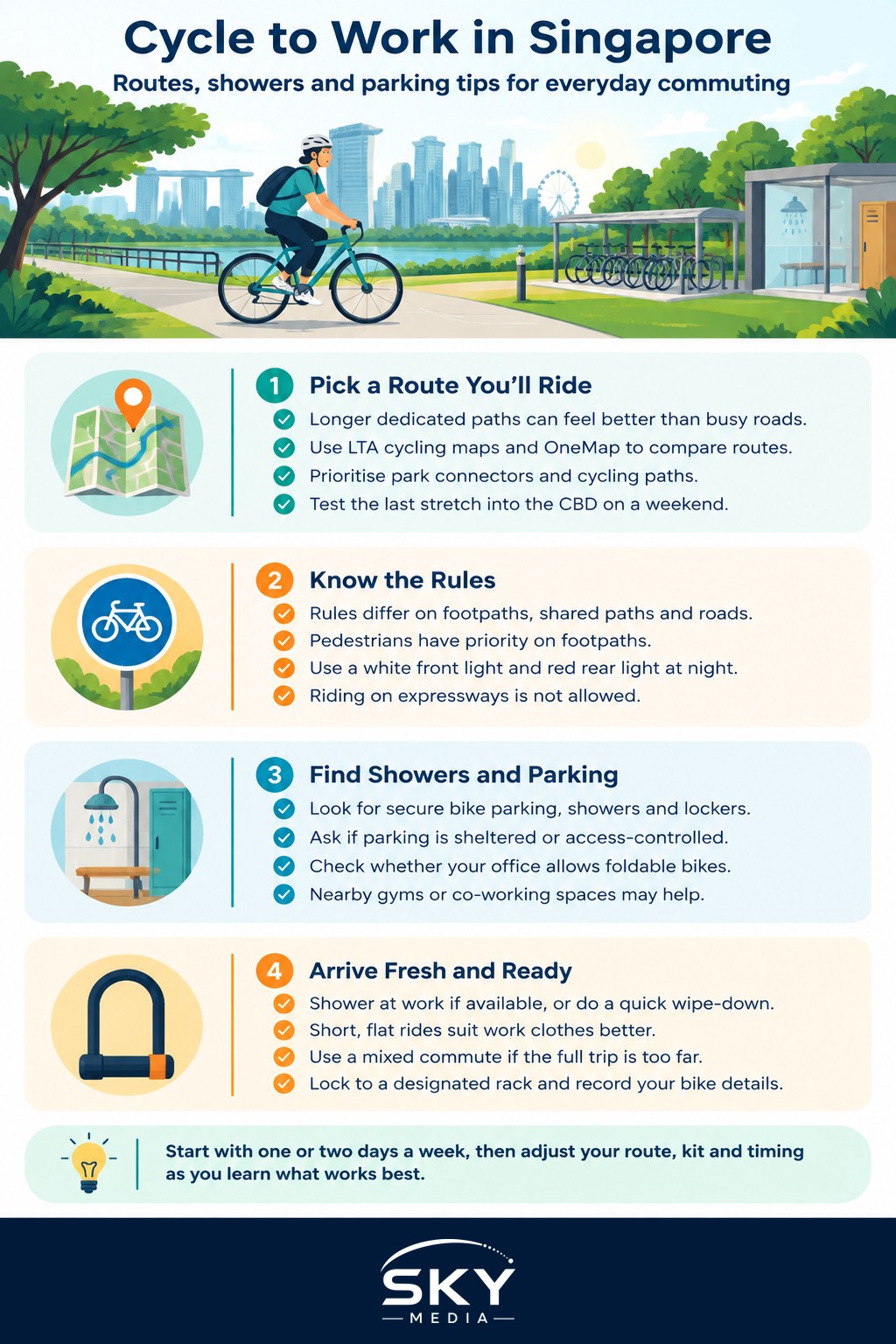
Plan a Route You Will Actually Ride
The best commuting route is not always the shortest. A slightly longer ride on a dedicated path often beats a direct route along a busy road, both for safety and for how you feel when you arrive.
Start by mapping options:
- Use official mapping tools. LTA’s cycling path information and OneMap (the Singapore Land Authority’s map service) show cycling paths, park connectors and shared paths. General navigation apps with a cycling mode are useful for comparing timings.
- Prioritise park connectors and cycling paths. NParks’ park connector network links many towns and is pleasant in the early morning. Our guide to the best cycling routes in Singapore highlights sections that double as commuting corridors.
- Check the last stretch. Many routes are smooth until the final kilometre into the business district, where paths are narrower and crossings are busier. Look closely at that segment.
- Do a weekend trial run. Ride the route at a relaxed pace when traffic is light, noting crossings, slopes and places to stop.
If the full distance is too far, consider a mixed commute. You can ride to an MRT station and continue by train with a foldable bike, or use shared bikes for part of the trip. Our guide to folding bikes for commuting explains how this works on public transport, and bike-sharing apps in Singapore covers the shared option.
Know the Rules of the Road and Path
Cyclists in Singapore share space with pedestrians, PMD users and motor vehicles, and the rules differ by where you ride. LTA sets these out under the Active Mobility rules, and they can be updated, so check LTA’s website for the latest. In broad terms:
- Footpaths: bicycles are generally allowed, at a lower speed limit, and pedestrians have priority.
- Cycling and shared paths: a higher speed limit applies, but you must still slow down near pedestrians and at crossings.
- Roads: helmets are required, and there are rules on riding in single file or two abreast depending on the road. Bicycles are not allowed on expressways.
- Lights: use a white front light and red rear light when riding at night or in poor visibility.
Courtesy matters as much as the rules. Ring your bell early, pass on the right with space, and dismount at crowded crossings or void decks.
Find Showers and End-of-Trip Facilities
End-of-trip facilities are what turn cycling from an occasional adventure into a daily habit. These typically include secure bike parking, showers, lockers and sometimes changing rooms or towel services.
Ask your office or building management:
- Is there bicycle parking, and is it sheltered or access-controlled?
- Are there showers for tenants, and are they shared between floors or buildings?
- Can you get a locker to keep a towel, toiletries and a change of shoes?
- Are there rules on bringing a foldable bike into the office?
If your building has nothing, look nearby. Some gyms and swimming complexes offer shower access with entry or membership, and some co-working spaces include facilities. Check terms and costs directly, as they vary.
Compare Your Options for Arriving Fresh
| Approach | How it works | Good for | Watch out for |
|---|---|---|---|
| Full shower at office | Ride in sports kit, shower and change at work | Longer rides, hot mornings | Depends on facilities and queue times |
| Wipe-down and change | Use wet wipes, a small towel and fresh clothes in a toilet or changing room | Medium rides with no shower available | Works best with a slower, cooler ride |
| Ride in work clothes | Ride gently in breathable office wear | Short, flat rides under shade | Sweat on humid days, chain grease on trousers |
| Mixed commute | Cycle part way, then MRT or bus | Long distances or very hot days | Foldable bike rules and peak-hour crowds |
Many regular commuters switch between these depending on the weather and their schedule. For clothing tips, our guide on what to wear cycling to work goes deeper into fabrics, bags and footwear.
Park Your Bike Safely
Bike theft and illegal parking are the two parking problems to avoid.
- Use designated racks. Bicycle racks are common at MRT stations, HDB estates and many commercial buildings. Bicycles parked outside designated areas, or obstructing paths, may be removed by the authorities.
- Lock properly. Use a sturdy lock through the frame and a wheel, ideally to a fixed rack. Remove lights and easily detached accessories.
- Record your bike details. Note the frame number and keep a photo, which helps if it is stolen.
- Prefer covered or monitored spots. Sheltered racks protect the bike from rain and sun, and areas with foot traffic or cameras tend to see less tampering.
If you can bring a foldable bike indoors, check with your office first, and keep it tidy and out of walkways.
Beat the Heat and the Rain
Singapore’s climate is the biggest daily variable for bike commuters.
- Ride early. Morning temperatures are lower, and leaving a little earlier lets you ride at a gentler pace.
- Hydrate. Carry water and drink before you feel thirsty.
- Plan for showers. Keep a light rain jacket and a waterproof bag cover in your pannier. If there is lightning, take shelter rather than riding on.
- Ride at a sustainable pace. Commuting is not training. Riding at a conversational effort means you arrive less sweaty.
- Use shade. Tree-lined park connectors are often noticeably cooler than open roads.
Building the Habit
Most people who stick with cycling to work start small. Try one or two days a week, keep a set of office clothes at work, and adjust your route as you learn which stretches are pleasant and which to avoid. Basic bike maintenance helps too: check tyre pressure weekly and keep the chain clean and lubricated.
Beyond the health benefits, each car or taxi trip replaced by a bike ride cuts emissions and congestion. Over a year, those regular short rides add up to a meaningful change, and many commuters find the ride becomes the best part of their day.
Frequently Asked Questions
Can I take my bicycle on the MRT for part of the commute? A foldable bike is the usual way to combine riding with the train, and rules for carrying one on public transport apply, so check the current requirements before you try. A mixed commute works well for long distances or very hot days, though peak-hour crowds are a drawback.
How can I arrive at the office without being sweaty? Ride at a conversational pace rather than training effort, set off early when it is cooler, and use shaded park connectors. Then use a shower if your building has one, or wipe down and change into fresh clothes kept at work.
What should I check with building management before I start? Ask whether there is sheltered or access-controlled bicycle parking, whether tenants can use showers, if you can get a locker and whether a foldable bike may be brought into the office. If nothing is offered, nearby gyms or co-working spaces may have shower access on their own terms.
Is a bike lock through the frame enough to prevent theft? A sturdy lock through the frame and a wheel, fixed to a rack, is the sensible minimum. Also remove lights and easily detached accessories, note your frame number and keep a photo, and prefer covered spots with foot traffic or cameras.
What do I do when it starts raining or there is lightning? Keep a light rain jacket and waterproof bag cover in your pannier for ordinary showers. If there is lightning, take shelter instead of riding on. Check the route for places to stop before you set out.
Official sources: Land Transport Authority (LTA)