
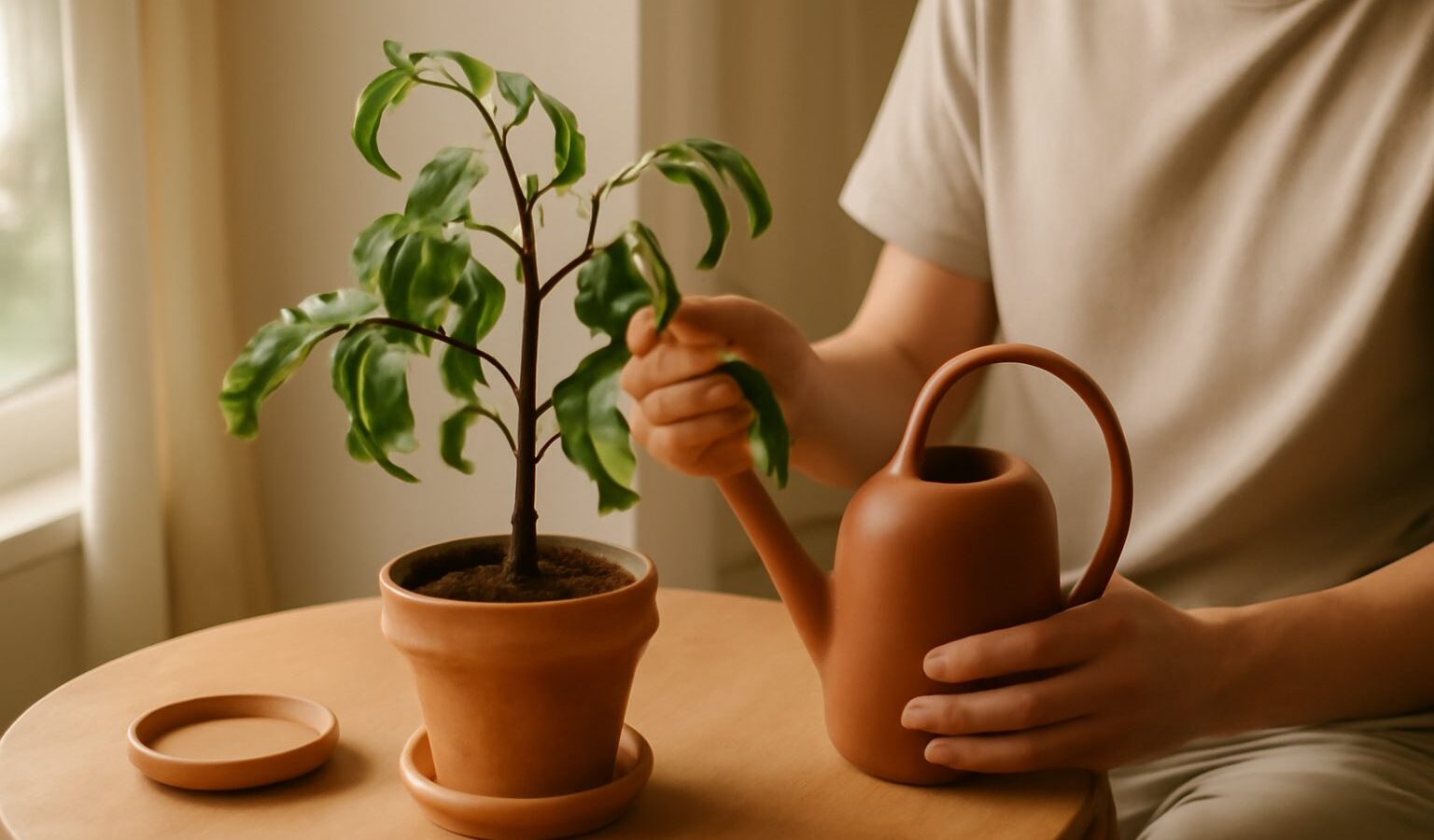
Few things worry a home gardener more than watching healthy foliage start to cup, twist or roll inwards for no obvious reason. The good news is that leaf curl Singapore gardeners see is almost always a signal rather than a death sentence, and once you learn to read that signal you can usually put things right. This is a general guide for home growers, not professional plant health advice, so if a prized or unusual plant is badly affected it is always worth seeking specialist help.
Curling is simply the plant telling you that something in its environment or its care has slipped out of balance. In our warm, humid, fast-growing climate the usual suspects are a short list, and working through them in order is the quickest way to a diagnosis. Below we cover the common causes and the practical fix for each.
Why Leaves Curl in the First Place
A leaf is a delicate structure that holds its shape through water pressure inside its cells and steady, even growth across its surface. When water runs short, or when one part of the leaf grows faster than another, that flat shape distorts and you see curling, cupping or crinkling. So most curling traces back to one of four things: too little water, too much heat and sun, pests feeding on the plant, or disease. Occasionally a nutrient problem or a dose of fertiliser that was too strong plays a part too.
The direction of the curl offers a clue. Leaves that cup downwards and feel dry and brittle usually point to heat or water stress. Leaves that curl upwards or pucker, especially the newest growth, more often point to pests or disease. Keep that rough rule in mind as you investigate.
Underwatering and Heat Stress
By far the most common cause in local homes and balconies is simply that the plant is thirsty. When roots cannot pull up enough moisture to keep the leaf firm, the leaf curls inwards to reduce the surface area exposed to the air, which is the plant trying to save itself from drying out further. On a hot, still afternoon a plant in a small pot can go from fine to floppy in a matter of hours.
The fix is steady watering rather than drowning. Check the top few centimetres of the mix with your finger, and water thoroughly whenever it feels dry, letting the excess drain away. Move pots that bake in fierce afternoon sun into brighter shade or filtered light, as our midday sun is strong enough to scorch and curl leaves even on plants that enjoy warmth. During dry, hazy spells raise the humidity around thirsty foliage by grouping pots together, and never let a pot stand bone dry for days.
Do not swing to the opposite extreme, though. Roots that sit in soggy, airless mix rot and then fail to take up water at all, which produces the same curling as drought. If the mix stays wet and the leaves still curl, poor drainage may be the real culprit.
Pests: Thrips, Aphids and Mites
If the newest leaves are puckered, twisted or curled tightly, look closely for pests before you do anything else. Several tiny insects feed by piercing soft young growth and draining its sap, and the damaged cells then grow unevenly, pulling the leaf out of shape as it expands.
- Aphids are small soft-bodied insects, often green, black or white, that cluster on stem tips and the undersides of new leaves. They leave a sticky residue that ants love.
- Thrips are slender and hard to spot, leaving silvery streaks, tiny black specks of waste and distorted, curled new growth.
- Spider mites thrive in hot, dry air and show as fine speckling and delicate webbing, with leaves curling and browning as feeding intensifies.
Deal with an infestation early. Rinse plants under a firm spray of water, wipe leaves by hand, and treat persistent problems with insecticidal soap or horticultural oil, always following the product instructions and testing on a few leaves first. Isolate a badly affected plant so the pests do not march across your whole collection.
Disease and Nutrient Issues
Some viral and fungal diseases also cause curling, usually alongside other symptoms such as yellow mottling, distorted patterns or dark spots. Viruses in particular have no cure, so a plant that is stunted and badly deformed with mottled, curled leaves is often best removed and binned, not composted, to protect the rest of your garden. Always clean your secateurs between plants to avoid spreading anything.
Overfeeding can scorch and curl leaf edges too, as a build-up of fertiliser salts draws moisture out of the roots. Flush the pot with plain water and ease off the feed. A genuine shortage of certain nutrients can cause cupping as well, though this is less common in regularly fed plants.
A Quick Diagnosis Table
Use the table below as a starting point, then confirm by inspecting the plant closely, especially the undersides of the leaves.
| What you see | Likely cause | First thing to try |
|---|---|---|
| Leaves cup down, dry and brittle | Underwatering or heat stress | Water deeply, move out of harsh sun |
| Curling despite constantly wet soil | Overwatering, root rot | Improve drainage, let mix dry out |
| New growth twisted, sticky or speckled | Aphids, thrips or mites | Rinse, inspect, treat with soap or oil |
| Scorched, curled leaf edges | Overfeeding, salt build-up | Flush with water, reduce feeding |
| Mottled, deformed, stunted leaves | Viral or fungal disease | Isolate, remove badly affected plants |
Prevention Beats Cure
Most curling never happens on a plant that is well matched to its spot and looked after with a light, consistent hand. Give each plant the light it actually wants, water by checking the mix rather than by the calendar, and feed little and often instead of in heavy bursts. Inspect new growth once a week so you catch pests while they are still a handful rather than a plague, and quarantine any new plant for a fortnight before it joins the others.
Above all, do not panic at the first curled leaf. Work calmly through the list, change one thing at a time, and give the plant a week or two to respond. Healthy new leaves emerging flat and firm are your sign that the balance has been restored.
Explore more
How to Deal With Plant Pests
Common Houseplant Problems and Fixes
A Beginner’s Guide to Houseplants
Gardening in Singapore’s Tropical Climate