
Deepavali, the festival of lights, is a joyous celebration for the Hindu community, and food, especially an array of sweets and savoury snacks, is central to the festivities. Homes fill with treats to share with family and visitors. This guide explores the festive foods of Deepavali and the spirit of sharing that surrounds them.
The festival and its food
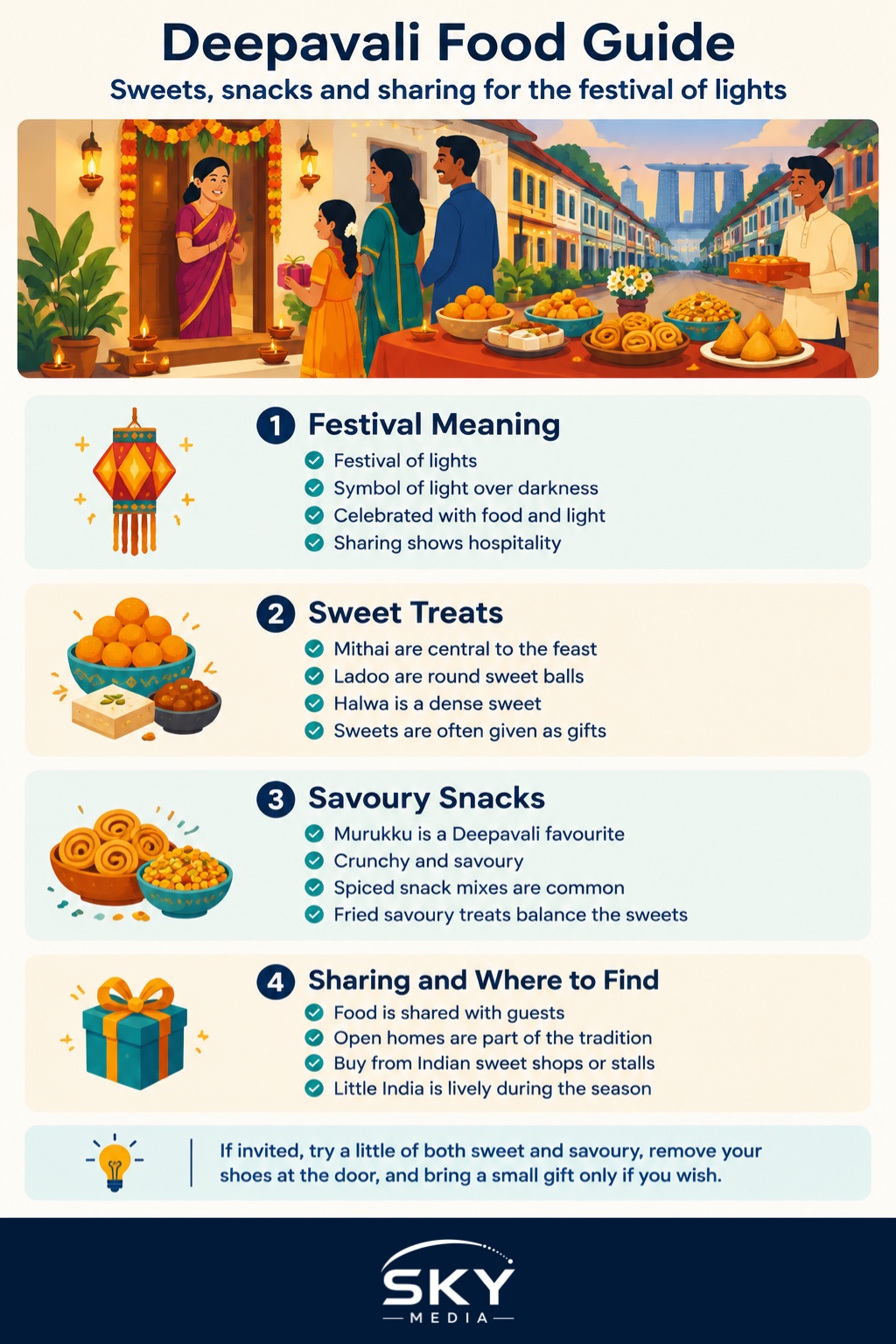
Deepavali, also known as Diwali, is the festival of lights, symbolising the triumph of light over darkness and good over evil. It is a time of joy, renewal and togetherness, celebrated with lights, decorations, new clothes and, of course, food. Sweets and savoury snacks play a central role, prepared in abundance to share with family, friends and visitors during the celebration. The making and sharing of these treats is an expression of hospitality and festive joy, and offering sweets to guests is an important part of the tradition. Food, quite literally, sweetens the celebration.
The festive sweets
Deepavali is especially associated with an array of sweets, or mithai, which are integral to the celebration.
- Assorted Indian sweets, from milk-based confections to syrup-soaked treats, colourful and rich.
- Ladoo, round sweet balls in various flavours.
- Halwa, a dense, sweet confection.
- Other traditional mithai, each with its own flavour and texture.
These sweets are offered generously to guests and exchanged as gifts, their sweetness symbolising the joy and good wishes of the season. A box of festive sweets is a common and welcome gift during Deepavali.
The savoury snacks
Balancing the sweets are savoury snacks that are equally beloved.
- Murukku, a crunchy, savoury spiral snack, a Deepavali favourite.
- Assorted savoury mixtures, crisp and spiced.
- Fried savoury treats, offering a moreish contrast to the sweets.
Murukku in particular is iconic, its crunchy texture and savoury spice making it irresistible, and it is a staple of the festive spread. The interplay of sweet and savoury snacks ensures there is something for every taste among the treats offered to visitors.
The tradition of sharing
| Aspect | What it means |
|---|---|
| Offering to guests | Sweets and snacks welcome visitors |
| Gifting | Boxes of treats exchanged as gifts |
| Open homes | Sharing food and festivity with visitors |
| Community | Treats shared across friends and neighbours |
The spirit of sharing is central to Deepavali food. Homes welcome visitors with spreads of sweets and snacks, treats are given as gifts, and the joy is spread through food. As with other festivals in multicultural Singapore, this sharing often extends across communities, with friends, neighbours and colleagues of all backgrounds partaking in the festive treats.
A celebration of light and togetherness
Beyond the food, Deepavali is a celebration of light, renewal and family togetherness, and the food is an expression of these themes. The abundance of sweets reflects the joy and hope of the festival, and the act of sharing embodies its spirit of goodwill and community. Preparing treats, decorating homes, and welcoming guests all come together in a celebration that is warm, generous and joyful. For those who celebrate, and for the friends who join them, Deepavali food is a delicious gateway into the festival’s spirit of light overcoming darkness and the sweetness of togetherness.
How to enjoy it
- Try both sweet and savoury, from mithai to murukku.
- Appreciate the variety, since the spread is colourful and diverse.
- Embrace the sharing spirit, if offered treats by friends or neighbours.
- Consider gifting, as festive sweets make lovely presents.
- Visit Little India, which comes alive during the season.
Where to experience it
Deepavali food is most authentically experienced through the sharing tradition in homes, but the sweets and snacks are widely available at Indian sweet shops, eateries and festive markets, especially in Little India, which transforms into a hub of light and festivity during the season. The festive bazaars and shops overflow with mithai, murukku and decorations in the lead-up to the celebration. Whether shared by a friend or bought from a sweet shop, Deepavali treats offer a delicious and joyful taste of the festival of lights.
The takeaway
Deepavali food is a joyful and generous part of the festival of lights, centred on an abundance of sweets and savoury snacks shared with family, friends and visitors. From colourful mithai and ladoo to the irresistible crunch of murukku, the festive spread is diverse and delicious, offered in a spirit of hospitality and goodwill that often crosses communities. Try both the sweet and savoury treats, embrace the tradition of sharing, and appreciate how food expresses the festival’s themes of light, joy and togetherness. In its treats and its generosity, Deepavali offers a heartfelt taste of celebration.
Visiting a home during Deepavali: a few pointers
Being invited to a friend’s or colleague’s home during Deepavali is a warm gesture, and a little awareness goes a long way in returning that warmth. If you are new to the festival, there is no need to feel unsure. Hospitality is generous and relaxed, and hosts are usually delighted simply that you have come to share in the celebration.
- Accept a little of everything, if you are able. Trying a sweet and a savoury snack, even in small amounts, is a gentle way to honour the effort that has gone into the spread.
- A small gift is welcome but not expected. A box of festive sweets, a fruit basket or flowers are all thoughtful. Many guests reciprocate the sharing spirit rather than arriving empty-handed.
- Remove your shoes at the door, as is common practice when entering many homes in Singapore. Following your host’s lead is the easiest guide.
- Compliment the spread, since much of it may be homemade. Asking about a particular treat is a lovely way to show genuine interest.
- Do not overstay, especially during busy visiting hours when the household may be receiving many guests through the day.
Above all, the visit is about togetherness. Warmth and good cheer matter far more than getting every custom exactly right.
Common questions about Deepavali treats
For those less familiar with the festival’s food, a few practical questions come up often. Here are some helpful things to keep in mind, especially in multicultural Singapore where friends of every background enjoy the treats together.
- Are the treats vegetarian? Many traditional sweets and snacks are vegetarian, which is one reason they are so widely shared. That said, recipes vary, so it is always fine to ask the host or shopkeeper if you have specific dietary needs.
- What about halal or allergy concerns? Ingredients such as ghee, nuts and dairy are common in festive sweets. If you are watching for allergens or looking for halal-certified options, check the packaging or ask directly, as many sweet shops can advise on their products.
- How long do the snacks keep? Fried savoury treats like murukku store well for a while in an airtight container, while milk-based sweets are best enjoyed fresh. When in doubt, keep them sealed and cool.
- Can I buy rather than make my own? Certainly. Indian sweet shops and festive stalls, particularly around Little India, offer a wide selection in the lead-up to the season, so there is no need to cook to take part.
- What is the difference between Deepavali and Diwali? They refer to the same festival of lights. Deepavali is the name commonly used in Singapore and by many communities, while Diwali is the name widely used elsewhere in India and around the world. The celebration, themes and treats are essentially the same.
- What should I say to someone celebrating Deepavali? A simple “Happy Deepavali” is a warm and widely understood greeting. You can also add a note of good wishes for the festival of lights. The sincerity of the greeting matters more than the exact words.
- Can people with diabetes enjoy Deepavali sweets? Many festive sweets are rich in sugar, ghee and dairy, so they should be taken in small amounts. Savoury snacks like murukku are not sugar-heavy but can be high in salt and fat. People with diabetes should check with a doctor or dietitian.
- What is the best time to visit Little India during Deepavali? Go earlier in the season or on a weekday if you want fewer crowds, since the area gets busy in the lead-up to the festival, especially in the evenings and on weekends. Take the MRT rather than driving, and check current event details closer to the date.
- Which Deepavali treats suit people who do not like very sweet food? Savoury snacks are a good choice, such as murukku and assorted spiced mixtures, which balance the sweets. You can also try just a small taste of mithai instead of a full piece. Hosts will happily guide you toward lighter options if you ask.
Explore more: Deepavali in Singapore · Indian food in Singapore · Singapore ethnic enclaves
Further reading: Deepavali Sweets Explained for Singapore Beginners · Festive Foods of Singapore · Ordering Deepavali Catering for a Home Gathering in Singapore