
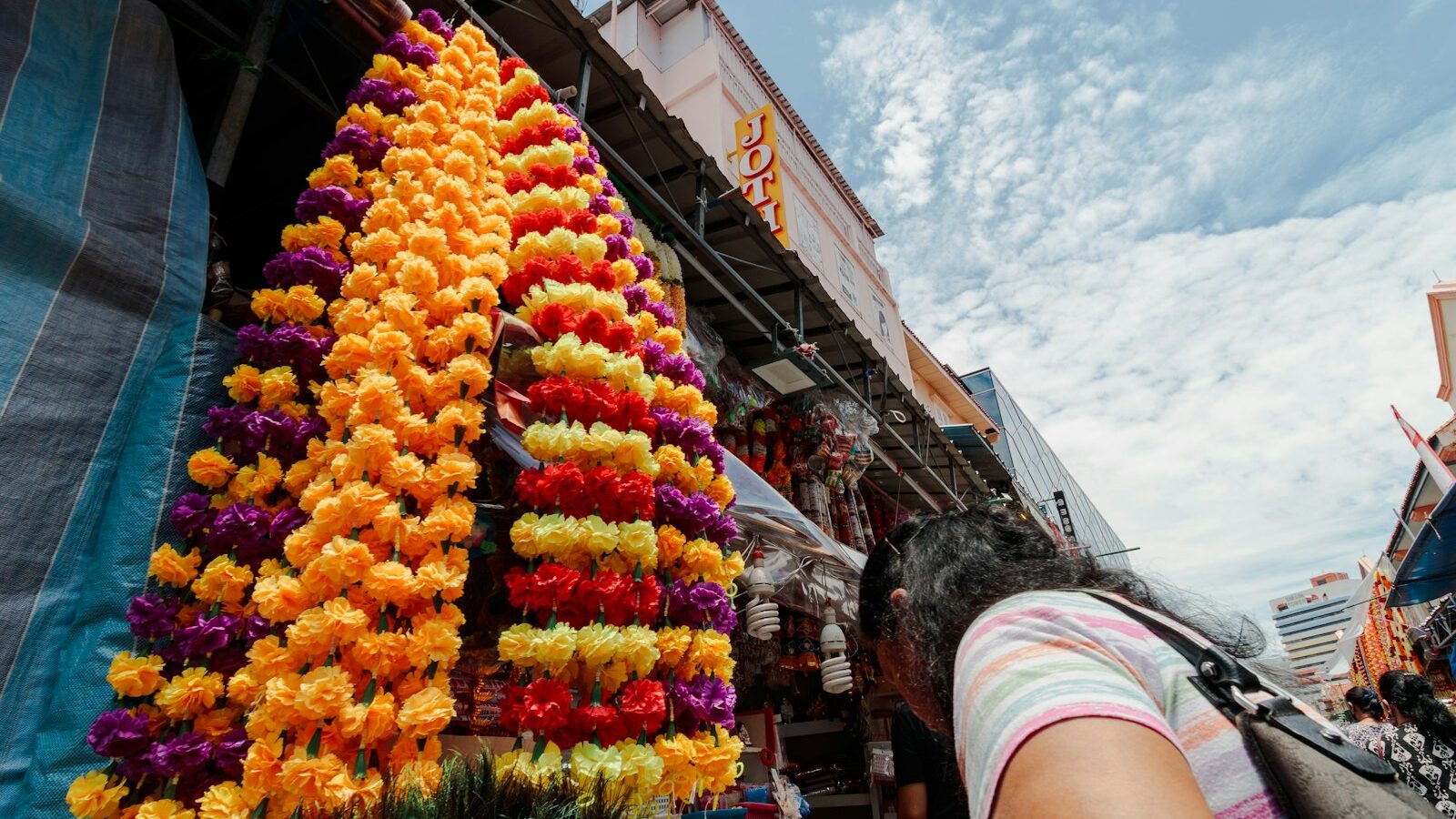
Across Singapore’s many communities, fresh flowers play a warm and meaningful part in prayers, offerings, and festive occasions. Growing a few of these flowers at home can be a lovely, calming hobby, and it means you always have something fresh to pick. This guide to flowers for prayers and offerings singapore gardeners commonly grow keeps things general and respectful. Practices differ from family to family and community to community, so treat this as gardening guidance rather than any statement of doctrine, and follow your own household’s customs.
Flowers Often Grown for These Occasions
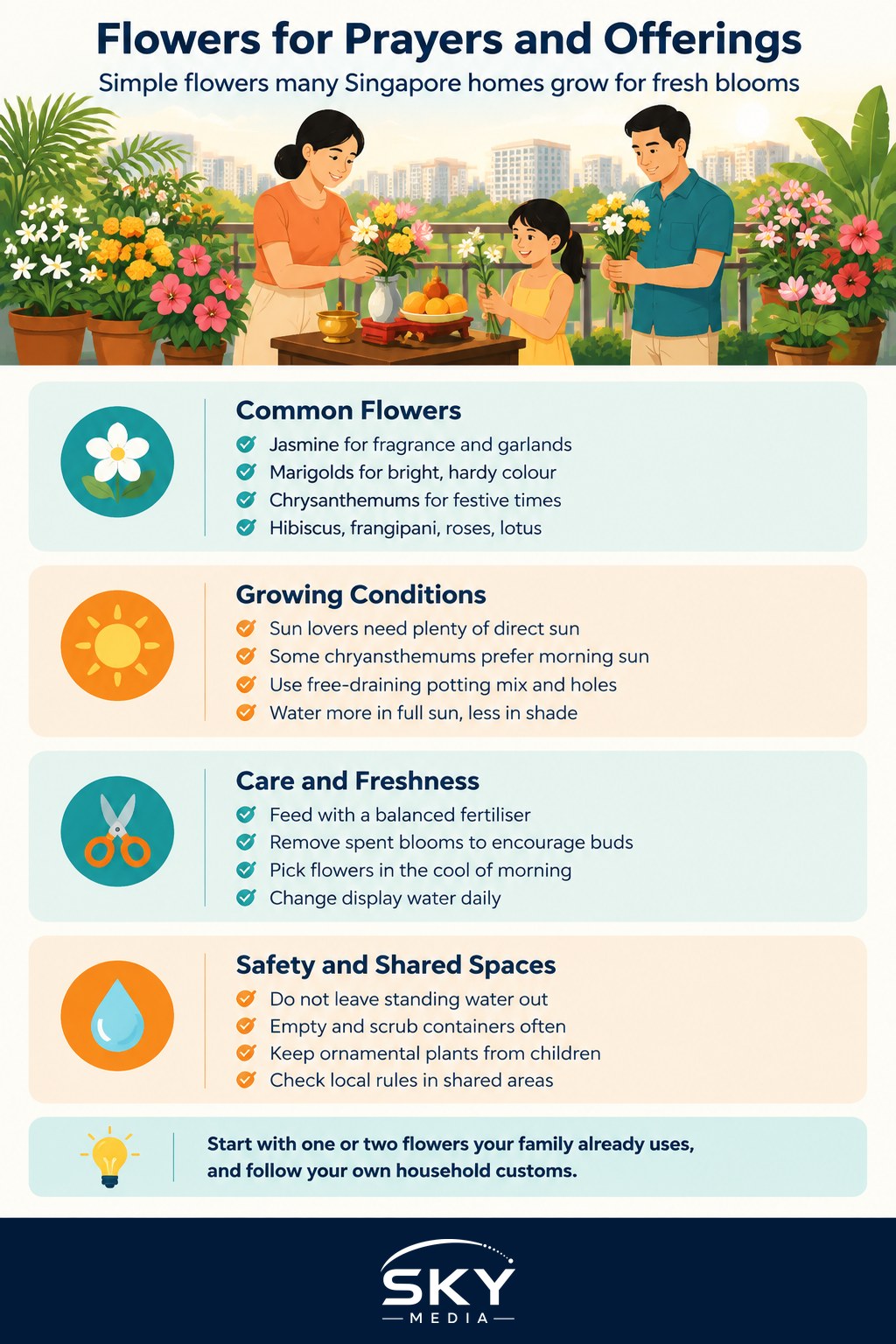
Several flowers appear again and again in Singapore homes, and happily most grow well in our climate. Jasmine is prized for its fragrance and small white blooms, often strung into garlands. Marigolds bring bright orange and yellow and are hardy in our sun. Chrysanthemums are common around festive times and for remembrance. Other favourites include hibiscus, frangipani, roses, and the lotus, each carrying its own meaning for different families.
The nice thing is that many of these already have detailed care guides you can lean on. For fragrant white blooms, see growing jasmine and fragrant climbers in Singapore. For easy, cheerful colour, our guide on growing marigolds in Singapore is a good starting point. If you have room for water, the lotus is another meaningful choice, though it needs a pond or a large water container.
Growing Them in Our Tropical Climate
Most of these flowers love our warmth and light. As a general rule, sun lovers like marigold, hibiscus, and jasmine want plenty of direct sun for the best flowering, while a few, such as some chrysanthemums, do better with morning sun and shelter from the harshest afternoon heat. Match the plant to the sunniest spots you have, whether that is a balcony rail, a corridor edge, or a garden bed.
Use a well draining potting mix in pots with good drainage holes, enriched with compost for the hungrier bloomers. Water regularly, more in full sun, and let the mix dry a little between waterings for plants that dislike wet feet. A balanced fertiliser through the growing season keeps the flowers coming, applied at the rate on the label. To encourage more blooms so you always have flowers to pick, remove spent flower heads regularly, which pushes the plant to produce fresh buds.
A local reminder that always matters: any container, saucer, or tray that holds standing water becomes a breeding spot for Aedes mosquitoes and a dengue risk. This includes vases and offering bowls of water left out for days. Change the water often, empty and scrub saucers regularly, and follow NParks and NEA guidance on preventing mosquito breeding.
Picking, Handling and Keeping Flowers Fresh
Harvest flowers in the cooler parts of the day, early morning or evening, when they are freshest and least stressed by heat. Use clean scissors and cut cleanly. For blooms you will display in water, trim the stems and change the water daily to keep them fresh and, just as importantly, to stop mosquitoes breeding.
A gentle safety note. Some ornamental flowers and their leaves or sap can be toxic if eaten, and are grown for display rather than eating. Unless a flower is a known edible variety grown as food, do not eat it, keep plants out of reach of young children and pets, and wash your hands after handling sap. If you suspect a child or pet has eaten part of an ornamental plant, contact a doctor or a vet. For safer choices around the home, see child-safe plants for family homes in Singapore.
A Small, Meaningful Garden
You do not need a big space to grow flowers for prayers and offerings. A few well-chosen pots on a balcony or along a corridor can keep you supplied through the year, and tending them can become a quiet, grounding routine in its own right. Start with one or two flowers your family uses most, learn their rhythm, and add more as you go.
If you garden along an HDB corridor or in another shared area, keep to the rules on obstruction, falling items, and mosquito breeding, and check with your town council first. See corridor gardening and HDB rules in Singapore.
Grown with a little care and plenty of sun, these flowers connect a small tropical garden to the traditions that matter to you, giving you fresh, home-grown blooms whenever you need them.