

You turn the key or press the start button, and nothing happens the way it should. It is a stressful moment, whether you are running late for work or stuck in a quiet HDB carpark late at night. The good news is that when a car wont start singapore drivers face a fairly short list of usual suspects, and a calm, step by step check often points you in the right direction. This guide walks through what to notice and what it might mean, so you can either fix a simple issue yourself or describe the problem clearly to a workshop.
Before anything else, take a breath and make sure you are parked safely with the handbrake on. Note exactly what happens when you try to start: complete silence, a rapid clicking, the engine cranking but not catching, or dashboard lights that dim or flicker. Those clues matter more than you might think, because different symptoms tend to come from different parts of the car.
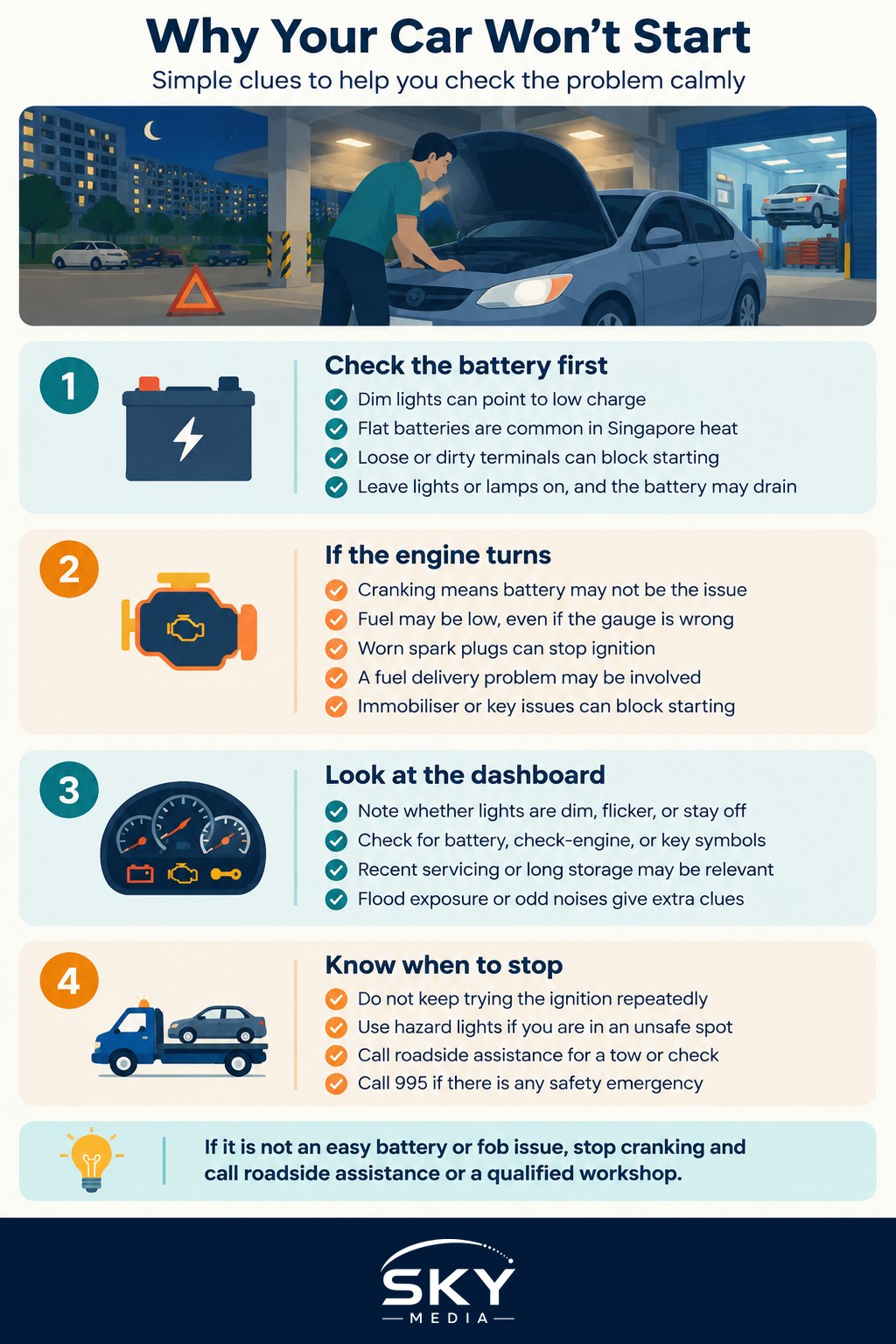
Start With the Battery and Electrics
A weak or flat battery is the most common reason a car will not start, especially in Singapore’s constant heat, which is hard on batteries and shortens their life. If your headlights and dashboard look dim, the starter makes a rapid clicking sound, or you hear nothing at all when you turn the key, the battery is a strong candidate.
Quick things to check:
- Are the interior lights and dashboard coming on at all? Very dim or dead lights suggest little or no charge.
- Did you leave lights, the boot, or an interior lamp on overnight? That can drain a battery flat.
- Are the battery terminals loose or crusted with white or greenish deposits? Poor contact can stop the car from starting.
If you suspect a flat battery, a jump start may get you going, and it helps to know the safe method in advance. Our guide on how to jump start a car walks through the steps and the order of the cables. Keep in mind that a battery that keeps going flat is telling you something, so read up on car battery care and replacement and have it tested rather than repeatedly jump starting it.
When the Engine Cranks but Won’t Catch
Sometimes the starter motor turns the engine over, you hear that familiar churning sound, but the engine never fires up and settles into a steady idle. This points away from the battery and toward fuel, ignition, or sensor issues.
A few general possibilities:
- Low or empty fuel. It sounds obvious, but a faulty gauge can leave you emptier than you think.
- Ignition components such as worn spark plugs, which struggle to light the fuel.
- A fuel delivery problem, so the engine is not getting what it needs.
- An immobiliser or key issue, common in modern cars, where the car does not recognise the key and refuses to start.
For a keyless car, a weak key fob battery can stop the car from detecting the key. Many cars have a backup method, such as holding the fob against the start button, so check your owner’s manual. If you think it is the fob, our note on replacing your car key fob battery may help. Worn spark plugs are another everyday culprit that a workshop can check.
Reading the Clues and Warning Lights
Modern cars try to tell you what is wrong. If the dashboard lights up but the car will not start, look for warning symbols and note any messages. A steady check-engine light, an immobiliser or key symbol, or a battery warning can all narrow things down. It helps to be familiar with your dashboard symbols so they are not a mystery in the moment.
Also consider what happened just before. A car that was recently serviced, sat unused for weeks, got caught in a flash flood, or was making odd noises may be giving you extra context. If it stalled and would not restart after driving through deep water, do not keep cranking it, as that can cause serious damage.
When to Stop and Call for Help
DIY checks are fine for simple things like a flat battery, a loose terminal, or a fob battery. Beyond that, resist the urge to keep trying the ignition repeatedly, which can wear the starter or flood the engine. If the car is stuck in an awkward or unsafe spot, put on your hazard lights and stay aware of your surroundings.
Call your insurer’s or motoring club’s roadside assistance or breakdown recovery service for a tow or an on-site check, and if there is any emergency involving safety, call 995. Anything to do with fuel, ignition, electronics, or a repeated no-start should be looked at by a qualified workshop rather than guessed at. Our guide to dealing with a car breakdown covers staying safe while you wait.
A no-start is rarely the end of the world. Work through the clues calmly, fix the easy stuff, and lean on professionals for the rest, and you will be back on the road with a lot less stress.
Frequently Asked Questions
What does rapid clicking when I turn the key usually mean? A rapid clicking sound, dim dashboard lights or complete silence often points to a weak or flat battery, which is the most common reason a car will not start, especially in Singapore’s heat. Check the lights and terminals, and have the battery tested if it keeps happening.
Why does my engine crank but not start? It points away from the battery and towards fuel, ignition or sensors. Possibilities include low fuel despite a faulty gauge, worn spark plugs, a fuel delivery problem, or an immobiliser or key issue. A qualified workshop should check anything involving fuel or ignition.
What can I do if my keyless car does not detect the key? A weak fob battery can stop the car from detecting the key. Many cars have a backup method, such as holding the fob against the start button, so check your owner’s manual. If that works, replace the fob battery soon.
Is it harmful to keep trying the ignition repeatedly? Yes, repeated attempts can wear the starter or flood the engine. After a try or two, stop and think through the clues. If the car stalled in deep water and would not restart, do not keep cranking it, as that can cause serious damage.
Should I keep jump starting a battery that keeps going flat? No, a battery that keeps going flat is telling you something. Get it tested rather than repeatedly jump starting it. It could be age, heat, parasitic drain such as a light left on, or a charging problem that a workshop can identify.