
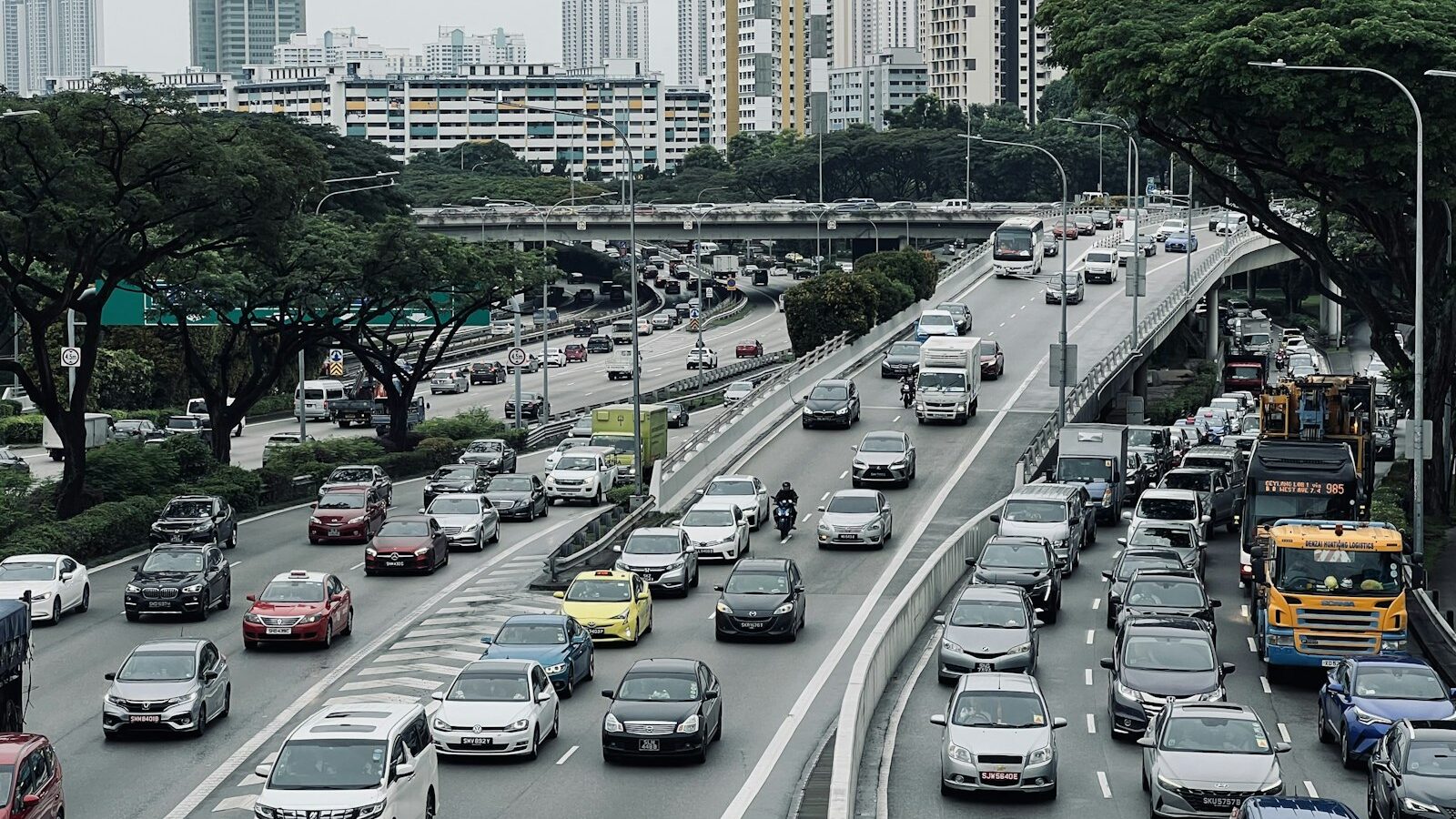
Singapore may be flat compared to most places, but slopes still catch plenty of drivers off guard. Multi-storey carpark ramps, the spiral exits at shopping malls, flyover approaches and the steep entrances to some HDB carparks all demand a controlled start on a gradient. Getting hill starts singapore drivers face right is less about strength and more about smooth timing, whether you drive a manual or an automatic. This guide walks through the technique calmly so you can pull away on any slope without rolling back into the car behind you.
Why Slopes Feel Harder Than They Should
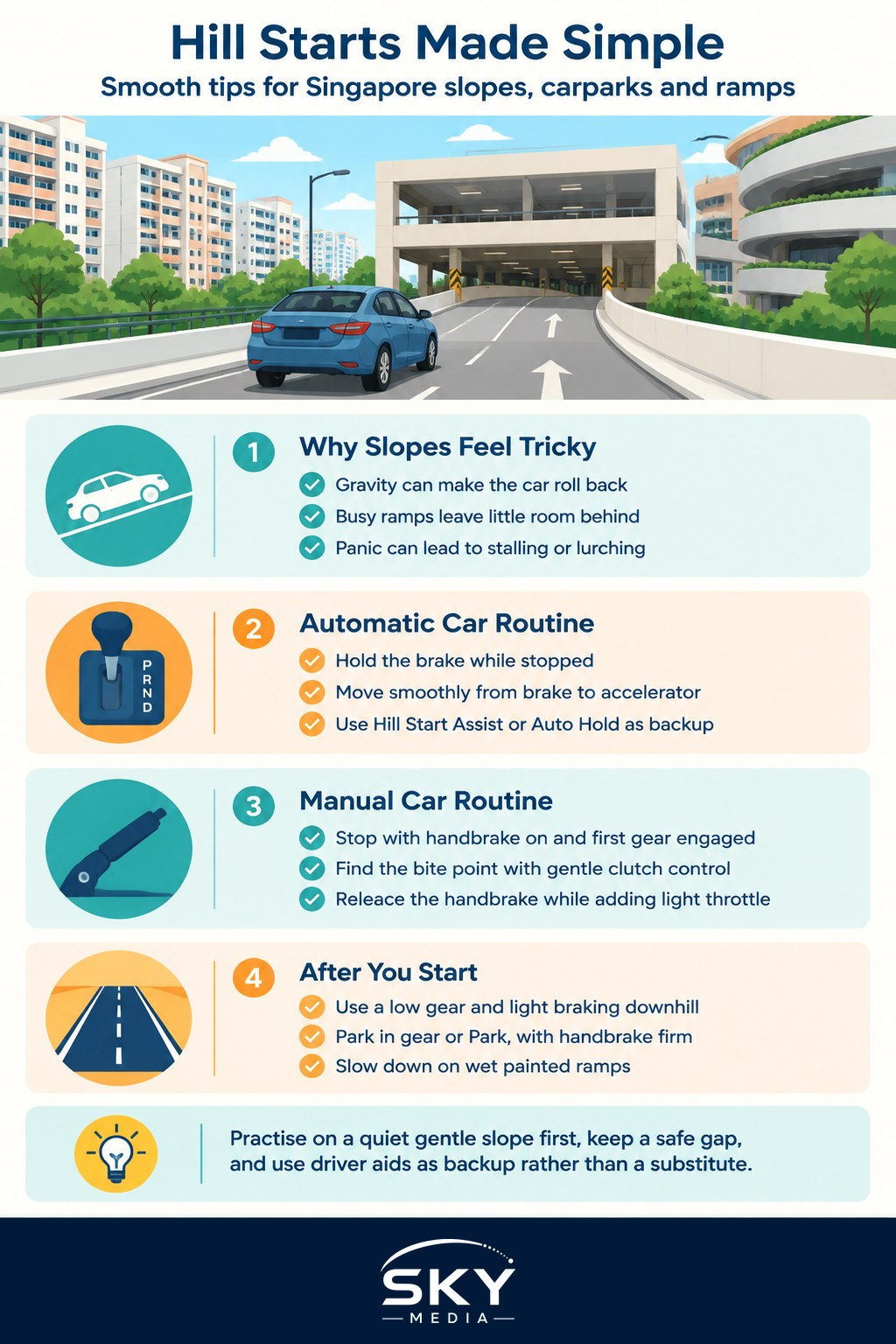
On a flat road, gravity is not working against you, so a slightly clumsy start goes unnoticed. On a slope, the moment you lift off the brake the car wants to roll backwards. If you are slow to reach the accelerator, you drift into the space behind, which is exactly where another driver has often crept close, especially at busy carpark ramps and at traffic lights on an incline.
The pressure is mostly mental. Drivers panic, rush the pedals and stall or lurch forward. The fix is a repeatable routine you can do the same way every time. Confidence on slopes also feeds into general road confidence, and if inclines are part of a wider nervousness behind the wheel, our guide to overcoming driving anxiety pairs well with the technique here.
Hill Starts in an Automatic Car
Most cars in Singapore are automatic, and the good news is that hill starts are far simpler here.
- Keep your foot on the brake while stopped on the slope.
- When it is time to move, release the brake and move smoothly to the accelerator.
- On a gentle slope, the car creeps forward before it can roll back, so a light, steady press is all you need.
- On a steeper ramp, cover the accelerator so you can apply power the instant the brake comes off.
Many newer cars have Hill Start Assist or Auto Hold. Hill Start Assist holds the brakes for a second or two after you lift off, giving you time to reach the accelerator without rolling back. Auto Hold keeps the car stationary until you press the accelerator. These are helpful, but treat them as a backup rather than a crutch. Learn the manual method too, because you will not always be in your own car. If you often drive different vehicles, our notes on driving an unfamiliar or rental car are worth a read.
Hill Starts in a Manual Car
Manual cars are less common here but still around, and slopes are where clutch control really shows. The classic method uses the handbrake:
- Stop on the slope with the handbrake firmly up and the car in first gear.
- Bring the clutch up gently until you feel the bite point, where the engine note dips slightly and the car strains forward against the handbrake.
- Add a little accelerator to hold the revs steady.
- Release the handbrake smoothly while feeding in a touch more accelerator and easing the clutch up fully.
Done well, the car moves off without any roll back at all. The bite point is the whole secret, and if it still feels vague, spend time practising with our guide to mastering clutch control in a manual car. For anyone brand new to a stick shift, start gentle before tackling ramps.
Slope Driving Beyond the Start
Slopes are not only about pulling away. Driving down a long carpark spiral calls for a light touch on the brakes and a low gear so you are not riding the brakes the whole way, which can overheat them. Take mall spiral ramps slowly, keep to your side of the painted line, and watch for cars coming up as you go down.
When parking nose-up or nose-down on a slope, always leave the car in Park for an automatic or in gear for a manual, and apply the handbrake firmly every time. On a very steep incline, turning the front wheels towards the kerb adds a margin of safety if the car ever creeps. Our climate matters too. After heavy rain, painted ramp surfaces and smooth carpark floors get slippery, so ease off your speed.
Building Real Confidence
The best way to get comfortable is deliberate practice in a quiet setting. Find a gentle slope at a quiet time, perhaps an empty carpark ramp on a weekday morning, and repeat the start a dozen times until it feels automatic. Then move to slightly steeper gradients. Keep a sensible gap from the car ahead when stopped on any incline, so you have room if either of you rolls slightly.
If it has been years since you drove, or you never felt sure on slopes in the first place, a short course with an instructor is money well spent, and our guide to refresher lessons for rusty drivers explains what to expect.
The Bottom Line
Hill starts are a skill, not a talent, and Singapore gives you plenty of ramps to practise on. Learn the routine for your gearbox, use driver aids as a safety net rather than a substitute, keep your movements smooth, and give yourself space. Drive within the speed limits, stay patient at busy ramps, and slopes will soon feel like just another part of the road.
Frequently Asked Questions
What if my car rolls back on a slope? Press the brake firmly and apply the handbrake at once. Stay calm and restart your procedure. If you are close to the car behind, a small roll-back is the reason to keep a gap on inclines. Practise on a quiet slope so it feels easier.
Is Hill Start Assist available on all cars? No, it is common on newer cars but not universal, so check your owner’s manual or ask the dealer. Even if you have it, learn the manual technique. It also holds the car for only a short time.
How far behind the car ahead should I stop on a slope? Leave a bigger gap than usual, so you can see the road surface where the rear tyres meet it. This gives you room if either car rolls slightly. Being relaxed about space also helps you feel less rushed.
Is it bad for the car to use the handbrake on hill starts? No, using the handbrake is a standard, recommended method for manual cars. It lets you find the bite point without rolling back. For automatics, the foot brake is usually enough.
Why does my car feel underpowered going up a steep ramp? Climbing needs more power, and a low gear helps in a manual or in some automatics with a manual mode. Press the accelerator smoothly. If it feels weak even on gentle slopes, have a workshop check the car.