
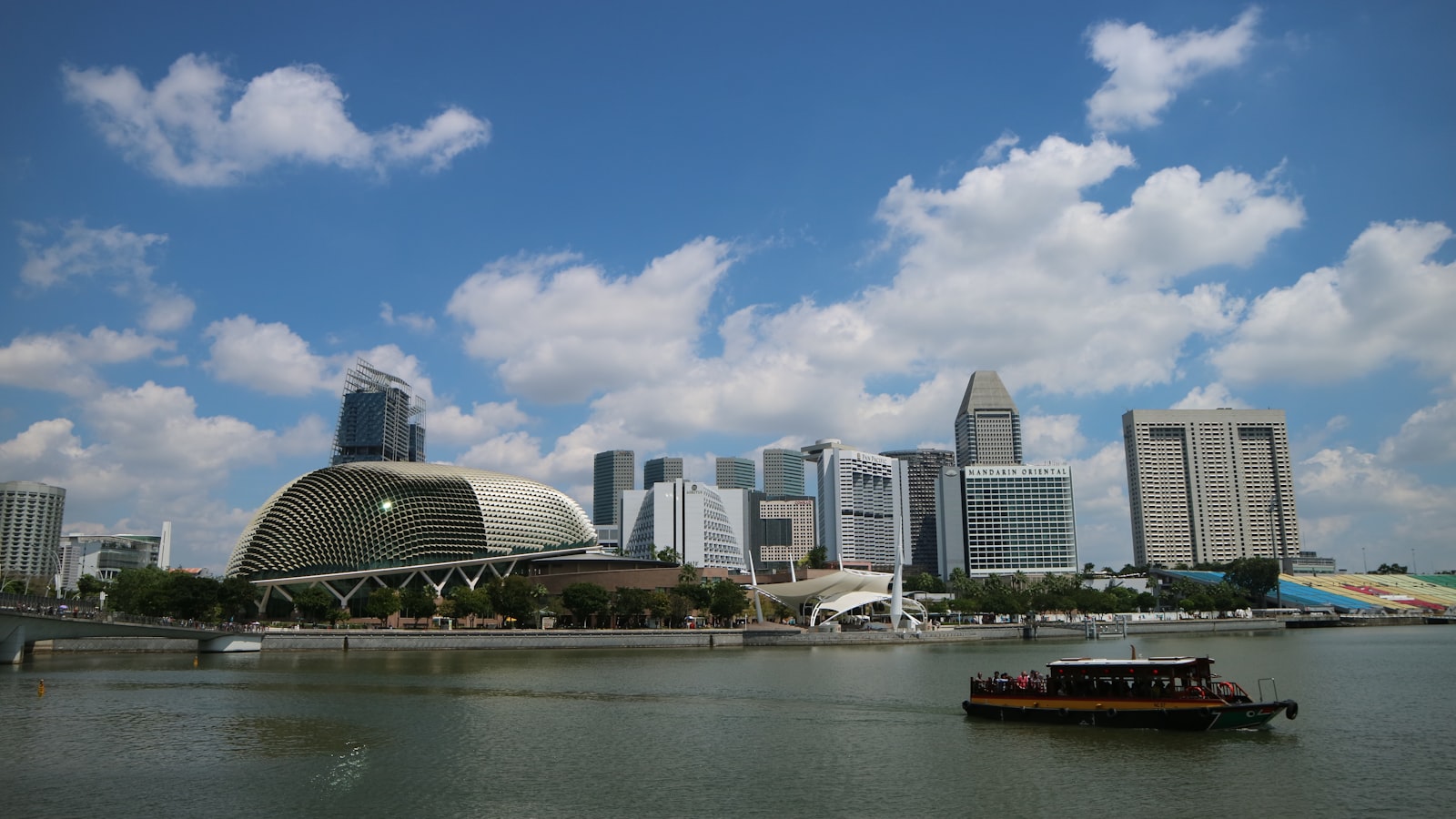
Singapore is one of the busiest ports in the world, and our waterfront is a gift for photographers. From the working jetties and anchored ships off the coast to the sleek yachts at Marina Bay and the old bumboats along the river, there is endless material. Good harbour photography singapore offers is about more than pointing at a pretty boat: it is about light, timing, reflections and telling the story of a place where the sea meets the city. This guide will help you capture it well.
When and where to shoot
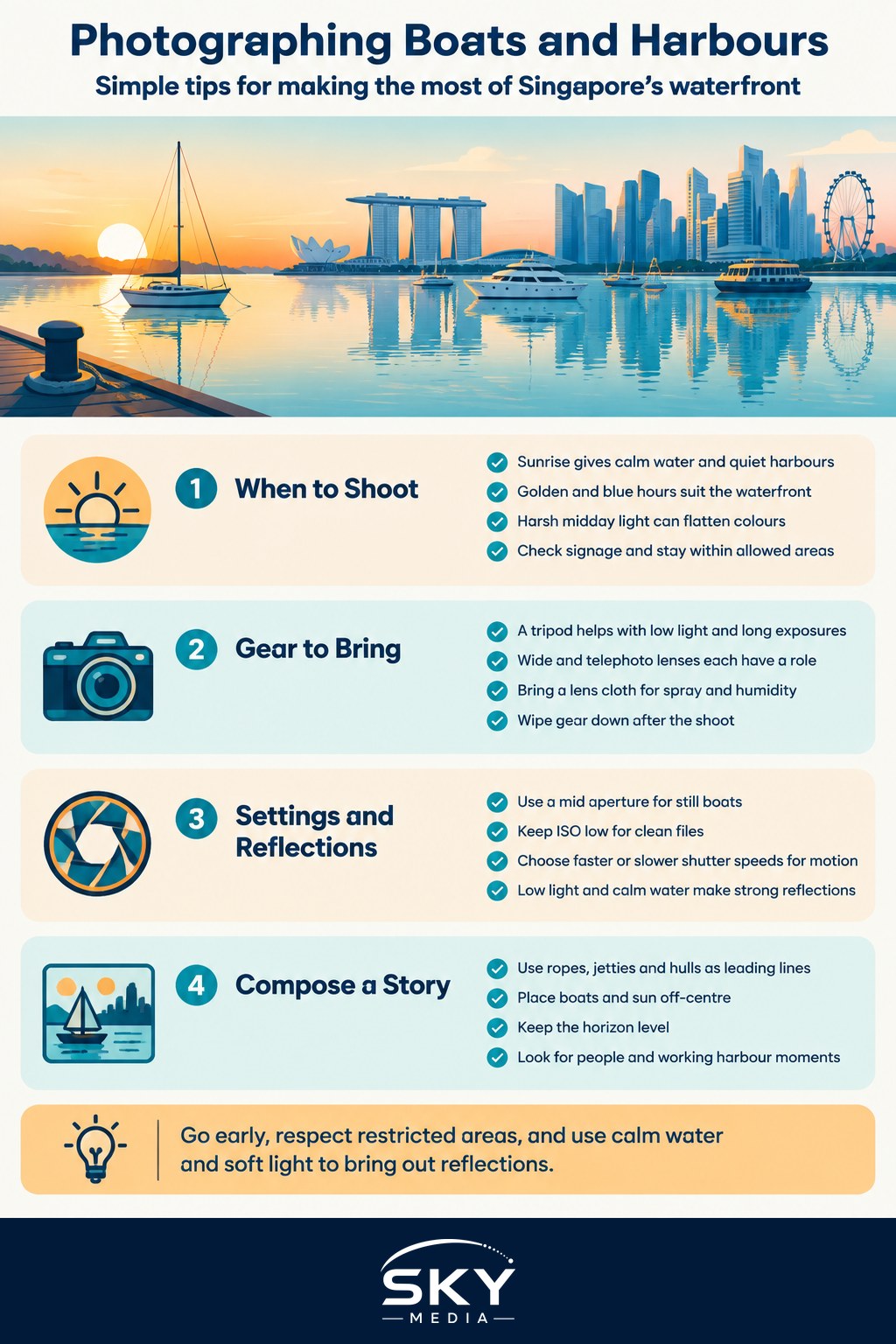
Light is everything on the water. Our tropical sun sits high and harsh for much of the day, which flattens colours and creates glare off the sea. The softer hours reward you far more. Sunrise brings calm water and quiet harbours, while the golden and blue hours drape the whole scene in warm or cool light. Our guide to shooting in golden hour and blue hour explains how to make the most of these windows, and it applies perfectly to the waterfront.
Singapore gives you plenty of vantage points. Marina Bay offers yachts against the skyline, the Singapore River has heritage bumboats and bridges, and the southern coast looks out over the anchored cargo fleet. Wherever you go, respect the rules of the place. Some jetties, marinas and port areas are private or restricted, so check signage, follow NParks and venue guidance where it applies, and never trespass for a shot. Blue hour in particular turns the harbour magical, when boat lights, the sky and the city all glow together.
The gear that helps on the water
You can shoot harbours with almost any camera, but a few things make it easier.
- A tripod for low-light and long-exposure work, especially around dawn, dusk and after dark. If you are choosing one, how to choose a tripod covers what to look for.
- A range of lenses. A wide angle takes in the sweep of a harbour and skyline, while a telephoto pulls in distant ships and isolates a single vessel, so a bit of extra reach is handy for the anchored fleet.
- A lens cloth, because sea spray and our high humidity leave marks and can fog a cold lens. Wipe often and let gear acclimatise.
Salt air is hard on cameras, so wipe everything down when you get home and be mindful of our humidity, which encourages fungus if gear is stored damp.
Camera settings for boats and reflections
Your settings depend on what the boats are doing.
- For still or slowly moving boats, a mid aperture such as f/8 keeps the vessel and its surroundings sharp. Keep ISO low for clean files.
- For moving boats, decide whether you want them frozen crisp or slightly blurred to suggest motion. A faster shutter speed freezes a passing ferry, while a slower one lets it streak. Our guide to panning to capture motion is worth reading if you want to track a boat sharply against a soft background.
- For glassy reflections and silky water at dawn or dusk, a long exposure smooths the sea into a mirror and blurs any ripples. A tripod is essential here.
Reflections are the secret weapon of harbour work. Calm water at first light doubles the scene, mirroring hulls, masts and the skyline. Get low, close to the water’s surface, to make reflections fill more of the frame.
Composition that tells a story
A harbour is a scene full of leading lines and layers, so use them. Ropes, jetties, piers and the edge of a hull all guide the eye. The masts of moored yachts create rhythm, and a foreground boat gives depth against a distant skyline. Keep your horizon level, since a tilted sea looks instantly wrong, and use the rule of thirds to place a key vessel or the sun off centre.
Think about story, not just prettiness. A weathered fisherman coiling rope, a tug nudging a giant container ship, or a lone kayak against the anchored fleet all say something about our maritime life. If people are clearly the subject and identifiable, be respectful and mindful of privacy. For a wider look at the best local vantage points, our roundup of best places to photograph in Singapore points you to strong waterfront spots, and it is worth scouting a location before you commit to a shoot there.
Editing your harbour shots
In post, aim for a clean, believable look. Straighten the horizon first. Lift the shadows in dark hulls, recover any blown-out sky near the sun, and gently boost contrast and clarity to make the water and boats crisp. Warm the white balance for a golden mood or cool it for a moody blue hour. A graduated adjustment to balance a bright sky against a darker sea often does wonders. Keep reflections and colours natural rather than oversaturated.
Photographing boats and harbours is a wonderful way to see Singapore from a new angle. Chase the soft light, respect the places you shoot, watch for reflections and let the working life of the water tell its story. Go early, stay patient, and the harbour will give you images with real atmosphere.