
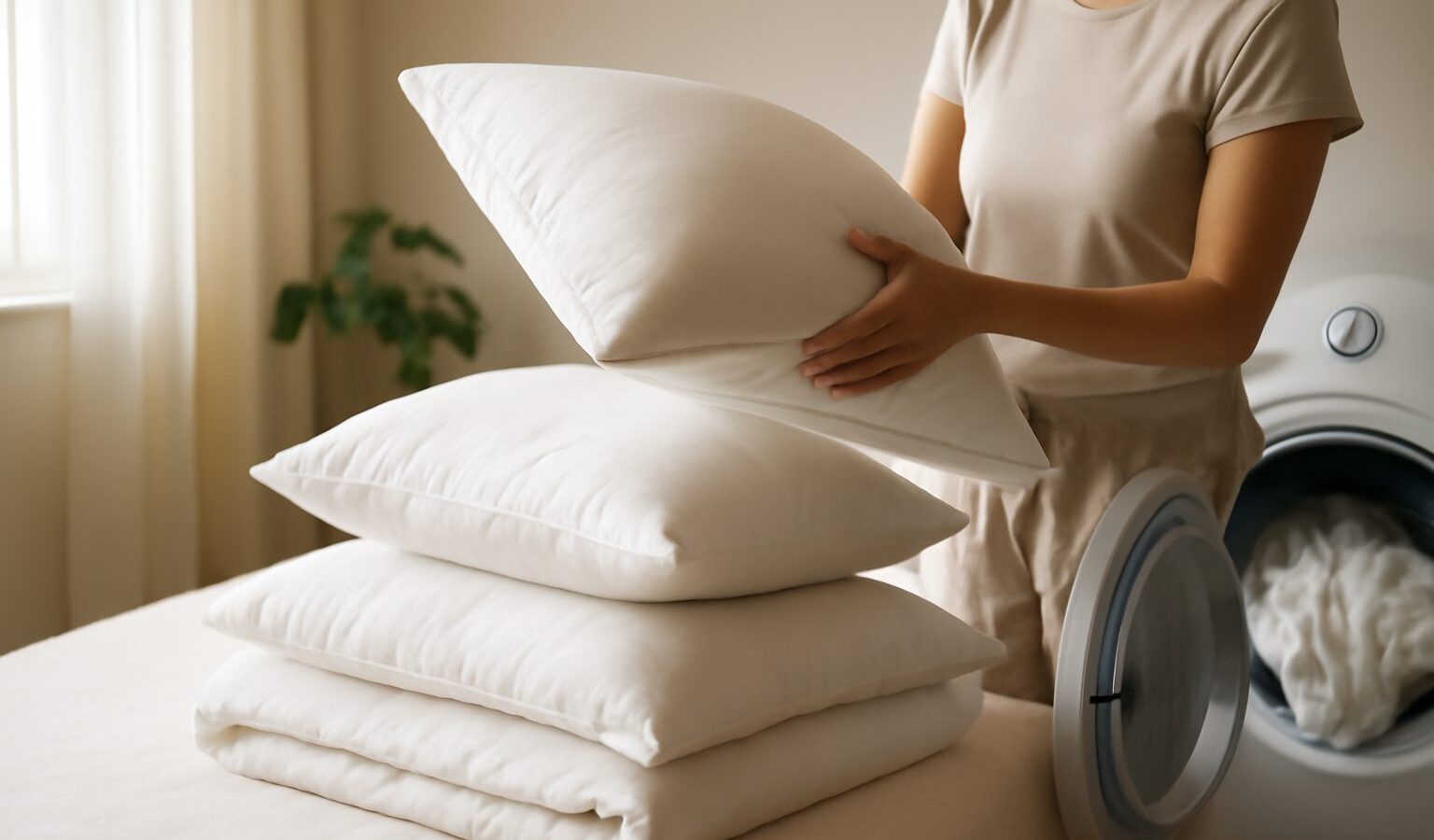
We change our pillowcases and duvet covers often, but the pillows and duvets inside quietly soak up sweat, skin cells, and moisture for months. In our warm, humid climate that makes them a favourite home for dust mites, and over time they can smell stale or feel flat. Washing pillows and duvets in Singapore is easier than most people think, and doing it a few times a year keeps your bed fresher, healthier, and far more comfortable. This guide covers how often to wash, the right settings, drying properly in our humidity, and how to keep everything fluffy.
Why Pillows and Duvets Need Washing
A pillowcase protects the pillow, but it does not stop everything. Body oils, sweat, and moisture pass through, feeding dust mites whose waste is a common trigger for sneezing, itchy eyes, and disrupted sleep. Our humidity makes this worse, because the damp warmth is exactly what mites thrive in.
Washing the actual pillow and duvet, not just the covers, removes that build-up, cuts the mite population, and lifts stale smells. It also revives loft, the fluffiness that makes bedding feel plush, since trapped sweat and dust weigh the filling down. A clean, well aired duvet simply feels better to sleep under, and it lasts longer too.
How Often to Wash and When to Replace
You do not need to wash these often, but you should not skip it for years either. Pair a couple of full washes a year with regular airing.
- Pillows: wash every three to six months, and air them in a breezy spot in between.
- Duvets: wash every three to six months, or at least twice a year, depending on use and whether anyone sweats heavily or has allergies.
- Covers and pillowcases: wash weekly with your sheets, which does most of the everyday hygiene work.
- Air both pillows and duvets on a dry, breezy day every few weeks to release moisture and freshen them up.
Bedding does wear out. Replace pillows when they stay flat after fluffing, when folding one in half and releasing it does not spring back, or when they smell no matter how you wash them. A good pillow supports your neck, so a permanently flat one is worth replacing. Duvets last longer but should be replaced when the filling clumps permanently or thins out.
Wash Settings That Work
The care label is your first stop, since fillings differ and some pillows and duvets should only be spot-cleaned or professionally cleaned. Where washing is allowed, a gentle approach protects the filling.
- Check the fabric care label for the fill type and washing instructions before anything else.
- Use a gentle cycle with a mild detergent, and go easy on the amount so it rinses out fully.
- Wash on warm where the label permits, as warmth helps reduce dust mites, but follow the label if it calls for cool water.
- Run an extra rinse to clear all detergent, since leftover soap stiffens filling and holds smells.
- Balance the load. Wash two pillows together so the drum stays even, and make sure a bulky duvet has room to move rather than jamming the machine.
A large duvet may not fit a compact home washer. If it does not have room to tumble freely, use a larger machine at a self-service laundrette or send it for professional cleaning rather than forcing it in.
Caring for Different Fillings
Different fills behave differently in the wash and the dryer, so knowing what you have helps you avoid ruining a good pillow or duvet.
| Filling type | Washing note | Drying note |
|---|---|---|
| Polyester and microfibre | Usually machine washable, gentle cycle | Dry fully, fluff to restore loft |
| Down and feather | Wash gently if label allows, mild detergent | Needs thorough, patient drying to avoid clumps |
| Memory foam | Do not machine wash, spot-clean only | Air dry fully, never wring or tumble |
| Latex | Spot-clean, keep out of direct heat and sun | Air dry in shade with good airflow |
When unsure, treat the item gently and follow the label, and if you are still not confident our explainer on laundry labels and machine settings helps you read the symbols correctly.
Drying Fully in Our Humidity
Drying is the make-or-break step, because a thick pillow or duvet that stays damp inside will smell musty and can grow mould. In our climate you must be patient and thorough.
- Tumble dry on a low or medium heat where the label allows, which is the most reliable way to dry bulky bedding right through.
- Add a couple of clean, dry towels or dryer balls to the drum to speed drying and help fluff the filling.
- Stop and redistribute the filling a few times during drying so no damp pockets remain, especially with down.
- If air drying, choose a dry, breezy day, spread the item out flat or over a wide rack, and use a fan or dehumidifier to move air through it.
- Do not rush it back onto the bed. Squeeze different parts to check the middle is completely dry before storing or using.
Never store a pillow or duvet that feels even slightly cool or heavy in the centre, as that hidden moisture is exactly what turns into a musty smell or mould.
Everyday Care and Fresher Sleep
Between washes, a few small habits keep your bedding pleasant. Air the bed each morning by folding back the duvet for a while before making it, letting overnight moisture escape rather than sealing it in. Give pillows a shake and a fluff daily to keep their shape and airflow. Every few weeks, hang pillows and duvets somewhere breezy for a couple of hours to freshen them naturally.
- Use a washable pillow protector and duvet cover, and wash them weekly to keep the inners cleaner for longer.
- Vacuum your mattress when you change the sheets to reduce dust and mites, and air it by pulling back the bedding.
- Keep the bedroom ventilated, since good airflow discourages the damp that mites and mould love.
- Run a dehumidifier or fan during long humid spells to protect all your bedding.
Care for your pillows and duvets a few times a year, dry them properly, and air your bed daily, and you will sleep on fresher, healthier bedding that stays comfortable for years.
Explore more
Fresh pillows and duvets are part of a well cared for bed. Keep the rest fresh with caring for bed linen and towels, master the fundamentals in how to do your laundry properly, and read your care symbols with understanding laundry labels and machine settings.