
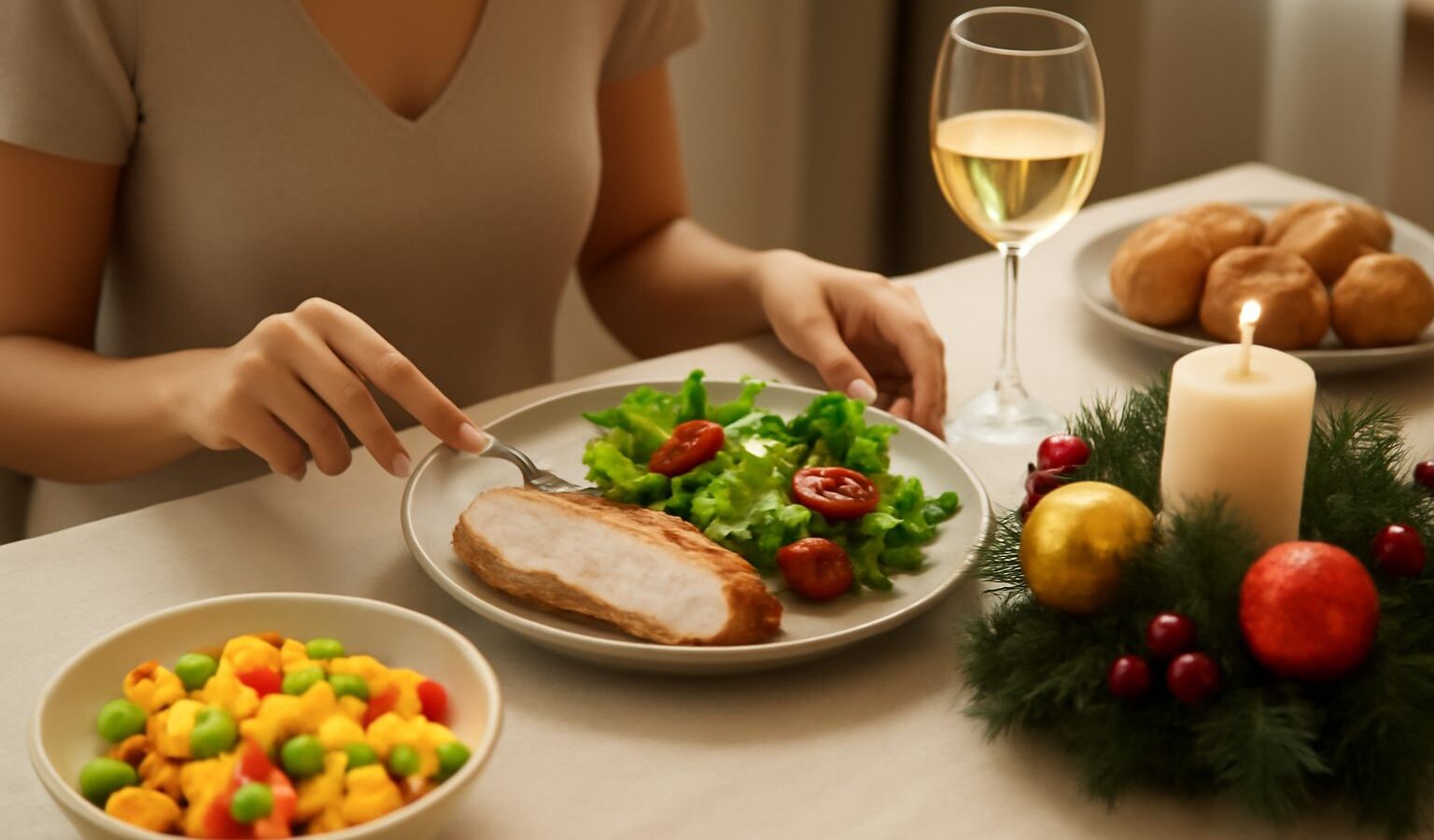
Singapore’s calendar is a near-endless parade of feasts, from Chinese New Year and Hari Raya to Deepavali, Christmas and the Mid-Autumn Festival. Food is how we celebrate, so the idea of healthy eating during festive seasons can feel like a contradiction. It is not. With a little planning and a relaxed mindset, you can enjoy every reunion dinner, open house and buffet without feeling stuffed, sluggish or guilty come January. This is general guidance for healthy adults, not medical or dietitian advice; if you have a condition such as diabetes or high cholesterol, follow your own doctor’s and dietitian’s advice on festive eating.
Enjoy the Celebration, Skip the Guilt
First, a reassuring truth: no single meal, and no single festive period, makes or breaks your health. What matters is the pattern across the whole year, not one indulgent weekend. Festive food is woven into culture, family and memory, and trying to “diet” through Chinese New Year usually backfires into feeling deprived and then overeating anyway.
So the goal is not restriction. It is enjoying the dishes you love with a bit more awareness, so you feel good during the celebrations and steady afterwards. Mindful eating, which means slowing down, savouring each bite and noticing when you are comfortably full, does more than any rigid rule. For more on that gentle approach, see mindful eating and your relationship with food and handling food cravings.
A Game Plan for Reunions and Open Houses
Festive gatherings are marathons of grazing, where food sits out for hours and everyone keeps topping up your plate. A few simple tactics keep you in control without drawing attention to yourself:
- Do not arrive starving. Skipping meals to “save room” usually leads to overeating. Have a light, protein-rich bite beforehand, such as yoghurt or an egg, so you choose with your head, not just your hunger.
- Scan before you serve. Walk the table once, then pick the dishes you genuinely love rather than filling up on whatever is nearest.
- Use a smaller plate and let vegetables and lean proteins take up the most space, with the richer items as tasters alongside.
- Pace yourself. Put your fork down between bites and chat; it takes time for your body to register fullness.
- Step away from the snack table. Mindless grazing beside the pineapple tarts adds up fast when you are not even hungry.
Portion awareness matters more than ever at a buffet; understanding portion sizes covers the simple hand method for sizing servings by eye.
Navigating Festive Treats, Festival by Festival
Every celebration has its irresistible stars, and you should absolutely enjoy them. The trick is treating them as the special once-a-year foods they are, rather than eating them by the tub every day for a month. Here is a gentle guide to some local favourites:
| Festive treat | Why it adds up | A lighter approach |
|---|---|---|
| Bak kwa and love letters | Rich in sugar, fat and salt | Savour a small piece slowly, not by the handful |
| Pineapple tarts and kueh | Buttery and sugary | Enjoy two or three, then share the rest |
| Rendang and rich curries | Heavy on coconut and oil | Spoon over more rice and vegetables to balance |
| Murukku and fried snacks | Deep-fried and easy to overeat | Portion into a small bowl, not straight from the tin |
| Mooncakes | Very energy-dense | Cut into quarters and share over tea |
| Log cake and festive bakes | High in sugar and fat | One good slice mindfully beats several rushed ones |
Notice the theme: none of these foods are off-limits. Sharing, portioning and slowing down let you taste everything without the heavy aftermath. Swapping some fried or sugary items for fruit, nuts or wholegrain bites between gatherings also helps; healthy snacking ideas and healthy desserts and treats in moderation have plenty of ideas.
Watch the Drinks, the Quiet Sugar Trap
It is easy to focus on food and forget how much sugar arrives in a glass. Festive tables overflow with soft drinks, packaged juices, sweetened cordials, festive tipples and endless sweet kopi and teh. These add up quickly and rarely make you feel full.
Simple swaps make a real difference:
- Choose water, plain tea or sparkling water as your main drink, and treat the sweet ones as occasional.
- Ask for kopi or teh kosong, or with less sugar, and look for the Healthier Choice Symbol on packaged drinks.
- If you drink alcohol, alternate with water, keep to moderate amounts, and avoid drinking on an empty stomach.
For more everyday alternatives, healthy drinks instead of soft drinks is a useful companion.
Easing Back After the Festivities
When the last of the goodies is finished, there is no need for a punishing detox or crash diet; these do not work and can be harmful. Your body simply needs a return to normal, balanced meals.
- Restock on vegetables and fruit. After days of rich food, plenty of colour and fibre feels genuinely good. Aim to get your five a day of fruits and vegetables back on track.
- Rehydrate and move. Water and a gentle walk do more than any cleanse. Resume your usual routine rather than overcorrecting.
- Do not moralise the food. You did not “sin” and do not need to “make up for it”. Just pick up your normal habits at the very next meal.
- Give leftovers away. Sharing surplus goodies with neighbours or colleagues keeps temptation from lingering in the cupboard for weeks on end.
Healthy eating during festive seasons is really about balance and kindness to yourself: celebrate fully, eat what you love with awareness, then ease back into your usual rhythm. Do that, and Singapore’s wonderful festive food stays a joy rather than a source of guilt. Building steady routines the rest of the year makes the festive stretches easier too; how to build lasting healthy eating habits shows how. For advice specific to your health, speak to a doctor or an accredited dietitian.