

If you carry a lot of extra weight, most beginner workout advice can feel like it was written for someone else. Jumping jacks hurt your knees, running is out of the question, and walking into a gym can feel like stepping onto a stage. Good exercise for overweight beginners looks different: it protects your joints, starts smaller than you expect and builds slowly. It is also absolutely worth doing. Moving more brings benefits for mood, sleep, blood sugar and heart health whether or not the scale changes quickly.
This guide is general information, not medical advice. It focuses on safe starting points, pacing and the checks to do first.
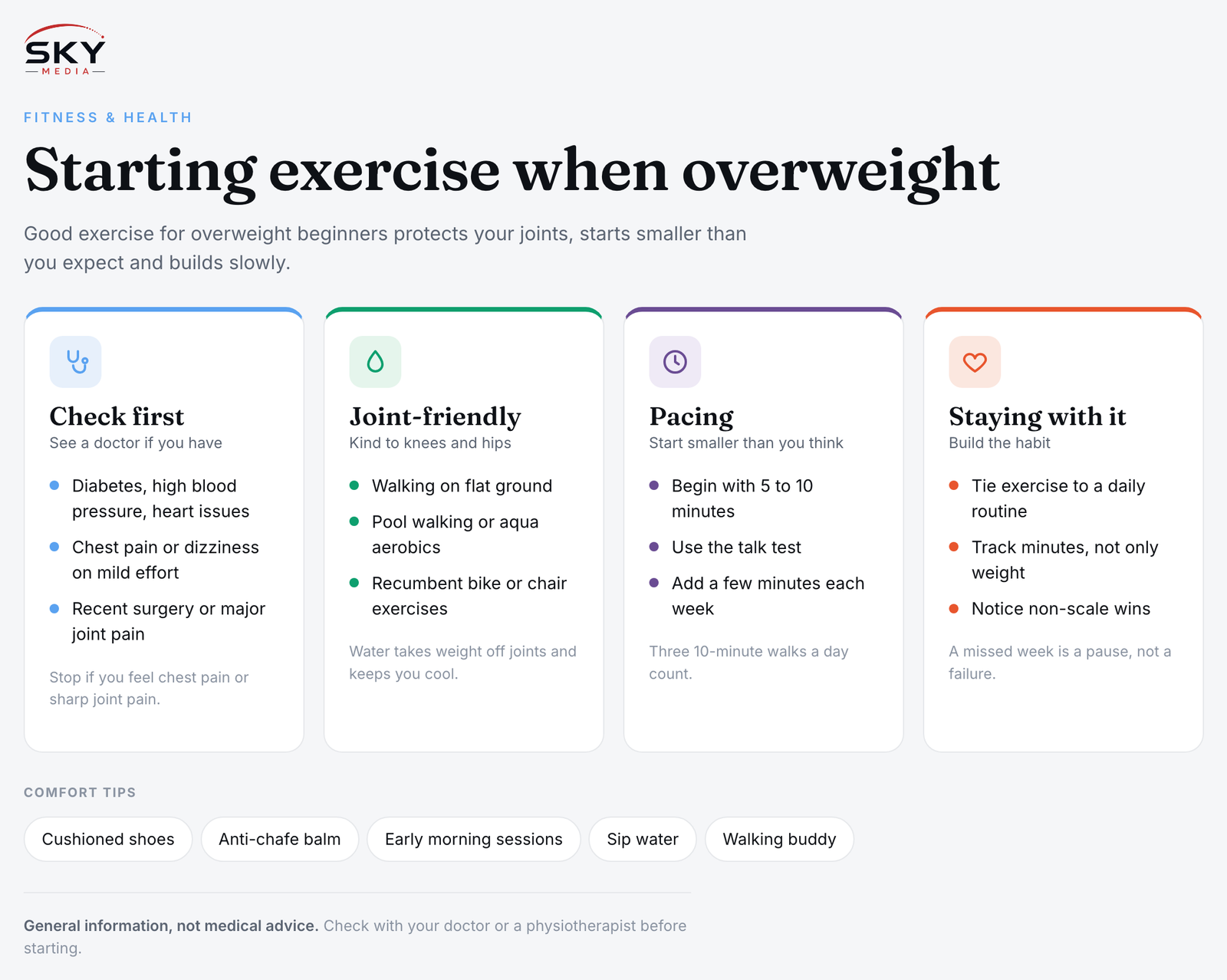
Safety Checks Before You Start
Talk to a doctor before beginning a new exercise routine if any of these apply to you:
- You have diabetes, high blood pressure, heart disease or high cholesterol, or you take medicine for any of them.
- You get chest pain, unusual breathlessness, dizziness or palpitations with mild effort.
- You have had a recent injury, joint replacement or surgery.
- You have significant knee, hip, ankle or back pain.
- You have sleep apnoea or a history of fainting.
A visit to your family doctor or a polyclinic is a sensible first step. In Singapore, the Healthier SG programme encourages residents to enrol with a family doctor who can help with a health plan, and HealthHub has information on enrolment and on government-supported activity programmes. Check the current details on those official sites.
During exercise, stop and seek help if you feel chest pain or pressure, severe breathlessness, dizziness, confusion or sharp joint pain. Mild muscle tiredness is normal; pain that makes you limp is not.
Joint-Friendly Places to Start
The aim at first is to move often without pounding your joints. These options are kinder to knees, hips and ankles.
Walking on flat ground. The simplest start. Park connectors, void decks during a downpour and air-conditioned malls in the heat are all practical. Start with short walks you can finish comfortably and repeat them.
Water-based exercise. Water supports your body weight, which takes pressure off joints, and it keeps you cool in Singapore’s heat. Walking laps in the shallow end, aqua aerobics or gentle swimming at public pools all count. If you feel self-conscious, quieter weekday mornings can help.
Stationary cycling. A recumbent bike, which has a back rest and a reclined seat, is especially comfortable for larger bodies and people with back pain. Many community gyms have one.
Chair and seated exercises. Arm raises, seated marches and leg extensions build strength and confidence without balance worries. Our guide to chair exercises for seniors and beginners works well for any age.
Simple strength moves. Wall push-ups, sit-to-stand from a sturdy chair, step-ups on the lowest step and resistance band rows build the muscles that protect your joints. Gentle holds such as a wall sit or a plank against a counter top are a low-impact way to start; see isometric exercises and planks for safe progressions.
Pacing: Start Smaller Than You Think
The most common mistake is doing too much on day one, feeling sore for a week and giving up. Instead:
- Use time, not distance. Start with five to ten minutes of activity, even if you could push further.
- Use the talk test. You should be able to speak in sentences. If you cannot, slow down.
- Add a little each week. Increase time a few minutes at a time, and only when the current level feels easy.
- Split sessions. Three ten-minute walks across a day count, and they may be easier on your joints than one long one.
- Rest days are part of the plan. Alternate harder and easier days, especially at the start.
Sample First Weeks, by Activity Type
| Activity | Why it suits beginners | Gentle starting point | Watch out for |
|---|---|---|---|
| Flat walking | Free, easy to fit in, builds stamina | Short walks on most days | Heat and humidity, worn-out shoes |
| Pool walking or aqua aerobics | Takes weight off joints, keeps you cool | A short session two or three times a week | Slippery pool decks, overdoing it because it feels easy |
| Recumbent or upright bike | Low impact, easy to control effort | A few minutes at a light setting | Seat height that strains knees |
| Chair and band strength work | Builds muscle that supports joints | One set of a few moves, twice a week | Holding your breath, jerky movements |
Treat this as a menu, not a prescription. A physiotherapist or your doctor can tailor it to your joints and health conditions.
Practical Comfort Tips
Small practical issues stop more people than lack of willpower.
- Shoes. Supportive, well-cushioned walking shoes with a wide enough toe box make a big difference. Replace them when the cushioning flattens.
- Chafing. Moisture-wicking clothes, longer shorts or cycling shorts under a skirt, and anti-chafe balm prevent painful rubbing in the humidity.
- Heat. Exercise in the early morning or evening, or indoors. Sip water through the session. Our guide to electrolytes and hydration for exercise explains when plain water is enough.
- Supportive gear. A well-fitting sports bra, and for some people a knee sleeve or compression wear, can improve comfort. Ask a physiotherapist if you are unsure.
- Getting up and down. If getting off the floor is hard, do all your moves standing or seated for now. You can work on floor transfers later.
Getting Support Without the Gym Anxiety
You do not need to join a commercial gym to start. Some options:
- Community centres and residents’ network spaces often run beginner-friendly classes. Check your nearest community club’s listings.
- Public pools and ActiveSG facilities offer swimming and gym access; check the ActiveSG website for current programmes and how to book.
- A physiotherapist, especially if you have joint pain, can design a programme around your body. Your doctor can advise on referrals.
- A walking buddy, a dog, or a family member who joins you adds accountability.
When choosing a trainer or class, look for someone who asks about your health history, scales moves without fuss and never uses shame as motivation. If a coach pushes you through sharp pain, find another one.
Staying With It
The habit matters more than any single workout.
- Tie exercise to something you already do, such as a walk after dinner.
- Track minutes moved or sessions completed rather than only weight.
- Notice non-scale wins: climbing stairs more easily, sleeping better, walking further at the mall.
- Expect setbacks. A missed week is a pause, not a failure.
For more ideas on making it stick, read how to build an exercise habit.
Every session counts, however short. Start gently, protect your joints, check in with your doctor, and let your body show you what it can do as the weeks go by.
Official sources: Health Promotion Board