

The idea of a flight with a little one can feel daunting, but plenty of Singapore families travel with babies and toddlers every week and come home glad they did. Flying with a baby in Singapore starts with an airport that makes it about as easy as air travel gets, and a bit of preparation goes a long way toward a calm trip. This guide covers the practical basics, from documents and bassinets to feeding, sleep and jet lag, plus how to make the most of Changi. It is general travel guidance. For anything about your child’s health or fitness to fly, please check with your paediatrician or doctor.
Documents and Booking Before You Go
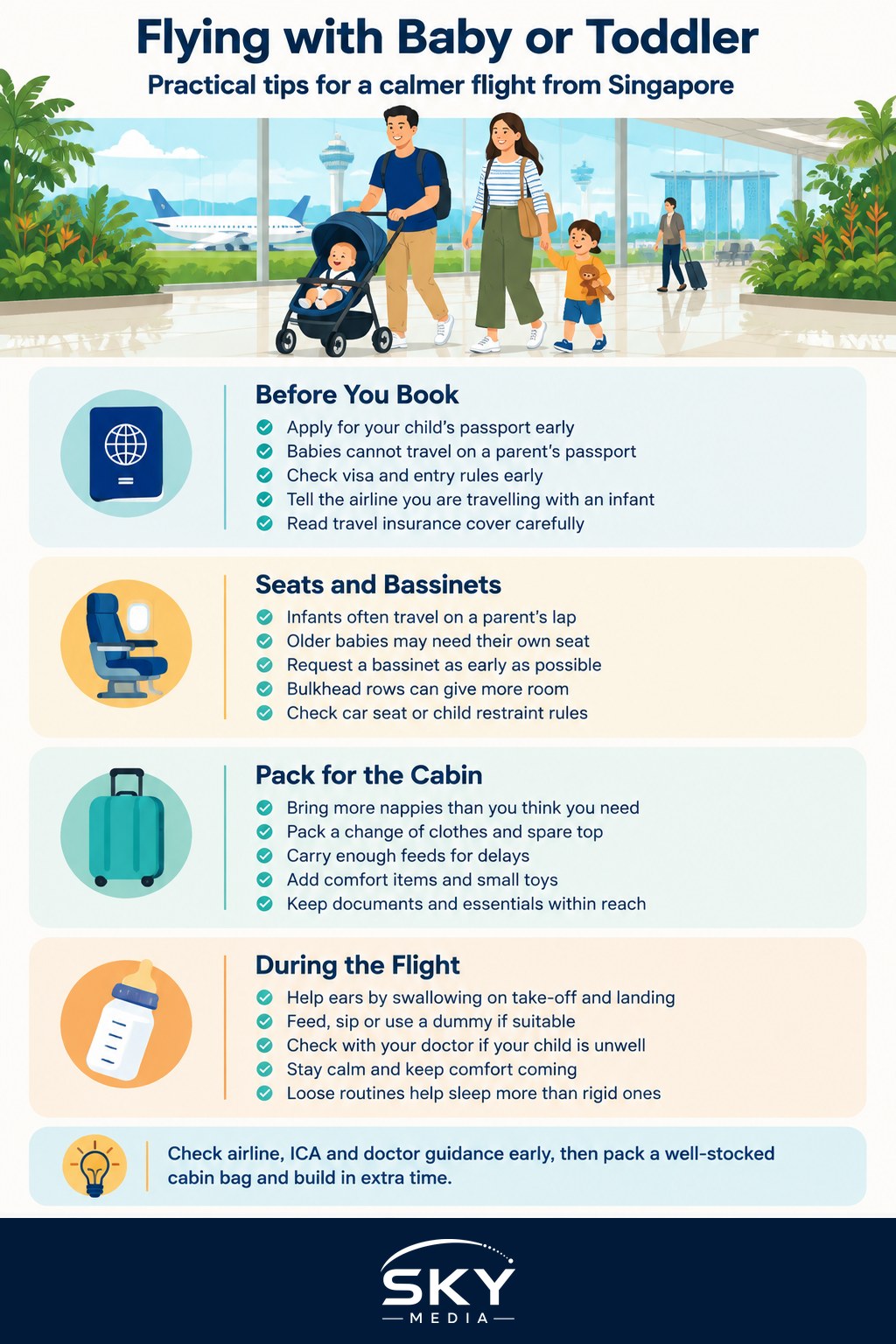
Even the smallest traveller needs their own passport. A baby cannot travel on a parent’s passport, so apply for the child’s Singapore passport well ahead, as processing takes time and you do not want it hanging over a booked trip. Check the current requirements and application steps through the official ICA channels rather than assuming, since details can change.
A few other pre-trip essentials:
- Visas and entry rules. Some destinations have entry requirements even for infants. Check the rules for your specific destination early.
- Health and vaccinations. If you are travelling somewhere with particular health considerations, speak to your doctor or a travel clinic in good time. This is general information, not medical advice, so confirm what applies to your child.
- Tell the airline you have an infant. When booking, flag that you are travelling with a baby. Airlines have specific policies for infants on laps versus in a seat, and for bassinets, and it is far easier to sort at booking than at the gate.
- Travel insurance. Consider cover that includes your child. Read what it covers rather than assuming.
Bassinets, Seats and Where to Sit
How your child travels depends on their age and size. Infants often fly on a parent’s lap, while older babies and toddlers may need or benefit from their own seat. Airlines set the rules here, so confirm the details for your flight.
For longer flights, an aircraft bassinet that attaches at a bulkhead can be a real help for a baby who still fits, letting them lie down and giving your arms a rest. Bassinets are limited in number and go quickly, so request one as early as possible and reconfirm before you fly. There are usually size and weight limits, and your baby may outgrow a bassinet sooner than you expect.
If your toddler has their own seat, ask the airline about using an approved car seat or child restraint on board, as policies differ. Bulkhead rows often give a little more room and are worth requesting when travelling with young children.
What to Pack in Your Cabin Bag
The cabin bag is your survival kit, so pack it thoughtfully and keep it within reach. Aim for more than you think you need of the essentials, plus a few comforts.
- Nappies, wipes and changes. Bring more nappies than the flight length suggests, plus a change of clothes for the baby and a spare top for you.
- Feeding supplies. Whatever your baby feeds on, bring enough for delays. Check the current airport security rules on carrying baby milk, water and food, as allowances for infant feeds are usually accommodated but worth confirming.
- Comfort items. A familiar soft toy, blanket or dummy helps a child settle in an unfamiliar space.
- Quiet entertainment. For toddlers, a few small new or favourite toys, stickers and snacks, rolled out one at a time, can buy precious calm.
- Medication and basics. Any items your child regularly needs, plus tissues and a small first-aid kit. Ask your doctor about anything medical before you rely on it.
Keep documents, feeds and a nappy change in the most accessible pocket, since you will want them without unpacking everything at your seat.
Feeding, Ears and Managing the Flight
The most talked-about worry is ear discomfort during take-off and landing, caused by pressure changes. A widely used, gentle approach is to have your child swallowing at those times, whether feeding at the breast or bottle, sucking a dummy, or, for older toddlers, sipping a drink or having a snack. Timing a feed for take-off and the descent can ease the pressure. If your child is unwell, has an ear infection or a heavy cold, check with your doctor before flying, as flying can worsen ear pain.
Beyond the ears, keep expectations realistic and stay calm. Babies pick up on tension, and a relaxed parent helps a settled child. Move around when it is safe to, keep feeds and comfort coming, and try not to worry about other passengers. Most people are more understanding than anxious parents fear.
Sleep, Jet Lag and Time Zones
Sleep on planes is unpredictable, and that is normal. Loose routines help more than rigid schedules. A familiar wind-down, a favourite blanket, and dim, quiet cues can encourage rest even in an aircraft seat or bassinet.
Jet lag affects children too, and larger time differences take longer to settle. Gentle strategies include easing into the new schedule over a few days, using daylight and mealtimes to help everyone adjust, and being patient with a few unsettled nights. There is no perfect fix, so plan a gentle first day or two at your destination rather than a packed itinerary. For specific concerns about your child’s sleep or health while travelling, check with your paediatrician.
Matching Tips to Your Child’s Stage
Different ages bring different challenges and advantages. Use this as a broad orientation, not a rulebook, since every child is different.
| Age or stage | What tends to be easier or harder | Handy tips |
|---|---|---|
| Young baby | Sleeps often, feeds settle them, but needs frequent changes | Feed for take-off and landing, request a bassinet early |
| Crawling baby | Wants to move, less content to sit still | Bulkhead room helps, bring safe distractions and snacks |
| Young toddler | Active and curious, tires of confinement | Rotate small toys, plan around nap times, allow walking in the aisle when safe |
| Older toddler | Can follow simple ideas and watch or play | Involve them, pack familiar comforts, keep snacks handy |
A gentle rule of thumb: consider building up with shorter regional trips before a long-haul flight. A short hop to a nearby destination lets you and your child practise the airport and flying routine with far lower stakes, so the first big trip feels manageable rather than overwhelming.
Making the Most of Changi and Jewel
Changi Airport is genuinely family-friendly, and using its facilities well sets a calmer tone. Arrive with time to spare so you are not rushing with a baby and bags. Look out for nursing rooms and baby-care facilities, family-friendly amenities, and spaces where a restless toddler can burn off energy before boarding rather than on the plane.
If your schedule allows, Jewel is a pleasant place to spend time before a flight or on a layover, with greenery and open space that toddlers enjoy. A little movement and a change of scene before boarding often helps a child settle once you are airborne. Build in buffer time, keep feeds and comforts within reach, and treat the airport as part of the trip rather than an obstacle before it. With a bit of planning, flying with your little one can be far smoother than the worry suggests.
Explore more
Before your next trip, warm up closer to home with our ideas for things to do with toddlers in Singapore and easy family weekend ideas in Singapore. Both are full of low-stress outings that help little ones get used to going places as a family.
Frequently Asked Questions
How young can a baby be before taking a flight? There is no single age that applies everywhere, because airlines set their own minimum ages and your baby’s health matters too. Check the airline’s policy for your flight, and ask your paediatrician whether your baby is fit to fly, especially if they were born early or have a medical condition.
Do I have to buy a ticket for a baby who sits on my lap? Often an infant on a lap is ticketed differently from a seated passenger, but fares, taxes and age cut-offs vary by airline. Confirm the rules when you book rather than at the airport. A baby who needs their own seat, or a bassinet, is usually arranged in advance too.
How early should I get to Changi when flying with a baby? Aim to arrive earlier than you normally would, since feeds, nappy changes and bags slow everything down. There is no universal time, so follow the airline’s check-in advice and add a comfortable buffer. Spare time also lets you use the nursing rooms before boarding.
Does my baby need a passport for a short trip across the Causeway? Yes, in general any traveller crossing a border needs their own valid travel document, and that includes babies. Check the requirements with ICA and the destination’s authorities, and apply well before the trip, as processing takes time.
What can I do if my baby cries during the flight? Stay calm, since babies sense tension. Check the usual causes first: hunger, a wet nappy, tiredness or ear discomfort. Feeding, cuddling, gentle walking and a familiar comfort item help. Most passengers are more sympathetic than anxious parents expect, so do not apologise endlessly.
Further reading: A China Travel Document for Your Singapore-Born Baby