
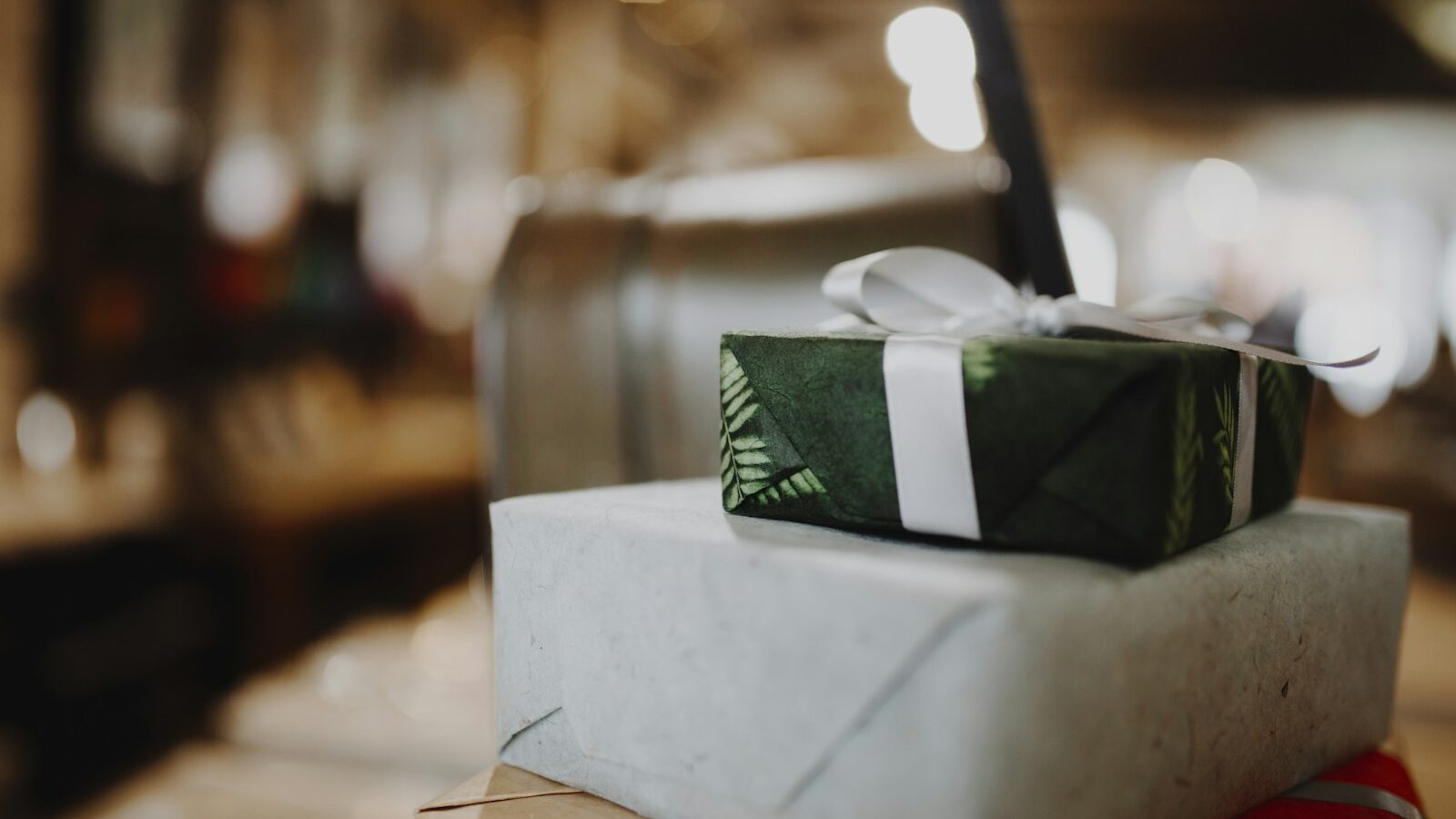
There is a quiet satisfaction in handing over a gift that looks as though real care went into it. Japanese wrapping traditions, from crisp diagonal paper wraps to furoshiki gift wrapping with a square of cloth, show that presentation can be part of the gift itself. They also happen to be practical in Singapore, where we wrap for birthdays, Chinese New Year, Hari Raya, Deepavali, Christmas and countless office farewells.
This guide covers four skills you can practise at home: the Japanese diagonal paper wrap, decorative pleats, furoshiki cloth knots and simple handmade bows. None needs special tools, and all improve quickly with a little repetition.

What You Need Before You Start
Keep your kit simple:
- Paper. Medium-weight wrapping paper or washi-style paper folds cleanly. Very thin paper tears; very thick paper fights back at the corners.
- Cloth for furoshiki. Any square of fabric works: a scarf, a bandana, a cut piece of cotton with hemmed edges. Cotton and cotton blends hold knots well. Silky fabrics look elegant but slip more.
- Double-sided tape. It keeps seams invisible. You will need very little with the diagonal method.
- A bone folder or the back of a spoon for sharp creases.
- Ribbon, twine or cord for bows.
- Scissors and a ruler.
Work on a clean, dry, flat table. In our humid weather, paper can soften, so store wrapping supplies away from the bathroom and kitchen.
The Japanese Diagonal Wrap (Paper)
The diagonal wrap, often seen in Japanese department stores, folds the box at an angle so that the paper hugs each corner with a single neat seam. It looks complicated, but it is a repeating rhythm of fold, turn, fold.
- Size the paper. Lay the paper face down and place the box face down on it at an angle, so each corner of the box points roughly towards a side of the paper. The paper should be large enough that the far corner can reach over the top of the box.
- First fold. Lift the paper edge nearest you up and over the front of the box. Crease along the box edge.
- Rotate and fold the side. Lift the box slightly and roll it away from you onto its next side. A triangular flap forms at the corner; fold it neatly along the box edge.
- Repeat around the box. Continue rotating and folding each side. Each time, tuck the excess into a clean diagonal pleat at the corner.
- Finish. The last corner of paper comes over the top as a diagonal flap. Fold its raw edge under for a crisp line and secure it with a small strip of double-sided tape.
Your first attempt may look lumpy; by the third or fourth box, you will feel where the paper wants to go. Start with a shallow rectangular box before you try deep or square ones.
Decorative Pleats
Pleats add texture and a handmade, tailored look. A simple band of pleats across the top of a gift catches the light beautifully.
- Plan placement. Decide where you want the pleats, usually a band across the lid or running diagonally.
- Make the pleats before wrapping. On the back of the paper, mark a light pencil line. Fold the paper forward along the line, then fold it back on itself a short distance away, creating a Z shape. Press flat. Repeat for two, three or more parallel pleats.
- Keep spacing even. Use a ruler. Uneven pleats are the most common giveaway of a rushed job.
- Wrap as normal. Treat the pleated paper as a single sheet and wrap your box with either a standard or diagonal method, keeping the pleats where you planned.
For variety, pleat a contrasting strip of paper and lay it over a plain wrap.
Furoshiki Knots for Different Shapes
Furoshiki is the Japanese tradition of wrapping and carrying objects in a square of cloth. It is reusable, adapts to awkward shapes and makes a lovely second gift in itself. The basis of most wraps is a secure square knot.
To tie the square knot: take two opposite corners of the cloth, cross right over left and tie once, then cross left over right and tie again. Pull firmly. If done correctly, the knot lies flat and holds well.
The table below matches common furoshiki wraps to the items they suit best.
| Wrap style | Best for | How it works |
|---|---|---|
| Basic carry wrap (otsukai tsutsumi) | Boxes of chocolates, books, small gift boxes | Place the box in the centre, fold two opposite corners over it, then tie the remaining two corners on top in a square knot |
| Bottle wrap | Wine, sauces, a single tall bottle | Stand the bottle in the centre, bring two opposite corners up and tie above the neck, then wrap the other two around the bottle and knot at the front |
| Two-bottle wrap | A pair of bottles | Lay bottles base to base on the diagonal, roll them up in the cloth, then bring the ends up and tie to form a handle |
| Round item wrap | Fruit, a melon, a round tin | Tie adjacent corners in pairs to make a pouch, then tie the two pouch knots together to make a handle |
| Bag wrap | Loose items, a picnic set | Knot each pair of adjacent corners near the tips, then tuck items inside and tie the remaining ends into a handle |
A few tips make furoshiki look polished:
- Match cloth size to the item. A rough guide is that the diagonal of the cloth should be around three times the width of the item, but experiment.
- Tuck in loose ends. After the knot, smooth the tails into a neat shape, or fan them out like petals.
- Choose fabric with the recipient in mind. A scarf they can wear afterwards turns the wrapping into part of the present.
For gifts during festive visits, furoshiki is a thoughtful, low-waste option. If you enjoy reducing packaging waste, our guide to eco-friendly moving supplies in Singapore has more ideas for reusable wrapping and fill.
Handmade Bows That Look Professional
A good bow finishes the gift. Try these three:
- Classic double-loop bow. Make two loops of ribbon, cross them, and tie them in the centre with a short piece of ribbon or thin wire. Trim the tails at an angle or in a V shape to stop fraying.
- Layered flat bow. Cut three strips of ribbon in decreasing lengths. Loop each into a flat ring, stack them with the largest at the bottom, and secure in the middle with a small band of ribbon. This bow lies flat, which is ideal for posting.
- Twine and sprig. For a rustic look, wrap twine around the gift several times and tie a small knot. Tuck in a dried flower, a cinnamon stick or a small handwritten tag.
The Japanese mizuhiki tradition of decorative cord knots is a craft of its own. If you enjoy knotwork, it is worth exploring once you are comfortable with the basics. Similar hand control is used in wire wrapping and wire art, which some crafters pick up next.
Etiquette and Thoughtful Touches
Gift customs vary across cultures and families, so treat these as gentle suggestions:
- Colours carry meaning. Red and gold are popular for celebrations in Chinese tradition. White is sometimes associated with mourning, so many people avoid all-white wraps for happy occasions. When in doubt, choose warm or bright colours.
- Presentation counts. Hand the gift over with both hands, a gesture of respect commonly seen in Japanese and Chinese settings and appreciated in Singapore generally.
- Furoshiki can be returned or kept. If you want the cloth back, say so warmly. Otherwise, assume it becomes part of the gift.
If Japanese culture interests you more broadly, learning Japanese in Singapore is a natural next step, and you will pick up the vocabulary behind many of these techniques.
Practising and Improving
Like any craft, wrapping gets better with repetition. Practise the diagonal wrap on empty delivery boxes and keep a scarf handy for furoshiki drills. Before long, your gifts will look as though they came from a specialist counter, and the people receiving them will notice the care you took.
Further reading: Gyotaku: Japanese Fish Printing for Beginners · Shibori: Japanese Tie-Dye for Beginners