

Tucked between the Black Sea and the Caucasus mountains, Georgia packs a lot into a small country: a characterful capital with sulphur baths and balconied old streets, dramatic mountain scenery a few hours’ drive away, and one of the oldest winemaking traditions in the world. For travellers looking beyond the usual Europe and Japan circuit, Georgia travel from Singapore is increasingly popular, and it rewards a week or more of slow exploring.
This guide covers how to get there, entry rules, when to go, and how to combine Tbilisi, Kazbegi and the Kakheti wine region into one well-paced trip.
Getting to Georgia From Singapore
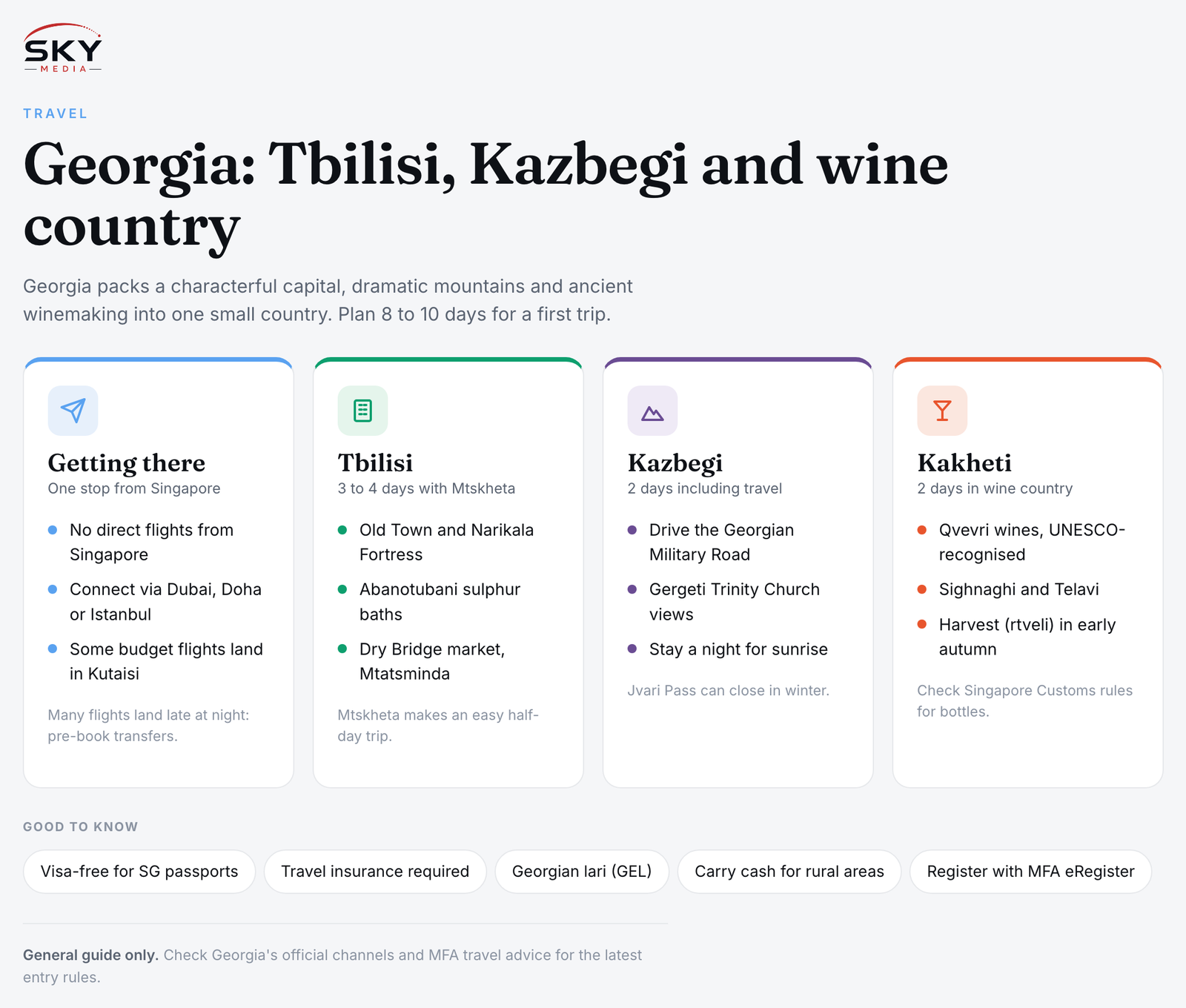
There are no direct flights between Singapore and Georgia, so plan on one stop. Common routings go through major Middle Eastern or Turkish hubs, such as Dubai, Doha or Istanbul, before connecting to Tbilisi International Airport. Some budget carriers also fly into Kutaisi, in western Georgia, which can be cheaper but is a few hours by road or rail from Tbilisi.
Tips for booking:
- Compare total journey time, not just price. Layovers vary widely, and an overnight connection can eat a day of your trip.
- Check arrival times. Many flights into Tbilisi land late at night or very early in the morning. Pre-arrange an airport transfer or check ride-hailing availability.
- Consider an open-jaw trip. Some travellers pair Georgia with Armenia or Turkey. Our guide to planning a multi-country trip from Singapore explains how to structure routes like this.
Visa, Entry and Practical Basics
Singapore passport holders have generally been able to visit Georgia visa-free for an extended stay, longer than most short holidays need. Entry rules can change, though, and Georgia has moved to require visitors to hold travel health insurance. Before you book, check the latest requirements on Georgia’s official government channels and the travel information published by Singapore’s Ministry of Foreign Affairs (MFA). Other passport holders, including Chinese nationals living in Singapore, should check their own entry requirements separately.
Other basics:
- Currency. Georgia uses the Georgian lari (GEL). Cards are widely accepted in Tbilisi, but carry some cash for rural guesthouses, markets and small cafés.
- Language. Georgian has its own unique alphabet. Russian is widely understood among older people, and English is increasingly common in the tourism industry, especially in Tbilisi.
- Getting around. Ride-hailing apps work in Tbilisi. For the regions, travellers usually choose between hiring a driver, joining a tour, taking shared minibuses (marshrutkas) or renting a car. Mountain roads can be challenging, so think carefully before self-driving.
- Safety and no-go areas. Georgia is generally considered welcoming to visitors, but the breakaway regions of Abkhazia and South Ossetia are not accessible from Georgia proper in the usual way. Read MFA’s travel advice before going and register your trip with MFA’s eRegister.
- Food. Georgian cuisine is a highlight: khachapuri (cheese bread), khinkali (soup dumplings), walnut-based dishes and fresh salads. Pork is common, so Muslim travellers should ask about ingredients and look for halal options in Tbilisi.
Tbilisi: The Capital
Most trips begin and end in Tbilisi, a city of hills, churches and creaky wooden balconies along the Mtkvari River.
Highlights to plan around:
- Old Town. Wander the lanes around the old quarter, with its mix of churches, a mosque and a synagogue reflecting the city’s history.
- Narikala Fortress. The ancient fortress overlooks the city. A cable car runs up from near the river, or you can walk.
- Abanotubani sulphur baths. The domed bathhouses use naturally warm, mineral-rich water. You can book private rooms; check what is included and the house rules.
- Rustaveli Avenue. The main boulevard is lined with theatres, museums and government buildings.
- Dry Bridge market. A flea market where you can browse Soviet-era items, antiques and art.
- Mtatsminda. The hill above the city has viewpoints and a park, popular at sunset.
Mtskheta, the former capital and a UNESCO World Heritage Site, is a short drive from Tbilisi and makes an easy half-day trip, with ancient churches at the meeting of two rivers.
Kazbegi: Mountains of the Greater Caucasus
The drive north from Tbilisi along the Georgian Military Road is one of the most scenic in the region. It passes the Ananuri fortress beside a reservoir, the ski area of Gudauri and the Jvari Pass before reaching Stepantsminda, the town usually called Kazbegi.
The postcard image of Georgia is the Gergeti Trinity Church, a small stone church perched on a ridge with Mount Kazbek rising behind it. You can hike up or take a vehicle, depending on your fitness and the conditions.
Things to know:
- Weather changes quickly. Mountain weather can turn cold, wet or foggy even in summer. Pack layers and rain gear.
- Winter closures happen. The road over the Jvari Pass can close because of snow or avalanche risk. Check road conditions before setting off in the colder months.
- Altitude. Kazbegi sits much higher than Tbilisi. Take it easy on the first day if you plan longer hikes.
- Stay overnight. A day trip is possible, but staying at least one night lets you catch the mountains at sunrise and enjoy quieter trails.
Kakheti: Georgia’s Wine Country
East of Tbilisi, the Kakheti region is the heart of Georgian winemaking. Georgia’s traditional method of fermenting wine in qvevri, large clay vessels buried in the ground, is recognised by UNESCO as intangible cultural heritage. The method produces distinctive amber wines from white grapes, alongside deep reds from the Saperavi grape.
Places to consider:
- Sighnaghi. A hilltop town with old walls and views across the Alazani Valley.
- Telavi. The regional centre, a good base for visiting wineries and monasteries.
- Alaverdi Monastery. A historic monastery with a winemaking tradition of its own.
- Family wineries and marani. A marani is a traditional wine cellar. Many small producers offer tastings, sometimes with home-cooked meals.
The grape harvest season, known as rtveli, usually falls in early autumn and is a lively time to visit. If you want to build your wine knowledge before the trip, start with our wine for beginners guide, and look out for Georgian bottles when exploring wine in Singapore after you return. If you are bringing bottles home, check Singapore Customs’ duty-free allowances and declaration rules.
Sample Itinerary and Time Needed
| Region | Main highlights | Suggested time |
|---|---|---|
| Tbilisi and Mtskheta | Old Town, Narikala, sulphur baths, ancient churches | 3 to 4 days |
| Kazbegi (Stepantsminda) | Georgian Military Road, Ananuri, Gergeti Trinity Church, mountain hikes | 2 days including travel |
| Kakheti | Sighnaghi, Telavi, qvevri wineries, monasteries | 2 days |
| Optional west (Kutaisi area) | Caves, canyons and monasteries | 2 to 3 days |
A first trip of 8 to 10 days lets you see Tbilisi, Kazbegi and Kakheti without rushing. Add western Georgia or neighbouring Armenia if you have two weeks.
When to Go
- Spring (around April to June). Green valleys, wildflowers and pleasant city weather. Higher mountain areas may still have snow early in the season.
- Summer (around July to August). Best for mountain hiking, though Tbilisi can be hot.
- Autumn (around September to October). Harvest season in Kakheti, golden colours and comfortable temperatures. A favourite for many visitors.
- Winter. Skiing in Gudauri and quieter cities, but expect cold weather and possible road closures in the mountains.
Georgia is a destination that rewards curiosity: try the food, linger over a long meal, and leave room in your plan for unexpected detours. With one stop on the way and a flexible itinerary, it makes a memorable alternative to the usual long-haul holiday from Singapore.
Further reading: Kyrgyzstan From Singapore: Bishkek, Issyk-Kul and Yurt Stays