
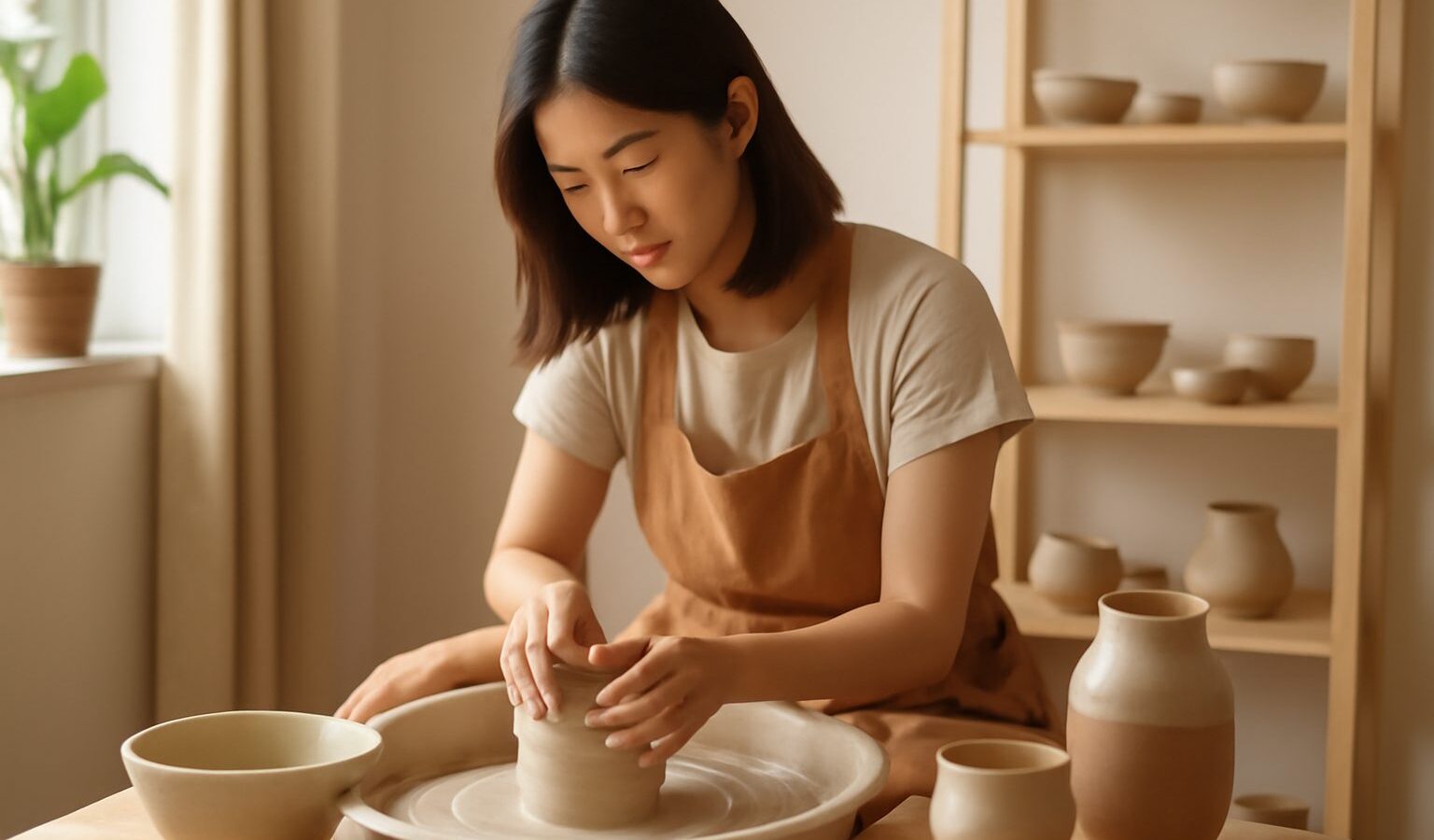
There is a special kind of calm in shaping a lump of clay with your own two hands. Pottery slows you down, gets you off your phone, and rewards patience with something you can actually use, a mug, a bowl, a little dish for your keys. If you have been curious about pottery in Singapore but assumed you needed a spinning wheel and a kiln at home, this beginner’s guide is for you. You can start this weekend, cheaply, and with almost no equipment.
Pottery and ceramics cover a lot of ground, from pinching a small pot at your kitchen table to throwing on a wheel at a studio. The good news is that beginners have never had more welcoming options here, and none of them ask you to commit a fortune up front.
Hand-Building Versus Wheel Throwing
The two main ways to make pottery are hand-building and wheel throwing, and they suit different people.
Hand-building means shaping clay by hand using simple techniques: pinching a ball into a pot, rolling coils and stacking them, or cutting flat slabs and joining them into boxes and trays. It needs almost no equipment, works on any table, and is very forgiving. Most people find it relaxing and easy to pick up in an afternoon.
Wheel throwing is the one you picture in films, clay spinning between your palms as a bowl rises up. It is enormously satisfying but has a real learning curve. Centring the clay alone can take a few sessions to click, so expect wobbly, uneven results at first. That is completely normal and part of the fun.
If you want a quick, low-pressure win, start with hand-building. If the spinning wheel is the whole reason you are curious, book a beginner wheel class and enjoy the mess. Many hobbyists end up doing both.
What You Need to Start
You do not need to buy much, and you certainly do not need a kiln. Here is the honest starter list.
- Clay. Air-dry clay is the easiest entry point and needs no firing, just time to dry. For fired pottery, studios supply the clay as part of your class or membership.
- A few basic tools. A wooden rib, a wire cutter, a sponge, and a simple loop tool cover most beginner needs. A butter knife and an old credit card work as stand-ins while you decide if you enjoy it.
- A work surface. A canvas cloth or an old wooden board stops clay sticking to your table.
- Water and a bowl. Clay work is wet work, so keep an apron and an old towel nearby.
- Somewhere to dry pieces. A shelf away from direct fans or aircon draughts, which can crack pieces if they dry too fast.
The big question for beginners is firing. A kiln reaches very high temperatures and is not an HDB-flat purchase. This is exactly why most people start at a studio, which handles firing and glazing for you, or start with air-dry clay at home to test the waters first.
Choosing Your Starting Point
Different routes suit different budgets, spaces and goals. Use this as a rough guide, and always check the studio or retailer for current prices, as supplies and class fees vary.
| Starting point | Best for | Rough cost band | What to know |
|---|---|---|---|
| Air-dry clay at home | Total beginners, tight budgets, HDB flats | Low | No firing needed; pieces are decorative, not food or water safe |
| One-off studio taster class | Trying the wheel once before committing | Low to mid | Instructor, clay and firing usually included; check what you take home |
| Multi-week beginner course | Learning properly with feedback | Mid | Structured skills, kiln access, glazing guidance |
| Studio membership or open studio | Regulars who want wheel and kiln time | Mid to premium | Ongoing access, often after a foundation course |
Starting cheap is not a lesser path. Plenty of people spend months on air-dry clay, love it, and only then sign up for a wheel course.
Where to Learn and Buy in Singapore
Singapore has a healthy pottery scene, so you are spoilt for choice.
For classes and studios, search for community pottery studios and ceramics workshops across the island, including in the central and eastern neighbourhoods and around the arts belt. Many run beginner-friendly taster sessions, weekend courses and open-studio memberships. Community centres and ActiveSG or PA courses sometimes offer affordable introductory ceramics classes too, which are a gentle, low-cost way in. When comparing, ask what is included: clay, tools, firing, glazing, and whether you keep your finished pieces.
For supplies, art and craft shops such as Art Friend and Spotlight stock air-dry clay, basic tools, acrylics and glazes suitable for beginners. Daiso is great for cheap sponges, cutting tools, small brushes and storage tubs. For proper pottery clay, stoneware and studio-grade tools, look to dedicated ceramics suppliers, which often sell online with delivery. Bras Basah Complex is a classic hunting ground for art materials if you prefer browsing in person.
If you want community, look for pottery meetups and hobby groups on social media. Sharing progress photos and swapping tips keeps beginners motivated through the wobbly early weeks.
Caring for Your Clay and Finished Pieces
Singapore’s humidity is both a friend and a foe to potters. Damp air keeps unfinished clay workable for longer, which is handy. The flip side is mould and uneven drying.
A few practical habits help:
- Store spare clay well. Keep it in a sealed bag or airtight box so it does not dry out or grow mould in the tropical damp.
- Dry pieces slowly and evenly. Rushing drying near a fan or aircon vent causes cracks. Cover pieces loosely with plastic to slow it down.
- Protect finished work. Air-dry pieces are not waterproof, so seal them with a suitable varnish if you want them to last, and keep them out of constant damp.
- Mind the mess. Never wash large amounts of clay down the sink, as it clogs pipes. Let clay water settle, pour off the clear water, and bin the sludge.
None of this is difficult once it becomes routine, and clean-up gets faster every time.
Small Wins Keep You Going
The secret to sticking with pottery is to celebrate the ugly first attempts. Your first pinch pot will be lopsided. Your first thrown bowl may collapse. Everyone’s does. Keep a couple of those early pieces so you can see how far you have come in a few months.
Set tiny goals: make one small dish, then a mug you actually drink from, then a matching pair. Pottery is a hobby you can grow into slowly, at your own pace and budget. Get your hands dirty this weekend, and see where the clay takes you.
Explore more
If pottery has sparked a wider urge to make things by hand, browse our other beginner guides. Try getting started with resin art or a beginner’s guide to candle making for more tactile, home-friendly crafts. Still deciding what suits you? Start with how to find a new hobby in Singapore.