
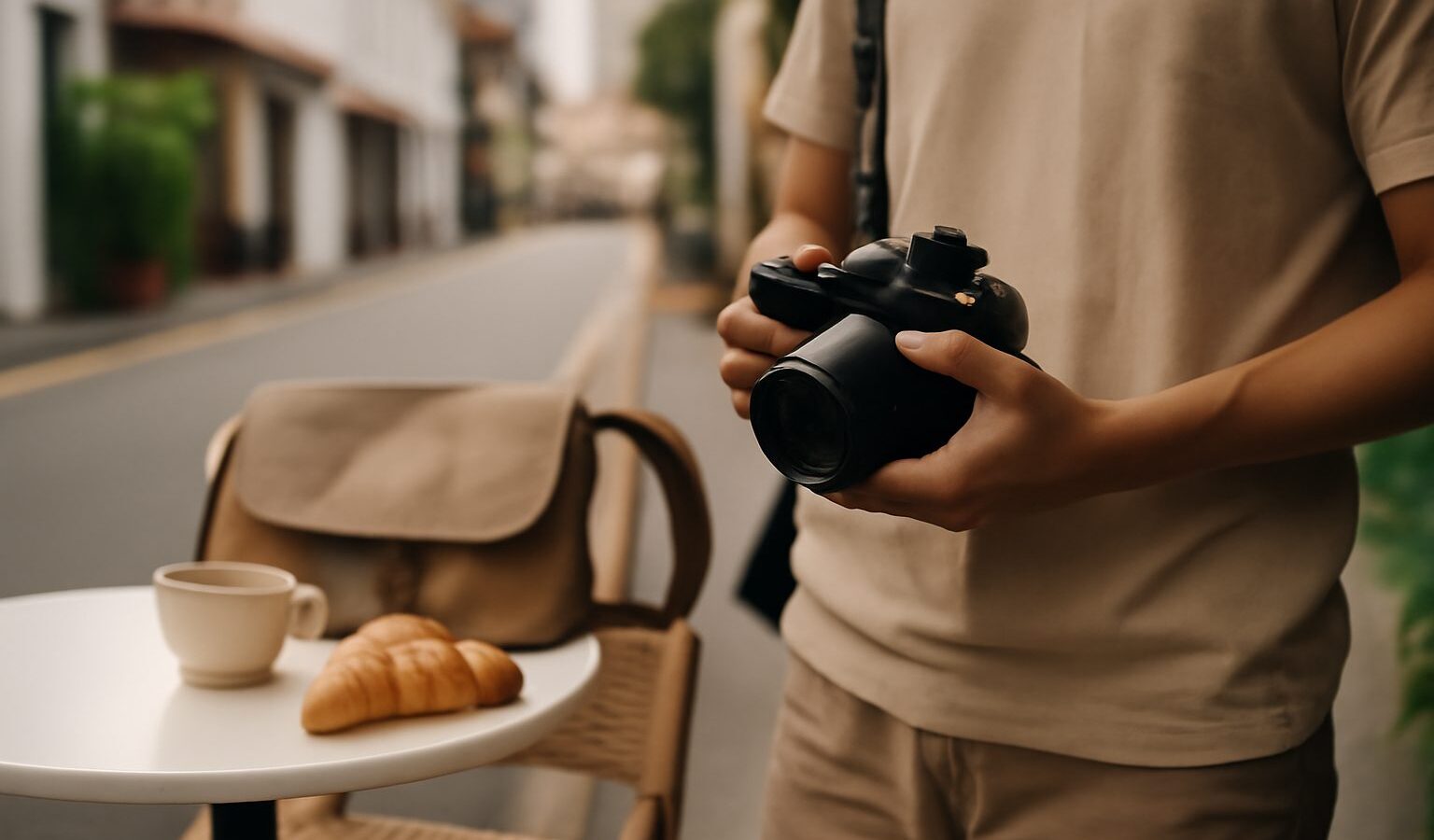
Street photography is one of the most accessible art forms you can take up in Singapore. You do not need a studio, expensive lighting or a model. You only need a camera, a little curiosity and a willingness to walk. This guide is for the complete beginner who wants a warm, practical way into the craft of making honest pictures of everyday life. We will keep it simple, friendly and rooted in the local scene, so you can start today with whatever you already own.
At its heart, street photography is about noticing. It is the art of catching small, true moments as they happen in public: a hawker wiping his stall, light falling across a void deck, two friends laughing at a bus stop. You are not staging anything. You are learning to see the ordinary city as something worth a second look.
What You Actually Need to Begin
The good news is that the barrier to entry is low. The best camera for street photography is the one you will carry every day, and for many people that is simply the phone already in their pocket. Modern phone cameras handle bright tropical light beautifully and are wonderfully discreet.
If you want to move beyond a phone, a small mirrorless camera or a compact with a fixed lens is ideal. Something light and quiet will not tire your hands on a long walk or draw attention. Avoid starting with a heavy setup and a long zoom, which is bulky and encourages you to shoot from far away rather than engage with a scene.
A short list of what genuinely helps:
- A camera you enjoy holding, phone or otherwise.
- A single moderate lens, roughly a normal or slightly wide view, so you learn to move with your feet.
- Comfortable shoes and a small bag, because good pictures come from walking.
- A spare battery and a cleaning cloth for our humid, sweaty afternoons.
Everything else is optional. Resist the urge to buy your way to better photos. Skill grows from mileage, not from gear.
Camera Settings That Free You to Look
Fiddling with menus is the enemy of a fleeting moment. The aim is to set your camera once so you can forget it and concentrate on the street. A widely used starting point is aperture priority mode, which lets you pick the depth of field while the camera handles shutter speed.
Try these beginner-friendly defaults and adjust as you learn:
- A middle aperture, around f/8, keeps most of the frame acceptably sharp so focus mistakes matter less.
- Auto ISO with a sensible ceiling lets the camera cope as you move from bright pavements into shaded five-foot-ways.
- A shutter speed no slower than 1/250 of a second freezes ordinary walking pace.
- Continuous or zone autofocus, or simply tapping to focus on a phone, is fast enough for most scenes.
On a phone, most of this is automatic. Your job is to tap the right spot, hold steady and shoot a little more than you think you need. You can always delete later.
Composition and Learning to See
Technique is only the doorway. What makes a picture sing is composition and timing, and both improve quickly with practice. Think of yourself as a patient collector of light and gesture rather than a hunter grabbing everything at once.
A few gentle habits to build:
- Find a good background first, then wait for the right person to walk into it. This “fishing” approach is far easier than chasing.
- Look for layers: something near, something middle, something far. Our dense city offers them everywhere.
- Watch the light. The soft hour after sunrise and before sunset flatters everything, while harsh noon gives you bold shadows and graphic shapes.
- Get closer than feels comfortable, but stay respectful. Filling the frame usually beats cropping later.
Do not worry about rules of thirds and leading lines on day one. Shoot a lot, review honestly, and keep the frames that made you feel something. Your eye will sharpen faster than you expect.
Shooting Respectfully and Lawfully in Singapore
Street photography involves people, so a thoughtful, considerate approach matters. In general you may take photographs in public places in Singapore, but courtesy and common sense should guide you at all times. The goal is honest pictures, never discomfort.
Please keep to these principles:
- Be respectful. If someone clearly does not want to be photographed, lower your camera and move on with a smile.
- Never photograph in a way that is intrusive, harassing or that targets someone in a vulnerable moment.
- Avoid photographing children without a parent’s awareness, and be sensitive around places of worship, hospitals and homes.
- Steer clear of restricted or secured areas such as certain government, military and transport zones, and heed any posted signs or staff instructions.
- Private property, including many malls, may set its own rules, so ask if unsure.
- If you plan to sell or publish a recognisable person’s image commercially, seek permission first.
A friendly manner earns you far more good pictures than stealth ever will. Many people are happy to be photographed when you simply ask and share the result.
Where to Practise Around the Island
Singapore is a gift to a street photographer. You have gleaming glass towers, weathered shophouses, wet markets, void decks and quiet heartland corners, often within a single MRT ride. You do not need to travel far or spend anything.
Beginner-friendly hunting grounds include the older shophouse districts with their colour and texture, a bustling hawker centre at lunchtime, a heartland market in the early morning, the waterfront promenades near the bay, and the everyday theatre of an MRT interchange. Even your own neighbourhood void deck rewards a patient eye.
Here is a quick way to weigh two common approaches as you begin.
| Approach | Candid, from the flow | Considered, ask first |
|---|---|---|
| Feel | Spontaneous, unguarded | Calm, collaborative |
| Best for | Gestures, motion, atmosphere | Portraits, character, detail |
| Skill needed | Anticipation and timing | Confidence and a friendly opener |
| Comfort level | Can feel daunting early on | Gentle and reassuring for beginners |
| Result | Slice-of-life moments | Honest, consenting portraits |
Neither is better. Many photographers blend both across a single walk, staying candid for atmosphere and asking politely when a face deserves a proper portrait.
Building a Habit and Growing
The single most useful thing you can do is go out regularly, even for twenty minutes. Consistency beats intensity. Pick one route, walk it often, and watch how the light and crowds change through the day and the week. Familiar ground teaches you to anticipate moments.
To keep improving without pressure, try setting yourself a tiny theme for each outing, such as reflections, red, or people waiting. Constraints spark creativity. Afterwards, review your frames kindly, choose a small favourite few, and note what worked. Joining a casual local photo walk, a community club group or an online Singapore photography community is a lovely way to learn, share and stay motivated among friendly people.
Above all, be patient with yourself. Every photographer you admire once stood on a pavement feeling awkward and unsure. Keep walking, keep looking, and the pictures will come.
Explore More
If this has sparked something, there is a whole creative world nearby to explore. You might enjoy our companion guide to learning to draw as an adult, which shares the same beginner-friendly spirit. For a deeper look at seeing itself, try how to appreciate visual art, and to understand the local context, browse an introduction to Singapore art history.
Related across Sky Media: Street Photography Composition Tips · Getting Started With Synthesisers