
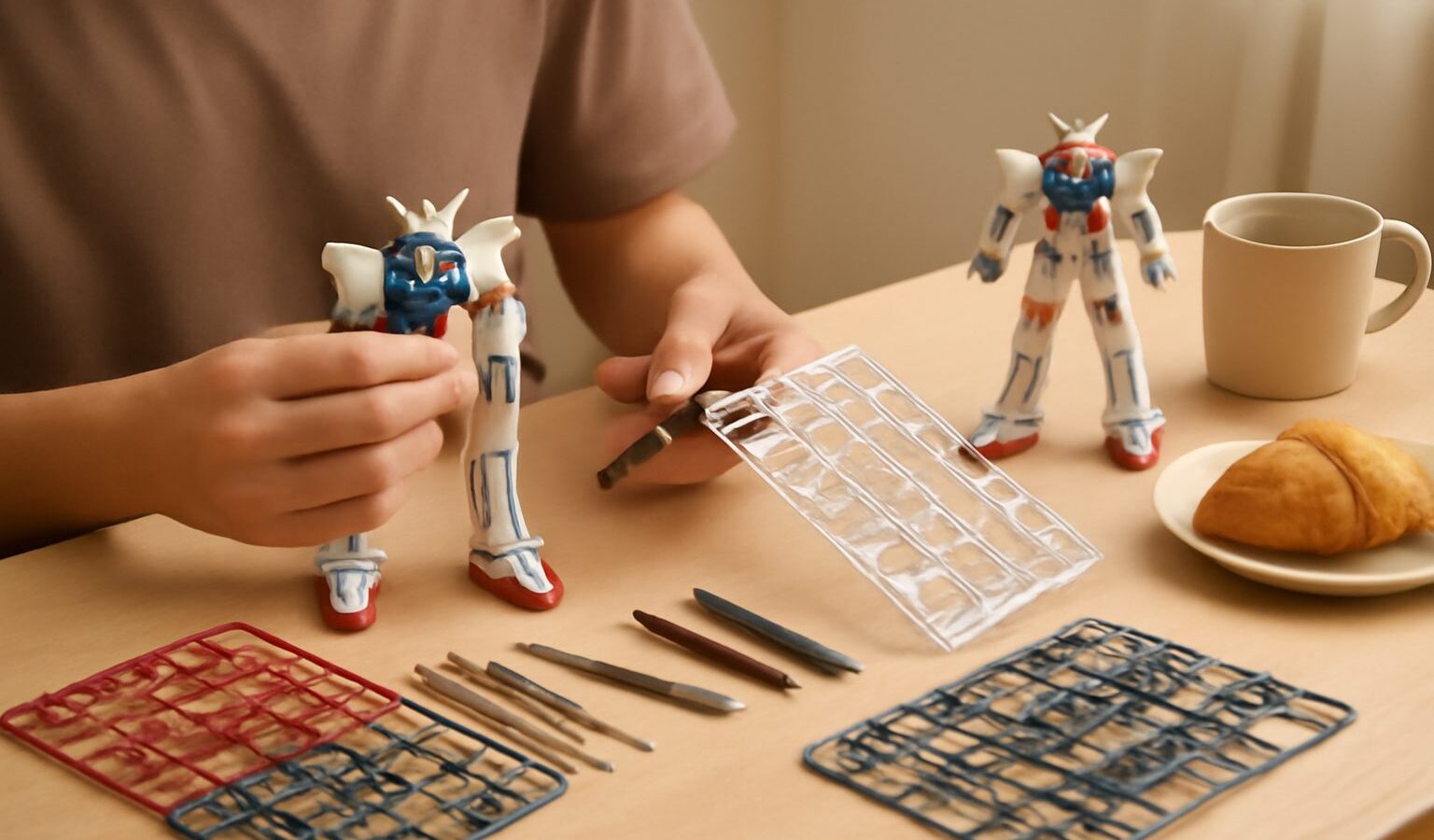
Snap a few colourful plastic parts together, pose a robot with movable joints, and you have your first Gunpla. Short for “Gundam plastic model”, Gunpla is one of the most beginner-friendly hobbies around, and the Gunpla scene in Singapore is warm, active and easy to join. You do not need glue, paint or any experience to start, just a kit and an hour of quiet time. This guide explains the different grades, the handful of tools that make building smoother, where to shop locally, and how to keep your finished kits looking great in our humid climate.
What Gunpla Is and Why Beginners Love It
Gunpla are model kits of the robots (called mobile suits) from the long-running Gundam animated series, made by Bandai. What makes them special is that the parts are moulded in colour and clip together without glue, so a finished kit already looks good straight out of the box. Better still, most modern kits are fully poseable, so you can display your robot in dynamic action stances.
It is an ideal hobby for life here. A single kit fits on a small table, packs away into its box, and needs no messy workshop. Building is quiet and screen-free, which makes it a lovely way to unwind. Because you complete a runner or a limb at a time, you get a steady stream of small wins, and even a first attempt looks impressive on the shelf. You can also start cheap: an entry-level kit and a single tool are enough to begin.
Understanding the Grades
Gunpla come in “grades” that describe size, detail and complexity rather than quality. Knowing them helps you pick the right first kit:
- High Grade (HG): 1/144 scale, palm-sized, moderate part count. The classic starting point, affordable and quick to build.
- Real Grade (RG): 1/144 scale but highly detailed with many small parts. Impressive results, though a little fiddly for a first go.
- Master Grade (MG): 1/100 scale, larger with inner frames and rich detail. A satisfying step up once you have built a couple.
- Perfect Grade (PG): 1/60 scale, very large and complex. Best saved for when you are confident.
- SD (Super Deformed): cute, chibi-proportioned kits with low part counts, great for absolute beginners and younger builders.
For your very first build, an HG or an SD kit is the sweet spot: enjoyable, forgiving, and finished in an afternoon.
The Simple Tools You Need to Start
You can genuinely build a snap-fit kit with your hands alone, but a few inexpensive tools make everything cleaner and more enjoyable:
- A side cutter (nipper) to snip parts off the plastic runner. This is the one tool worth buying first.
- A hobby knife to trim the small nub left behind after cutting.
- Fine sandpaper or a sanding stick to smooth those nubs flat.
- Tweezers for applying the small foil or waterslide stickers.
- A cutting mat to protect your table.
Paint and cement are entirely optional with Gunpla and not needed at all to get a great-looking result. When you want to add depth later, panel-lining markers are a popular, low-effort upgrade that make details pop.
A quick safety note: nippers and hobby knives are sharp, so cut away from your fingers and cap blades when not in use. If you move on to spray paints or cement down the track, use them in a well-ventilated area near an open window or fan and follow the product instructions. Keep blades and tiny parts away from children and pets.
Comparing Your First Gunpla Options
Not sure which grade to buy first? This table compares the friendliest starting points so you can match one to your budget and patience.
| Grade | Best for | Rough cost band | Build experience |
|---|---|---|---|
| SD (Super Deformed) | Kids and absolute beginners | Budget | Very quick, few parts, cute finished figure |
| High Grade (HG) | Most first-time builders | Budget to mid | Balanced part count, poseable, done in an afternoon |
| Real Grade (RG) | Keen beginners wanting detail | Mid | Many small parts, stunning result, a little fiddly |
| Master Grade (MG) | Those ready for a step up | Mid to premium | Inner frame, rich detail, a longer, rewarding build |
Prices differ by kit, grade and retailer, so treat these as rough bands and check the shop for current pricing before buying.
How to Build Your First Kit
The process is refreshingly simple:
- Read the instruction booklet and lay out your tools and runners.
- Cut each part with a small tag of plastic still attached, rather than flush against the part, to avoid marks.
- Trim the leftover nub close, then sand it smooth.
- Clip the parts together following the numbered steps. They are designed to fit firmly.
- Apply the stickers or foil seals last with tweezers for a clean finish.
- Optional: run a panel-lining marker into the recessed lines and wipe off the excess to add instant depth.
Work in short sessions, take your time, and enjoy watching the robot come together. Your second kit will look noticeably tidier than your first.
Where to Buy and Learn in Singapore
Gunpla is easy to find locally. Dedicated hobby and toy shops around the island stock a range of grades, and you will spot Gunpla at hobby stores in malls and heartland areas as well as at pop-up events and hobby fairs. For tools, Art Friend and Spotlight carry knives, cutting mats, sandpaper and tweezers, while Daiso is handy for cheap tweezers and small storage. Online marketplaces and local hobby retailers are useful for hunting down specific kits and restocks.
To learn, the community is generous and the resources are free. Countless online video tutorials walk you through cutting, sanding and panel-lining, and Singapore-based Gunpla groups on social media are friendly to newcomers who share their first builds. Some hobby shops host build sessions or competitions, which are a great way to meet fellow builders and pick up tips, so ask around when you visit.
Caring for Your Kits in the Humidity
Our tropical damp is easy to manage with a few habits. High humidity and strong sunlight can make stickers lift over time, and dust settles quickly on displayed models. Keep your builds looking sharp with these tips:
- Display finished kits in a glass or acrylic cabinet to keep dust off.
- Add a few silica gel sachets to the cabinet or storage box to reduce damp, and refresh them periodically.
- Keep sealed kits and any paints in a cool, dry drawer, out of direct sun.
- Dust gently with a soft brush, and avoid leaving models by a sunny window where colours can fade.
That really is all it takes. Pick up an affordable HG kit and a single nipper this week, set aside a calm afternoon, and enjoy building your first mobile suit. It is a hobby that grows with you, one satisfying kit at a time.
Explore more
If Gunpla hooks you, plenty of related hobbies scratch the same itch. Try the wider world of scale model building with aircraft, cars and ships, or the brick-by-brick fun of Lego as an adult hobby. If you love displaying finished pieces, browse collecting and caring for figurines or our guide to diecast and toy collecting.