
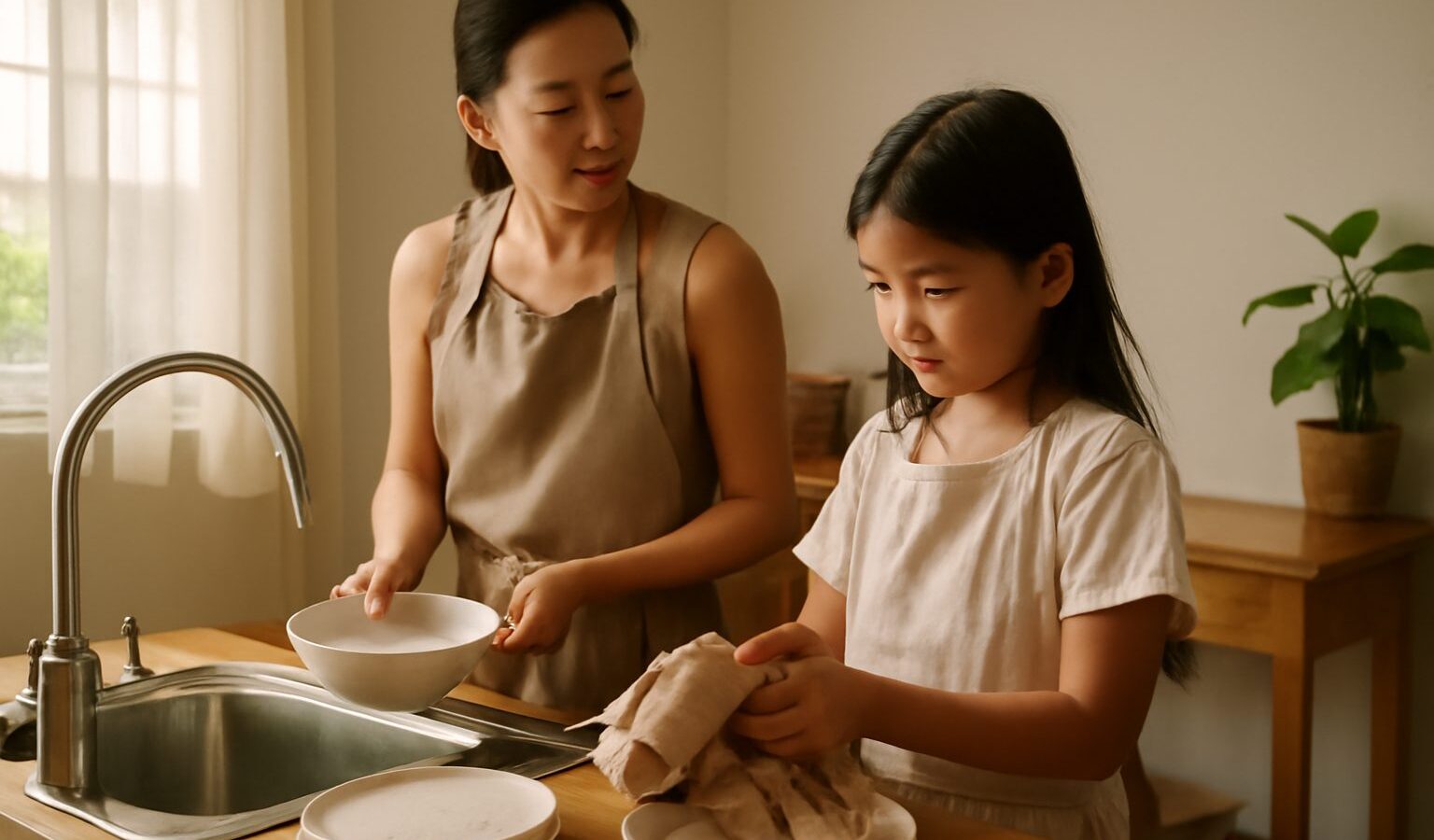
Many parents in Singapore feel torn about chores. Between school, tuition, CCAs and the daily rush through the heartland, it can seem easier to just do everything yourself. Yet giving children chores in Singapore is one of the gentlest ways to build responsibility, confidence and a sense of belonging at home. Chores are not about creating free labour. They are about helping a child feel that they matter to the family and that their small actions make a real difference.
There is no single right way to divide up the work, and every child is different. Some take to chores quickly, while others need more patience and encouragement. What follows are practical, supportive ideas you can adapt to your own family and your own flat.
Why Chores Matter More Than You Think
When a child clears their plate, folds a shirt or wipes a table, they learn far more than the task itself. They learn that a home runs on shared effort, that they are capable, and that their contribution is noticed. This quiet sense of competence carries over into schoolwork and friendships. A child who believes they can handle small challenges at home is often more willing to try hard things elsewhere.
Chores also teach cause and effect. If the shoes are not tidied, the doorway gets cluttered. If the water bottle is not washed, there is nothing clean for tomorrow. These are honest, low-stakes lessons that no worksheet can teach. Over time, children start to see themselves as helpers rather than guests in their own home. If you would like to go deeper on raising a willing helper, you may find Raising a Helpful and Cooperative Child a useful companion piece.
Just as important, chores build resilience. Sticking with a task even when it is boring or difficult is a small act of grit, and grit is something we can nurture gently over the years. For more on this, see Building Resilience and Grit in Your Child.
Matching Chores to Your Child’s Age
The secret to chores that stick is choosing tasks that fit your child. Ask for too much and they feel overwhelmed. Ask for too little and they feel bored or babied. Here are some gentle starting points you can adjust.
Younger primary-school children can usually manage simple, clear tasks. Think putting toys back in a box, placing dirty clothes in the laundry basket, wiping their own table after meals, or feeding a pet with your supervision. Keep instructions short and specific.
Older primary-school children can take on a little more. They might set the table, pack their own school bag the night before, water the plants, sort recycling, or help hang up laundry. This is a good age to introduce a small routine so chores become a habit rather than a nightly argument.
Early teens can handle real responsibility. They might cook a simple dish, do their own laundry from start to finish, manage part of the grocery list, or look after a younger sibling for a short while under your guidance. Teens often respond well when you explain that you trust them, rather than framing chores as punishment.
Making Chores Work Without the Nagging
Even the best chore plan can fall apart if it becomes a daily battle. A few small shifts in approach can make the whole thing feel calmer.
Start by being clear and consistent. Decide together which chores belong to whom, and write them somewhere visible, such as on the fridge. Children cope better when expectations are steady rather than changing with your mood or your stress levels.
Focus on effort rather than perfection. A five-year-old will not fold a towel like an adult, and that is completely fine. If you redo their work in front of them, they quietly learn that trying is pointless. Praise the attempt and let good enough be good enough. The way we praise matters too, and Praising Your Child the Right Way offers helpful pointers on this.
Try to keep chores separate from pocket money for the basic tasks that simply come with being part of the family. You might still reward extra, optional jobs, but core chores are best framed as everyone pitching in rather than a paid transaction. This keeps the focus on belonging.
Where there are several children, fairness becomes a live issue. Siblings notice quickly if one seems to do more than another. Rotating chores and talking openly about the sharing of work can ease this. If this is a frequent source of tension in your home, Fair Parenting with Multiple Children explores it in more detail.
Keeping the Bigger Picture in Mind
On busy weeks, chores may slip, and that is nothing to feel guilty about. The goal is not a spotless flat but a child who grows up feeling capable and connected. Progress will not be linear. There will be forgotten tasks, half-hearted efforts and the occasional flat refusal. Respond with calm reminders rather than harsh words, and remember that you are teaching a skill that takes years to develop.
Celebrate the small wins. The first time your child empties the dishwasher without being asked, or notices that the bin is full and quietly changes the bag, you are seeing the fruit of your patience. These moments are worth far more than a perfectly clean home.
Every family finds its own rhythm. Start small, stay kind, and let your child grow into responsibility at a pace that suits them. Over time, the daily nagging fades, and in its place you build a home where everyone shares the load and everyone feels they belong.