

Few garden projects feel as satisfying, or as slightly cheeky, as turning a supermarket fruit into a living plant. Growing pineapple singapore gardeners will be pleased to hear, is genuinely easy, because our warm, humid climate is close to a pineapple’s natural home. All you need is the leafy top you would normally throw away, a little patience, and a sunny spot on your balcony or by a bright window.
A pineapple is a bromeliad, a tough, sun-loving plant with a rosette of spiky leaves. That toughness is good news for busy or forgetful gardeners. Once it roots, it asks for very little. The trade-off is time. A pineapple plant takes a good while to fruit, often a couple of years or more, so treat this as a slow, rewarding hobby rather than a quick harvest.
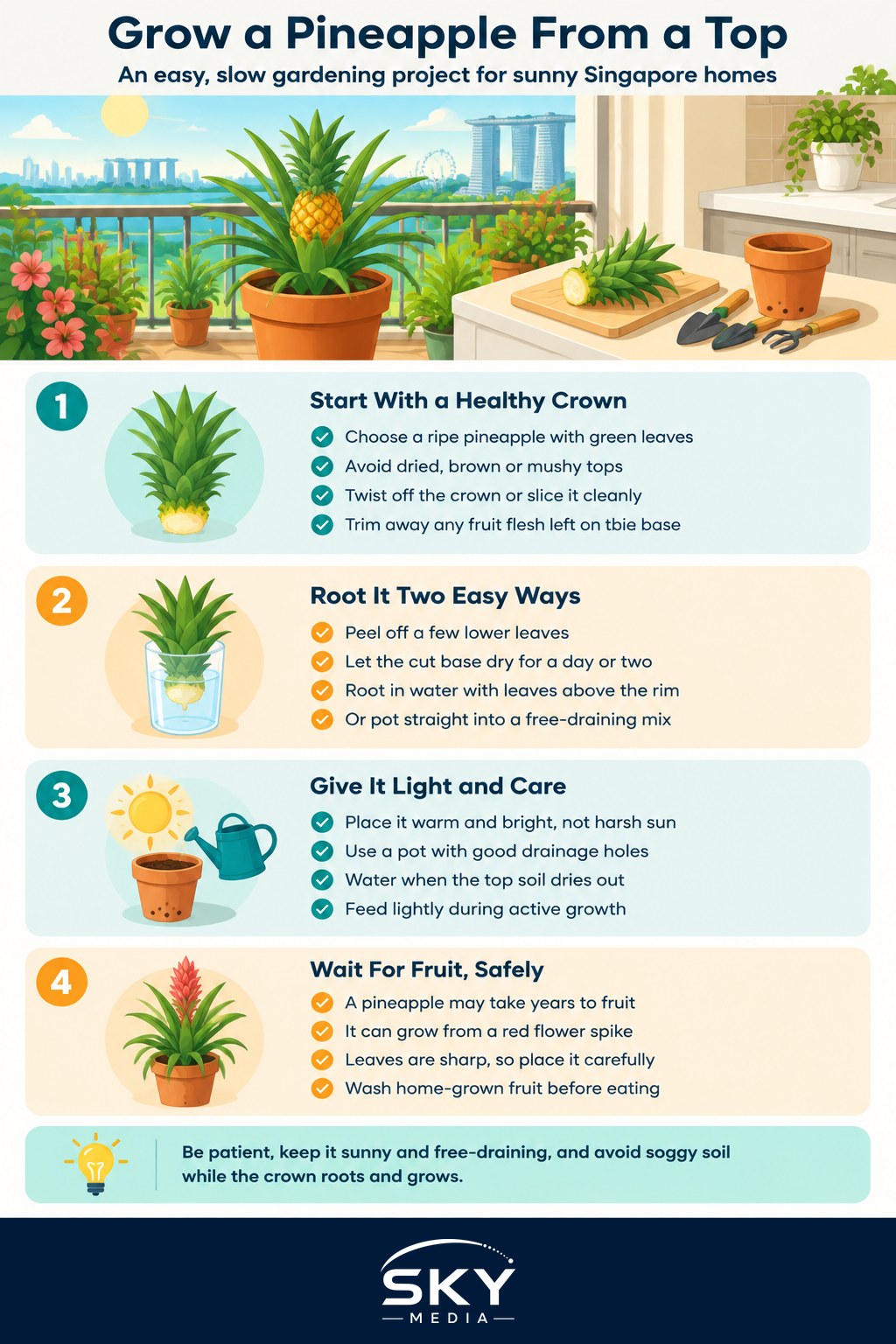
Preparing and rooting the crown
Start with a healthy, ripe pineapple that has fresh, green, firm leaves at the top. Avoid tops that are dried, brown, or mushy at the base. There are two easy ways to remove the crown. You can grip the leafy top firmly and twist it off with a sharp turn, which pulls out a small stub of core, or you can slice the top off with a clean knife just below the leaves. If you slice, trim away any fruit flesh, since leftover flesh rots and invites mould.
Next, peel or strip away the lowest few centimetres of small leaves to expose the short stem. Look closely and you may see tiny brown bumps, which are baby roots waiting to grow. Let the crown dry for a day or two in a shaded, airy spot so the cut base can callus over. This simple step reduces rot once it meets water or soil.
Now root it using either method:
- Water method: rest the crown so the exposed stem sits in a glass of water, with the leaves above the rim. Change the water every couple of days to keep it clean, and wait for white roots to appear.
- Soil method: pot the crown straight into a free-draining mix and water lightly, keeping the soil just moist, not soggy.
Whichever you choose, put it somewhere warm and bright but out of the harshest direct afternoon sun at first. In our heat, roots usually form within a few weeks.
Potting up and long-term care
Once roots are a few centimetres long, or the crown resists a gentle tug in soil, it is ready for its proper home. Choose a pot with good drainage holes and a gritty, free-draining mix, since pineapples hate sitting in wet feet. If you like blending your own, our guide to making your own potting mix will help you get the balance right.
Pineapples love light. Give your plant the brightest spot you have, ideally a sunny balcony or ledge. If you are working with a bright outdoor space, the tips in our best plants for a sunny balcony guide apply here too. Water when the top of the soil dries out, and go easy during rainy monsoon spells when pots stay damp longer. Being a bromeliad, a pineapple also drinks a little through the central cup formed by its leaves, so a small splash there now and then is welcome.
Feed occasionally during active growth with a balanced, diluted fertiliser. Over time the rosette widens and the leaves lengthen. Eventually, if it is happy, a red flower spike rises from the centre and slowly develops into a small pineapple. Home-grown fruit is often smaller than shop pineapples, but the pride is enormous.
A few honest reminders. Pineapple leaves have sharp, sometimes spiny edges, so position the pot away from where people brush past, and keep it out of reach of young children. When you finally harvest, treat it like any home-grown edible. Wash the fruit before you cut and eat it, and use clean tools and surfaces.
Growing a pineapple from a top is a lovely low-cost project that turns kitchen waste into a striking, spiky houseplant. If you enjoy this, you will probably love our roundup of kitchen scraps you can regrow too. Be patient, give it sun, keep it from getting soggy, and one day you may just harvest a pineapple you grew yourself.