
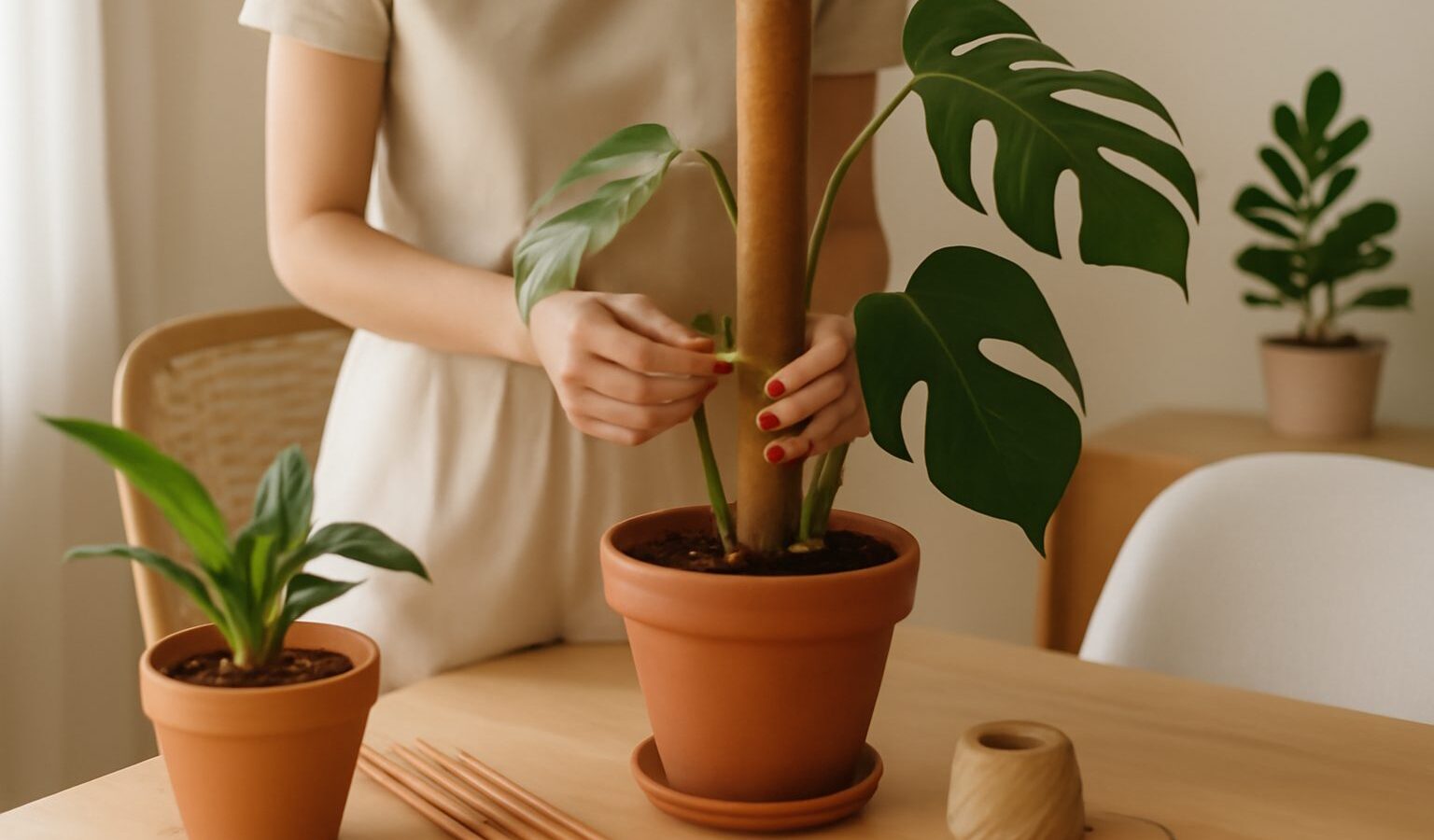
Sooner or later, almost every plant lover meets a stem that will not stand up. A fiddle-leaf fig leaning towards the window, a rubber plant tipping under its own weight, a top-heavy monstera threatening to tumble out of its pot, a leggy seedling flopping over. Staking and supporting your plants is the quiet, unglamorous skill that keeps a collection looking upright and healthy rather than sprawled and sorry. Staking plants in Singapore comes with a tropical twist too, because our fast growth, sudden storms and breezy balconies all put extra strain on stems.
Why Plants Need Support
Plants lean and flop for a few common reasons, and understanding the cause helps you choose the right fix. The most frequent culprit is light. A plant reaching for a single bright window will bend towards it, growing lopsided and eventually unstable. Turning the pot regularly helps, but a stem that has already stretched often needs propping while it recovers.
Weight is the other big factor. As plants mature, thick leaves and heavy stems can outgrow the strength of the trunk, especially on fast growers pushing out lush growth in our warm climate. Add a top-heavy plant in a lightweight pot and the whole thing becomes prone to toppling. Climbers such as aroids are a special case: they are not trying to stand alone at all but to climb, so they need a pole rather than a simple stake. Match the support to the plant’s natural habit and everything gets easier.
Choosing the Right Support
There is no single correct stake; the best choice depends on the plant. A simple bamboo cane or wooden stake is perfect for propping a single leaning stem or a young tree. For bushier plants, a ring or cage-style support gathers several floppy stems and holds them loosely together. For true climbers, a moss pole or trellis gives the aerial roots something to grip and encourages upward, more mature growth.
Whatever you use, a little thought at the start prevents damage later.
- Insert stakes carefully. Push a stake in near the edge of the pot and angle it away from the main root ball to avoid spearing the roots.
- Do it early where possible. Adding support while repotting, or while a plant is still young, is gentler than forcing a stake past established roots.
- Choose sturdy materials. In our humidity, cheap stakes can rot or grow mouldy, so pick bamboo, treated wood or plastic-coated metal that will last.
- Size up for growth. Plants grow fast here, so pick a stake taller and stronger than the plant currently needs.
Tying Plants Gently
The golden rule of staking is to tie loosely. A tie is meant to guide and steady a stem, never to bind it tightly. Use soft materials such as plant velcro, soft twine, or strips of old fabric, and loop the tie in a gentle figure-of-eight so there is a soft cushion between the stem and the stake. This lets the stem sway a little and thicken naturally without being cut or bruised.
Never lash a stem hard against a cane. A tight tie digs in as the stem grows, scarring or even strangling it, and a stem held rigidly cannot develop the strength it needs to eventually stand on its own. Tie at just enough points to hold the plant steady, then check the ties every few weeks. As stems thicken quickly in our climate, a tie that was loose last month can become tight, so loosen or re-tie as needed.
Support Options at a Glance
| Plant type | Best support | Notes |
|---|---|---|
| Single leaning stem | Bamboo cane or stake | Tie loosely, turn pot for even light |
| Bushy, floppy plant | Ring or cage support | Gathers stems without crushing them |
| Climbing aroid | Moss pole or trellis | Encourages bigger, mature leaves |
| Top-heavy tree | Sturdy stake, heavier pot | Guards against toppling in wind |
| Leggy seedling | Thin stick, soft tie | Temporary prop while it strengthens |
Coping With Storms and Wind
Anyone growing plants on a balcony or by an open window here knows the sudden violence of a Sumatra squall or a monsoon downpour. Strong gusts can snap unsupported stems, tip over tall pots and shred large leaves in minutes. Staking is your first line of defence: a well-anchored plant rides out the wind far better than a free-standing one. For tall or top-heavy plants, a heavier pot or a couple of bricks in the base lowers the centre of gravity and stops the whole thing blowing over.
Keep an eye on the forecast and, when a heavy storm is coming, move your most vulnerable pots into a sheltered corner or against a wall. Check ties and stakes after rough weather too, since a soaked, wind-battered plant may have loosened or leaned overnight. A little proactive support saves you from heartbreaking snapped stems.
Keeping Supported Plants Healthy
Staking is not just cosmetic; done well, it keeps plants healthier. An upright plant catches light more evenly, dries out faster after rain and suffers fewer of the fungal problems that thrive where damp leaves are crushed together in still air. When you tie up a plant, take the chance to inspect it: look along the stems and under the leaves for pests, and remove any dead or damaged growth so the plant can focus its energy upward.
Remember that support is often temporary. Many plants only need propping while they recover from stretching or while a young trunk thickens, after which you can gently remove the stake. Others, especially climbers, will use their support for life. Either way, revisit your stakes and ties regularly rather than fixing them once and forgetting, and your plants will stay upright, sturdy and looking their best.
Explore more
For the climbers that need a pole rather than a plain stake, read Using Moss Poles for Climbing Plants and How to Care for a Monstera. Staking often pairs with a good trim, so see How to Prune and Trim Your Plants, and if a top-heavy plant needs steadying, How to Repot a Houseplant will help.