
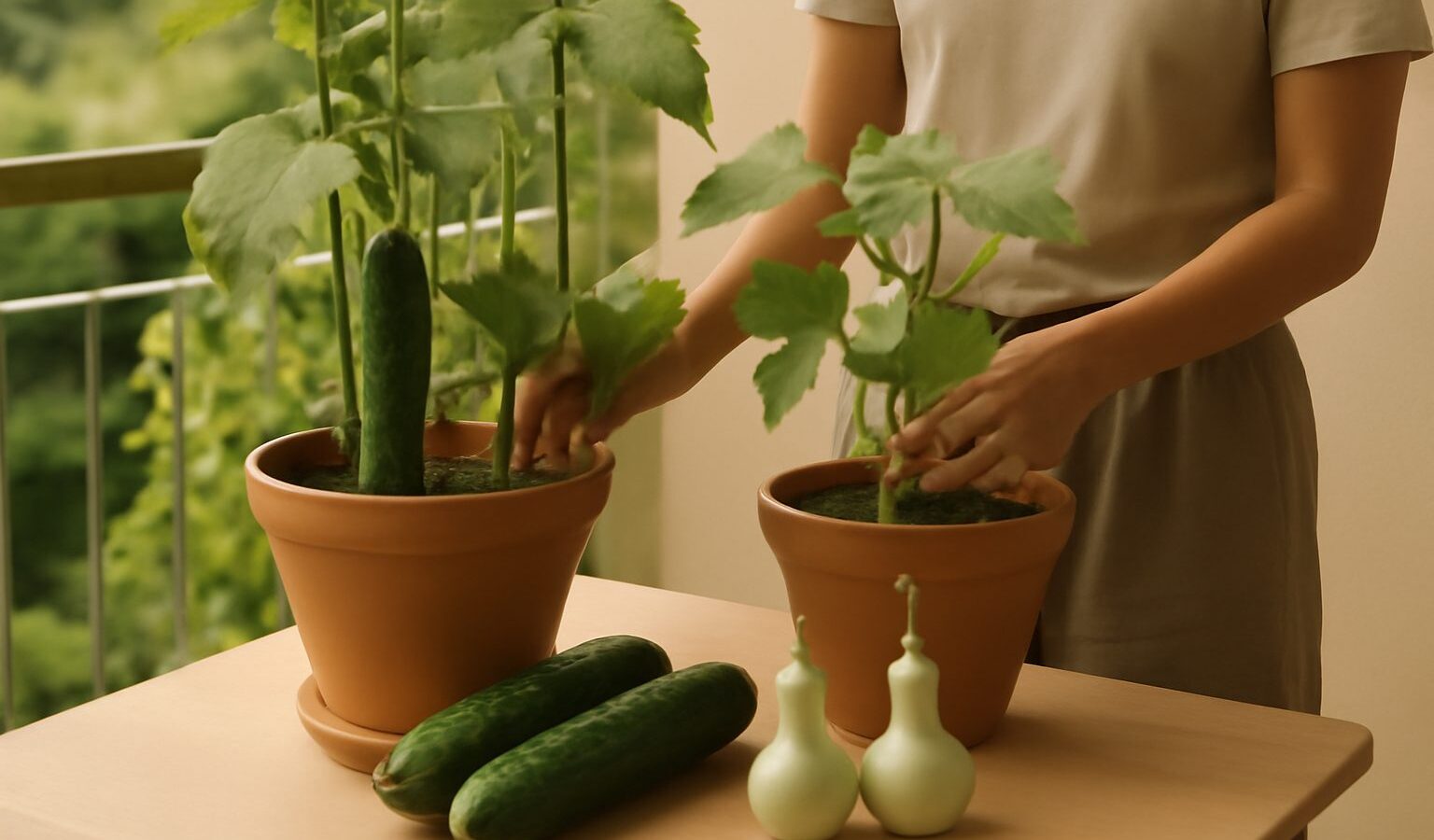
Vining cucurbits are the show offs of the tropical edible garden. Growing cucumber gives you crisp, cooling fruit within a couple of months, while gourds such as bitter gourd, bottle gourd and luffa (loofah) scramble enthusiastically over any trellis you give them. All of them love Singapore’s constant warmth, and all of them fruit best when you understand one key quirk of the family: their flowers usually need help to set fruit. This guide covers the practical side, from choosing a support to solving the disappointment of flowers that fall without a single cucumber.
This is general information for home gardeners, not professional horticultural advice. Always check the seed packet for the specific variety you buy.
What the Cucurbit Family Needs
Cucumber and its gourd relatives are fast, hungry, thirsty climbers. In our climate they grow almost year round, but they pay for that speed with heavy demands. They want:
- Strong sun, at least five to six hours of direct light for good fruiting.
- A big root run, so a pot of at least 30cm depth, or better still a bed.
- Rich, free draining soil with plenty of compost worked in.
- Steady water, because uneven moisture makes cucumbers bitter and gourds misshapen.
Because they climb, they suit balconies and corridors where you can grow upward. A single healthy vine can cover two to three metres, so plan the space and check your town council rules before letting one ramble along a common corridor.
Building a Support and Sowing
Put the trellis up before you sow, since these vines grow quickly and hate being disturbed. A sturdy A frame of bamboo, or netting fixed to a rail, gives the tendrils something to grip. Heavier gourds like bottle gourd need a stronger overhead frame, because a mature fruit is surprisingly weighty and can snap a weak support.
Sow seeds directly into the final pot or bed, about 2cm deep, two seeds per spot, thinning to the stronger seedling. Germination is quick in our heat, often within a week. As the vine grows, guide the young shoots onto the support and let the tendrils take over. If you would like to keep seed from an open pollinated fruit for the next round, our guide to saving and storing seeds explains how to dry and store it.
Watering, Feeding and the Dengue Point
Consistent water is the single biggest factor in quality. A fruiting cucumber vine in full sun may need watering every day, sometimes twice in a heatwave. Let it dry out and you get bitter, hollow or bent fruit. Mulch the surface to hold moisture and reduce splashing.
Feed regularly, as these are hungry plants. Once flowering starts, a fertiliser with decent potassium supports fruiting; too much nitrogen gives leafy vines and little fruit. Follow the dose on the product label.
Because you are watering heavily, stay alert to standing water. Empty pot saucers, tip out trays after our monsoon downpours, and never let water stagnate in a spare container nearby, as stagnant water breeds Aedes mosquitoes and dengue. Follow NEA guidance and the Mozzie Wipeout habits.
Pollination: The Usual Reason for No Fruit
Most cucurbits carry separate male and female flowers on the same plant. The female flower has a tiny fruit shaped swelling behind the petals; the male has a plain thin stalk. Fruit only forms when pollen moves from male to female, and on an enclosed balcony there may be too few bees to do the job. That is why so many growers see flowers drop without fruit.
The fix is simple hand pollination. In the early morning, pick a freshly open male flower, peel back its petals, and gently dab its pollen onto the centre of each open female flower. One male can serve several females. Bitter gourd, bottle gourd and luffa all respond well to this. Our detailed guide to hand pollinating fruiting plants walks through the timing and technique.
Note that bottle gourd and some night flowering gourds open in the evening and are moth pollinated in the wild, so pollinate those late in the day instead of the morning.
Common Pests and Problems
Cucurbits attract a predictable set of troubles in our humid air. Catch them early:
- Powdery mildew, a white coating on leaves, thrives in still, humid conditions. Improve airflow and avoid wetting foliage in the evening.
- Melon fruit fly stings young fruit, causing it to rot and drop. Bagging individual young fruit in newspaper or netting sleeves protects them well.
- Aphids and whiteflies cluster on shoot tips and spread virus. Wipe them off early.
- Downy mildew and leaf spots appear in prolonged wet spells; remove badly affected leaves.
If you spray anything, including a natural mix, test it on a few leaves first, spray in the cooler hours out of direct sun, keep it away from food preparation, eyes, children and pets, and respect any pre harvest interval on the label. Home mixes are not approved pesticides, so use them thoughtfully.
Choosing What to Grow
| Crop | Ease | Trellis strength | Harvest note |
|---|---|---|---|
| Cucumber | Easy, fast | Light netting fine | Pick young and firm |
| Bitter gourd | Moderate | Medium | Pick while ridged and green |
| Bottle gourd | Moderate | Strong, heavy fruit | Pick young for tenderness |
| Luffa (loofah) | Easy | Medium to strong | Eat young or dry mature for sponges |
Harvesting and Keeping It Going
Pick cucumbers young and firm, before they yellow and turn seedy, and the vine keeps producing. Bitter gourd is best while the skin is still glossy and the ridges sharp; overripe fruit turns orange and splits. Bottle gourd and luffa are eaten young and tender, though luffa left to dry on the vine gives you a natural bathroom sponge, which is a fun bonus.
These vines are sprinters, not marathon runners. After a good run of several weeks the plant tires, so many local growers sow a fresh batch every month or two for a steady supply. When one finishes, clear it, refresh the soil with compost, and start again. If you have room, moving cucurbits into a raised bed gives the roots the depth and cool they crave.
With a solid trellis, daily watering, a morning of hand pollination and a watchful eye for mildew, growing cucumber and gourds becomes one of the most productive things you can do on a sunny Singapore balcony.
Explore more: growing long beans and winged beans.