
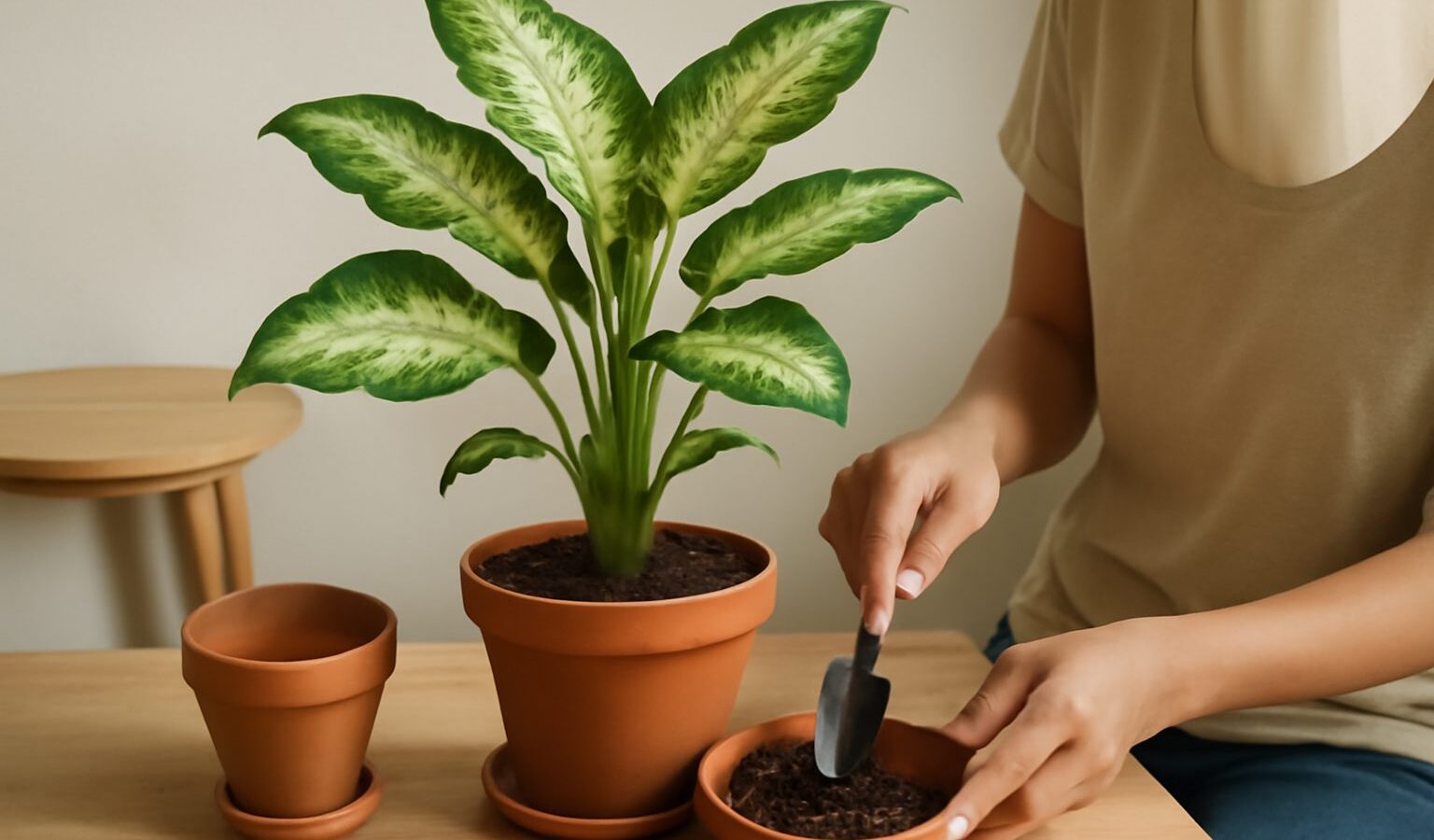
Few houseplants deliver as much leafy drama for as little fuss as the dieffenbachia dumb cane. Its broad, paddle-shaped leaves are splashed with cream, lime and dark green, and it thrives in exactly the warm, humid conditions that Singapore serves up all year. That makes it a natural pick for a shaded HDB corridor, a bright indoor corner or a sheltered balcony. There is one important catch, though: the sap is toxic and can numb and irritate the mouth, which is where the common name “dumb cane” comes from. This guide walks you through growing it well and handling it safely.
This is general information for home gardeners, not professional horticultural, medical or veterinary advice.
Why Dumb Cane Suits Singapore Homes
Dieffenbachia is a tropical aroid, so our year-round heat and humidity mimic its native rainforest floor almost perfectly. There is no cold season to shock it, and it never needs coddling through a winter. In a Singapore flat it will happily push out new leaves month after month, provided you keep it out of harsh direct sun and away from a blasting aircon vent.
The plant reads as lush and expensive but asks very little in return. A mature dumb cane can stand knee to waist high, filling an empty corner or softening a bare wall. Smaller specimens sit neatly on a sideboard or a shelf near a window. Because it tolerates the lower light of an indoor spot better than many showy plants, it is forgiving for beginners and black thumbs who want greenery without a daily routine.
If you like the look of big patterned leaves, it pairs well with other easy aroids. Once you have the hang of dumb cane, the care routine carries over to relatives like the Chinese evergreen and the arrowhead plant.
Handling the Toxic Sap Safely
This is the part to read before you buy. Dieffenbachia sap contains microscopic crystals that can cause intense burning, numbness and swelling if the sap gets into the mouth, and it can irritate skin and eyes on contact. It is toxic to people and to cats and dogs if chewed or eaten. This is not a reason to avoid the plant, but it is a reason to be sensible.
- Keep dumb cane well out of reach of young children and curious pets. If you have toddlers or animals that nibble leaves, place it high up or choose a different plant altogether.
- Wear gloves whenever you cut a stem, take cuttings or repot, and wash your hands and any tools afterwards. Keep the cut sap away from your eyes and mouth.
- If a person or pet bites or swallows any part of the plant, rinse the mouth, do not induce vomiting, and seek medical or veterinary help promptly. Note the plant name so the clinic knows what they are treating.
Handled with this basic care, dumb cane is perfectly safe to live with. Pet or child households that would rather not think about it can pick a non-toxic option instead, such as a cast iron plant.
Light, Water and Feeding
Dumb cane wants bright, indirect light. A spot a metre or two back from a window that gets gentle morning sun is ideal. Harsh midday sun through glass will scorch and bleach the leaves, so filter it with a sheer curtain if the light is fierce. In deep shade the plant survives but grows leggy and loses its variegation, so nudge it towards more light if the new leaves come out plain green.
Watering is where most people slip up. The rule is simple: water thoroughly, then let the top few centimetres of the mix dry out before you water again. Poke a finger into the soil to check. In our heat that might mean watering once or twice a week, but always test rather than water on a fixed schedule. Overwatering, especially in a pot with no drainage, leads to yellow lower leaves and soft, rotting stems.
A few more pointers keep growth strong:
- Use a pot with drainage holes and a light, airy potting mix. Add some perlite or coarse material so water drains freely.
- Feed with a balanced liquid fertiliser diluted to half strength roughly once a month during active growth. Follow the label; more is not better.
- Wipe the leaves with a damp cloth now and then to clear dust and let them breathe.
- If you run the aircon a lot, the dry air can crisp the leaf edges. Group plants together or sit the pot on a tray of pebbles to lift humidity.
Keeping the Plant Full and Healthy
Dieffenbachia naturally drops its lower leaves as it grows, so an older plant can end up with a bare, cane-like stem and a tuft of leaves on top. That bareness is normal, and it is also fixable. Cut the tall stem back and the plant will usually sprout new shoots lower down, giving you a bushier shape. Remember the glove-and-wash routine when you make the cut.
Those cut sections are how you make more plants. Lay a length of stem with a couple of nodes, the small bumps where leaves emerge, on damp propagating mix, or stand it in water until roots form. It is a slow but reliable way to turn one leggy plant into several full ones.
The comparison below sums up the common problems and how to read them.
| Symptom | Likely cause | What to do |
|---|---|---|
| Yellow lower leaves, soft base | Overwatering or poor drainage | Let mix dry more, check pot drains, trim rotten roots |
| Brown, crispy leaf edges | Dry aircon air or salt build-up | Raise humidity, flush the soil, ease off feeding |
| Faded, plain green new leaves | Too little light | Move to a brighter indirect spot |
| Scorched, bleached patches | Harsh direct sun | Shift back from the glass or filter the light |
| Leggy stem, bare bottom | Natural ageing, low light | Cut back to force new lower shoots, brighten the spot |
Watch too for common indoor pests such as spider mites and mealybugs, which thrive in dry air. Catch them early by checking leaf undersides, and wipe them off or treat gently. Empty any water that collects in the pot saucer rather than letting it stand, since stagnant water anywhere at home can breed Aedes mosquitoes; following the NEA Mozzie Wipeout habits is good practice for every plant you own.
A Rewarding, Low-Drama Houseplant
Dieffenbachia dumb cane earns its place in a Singapore home by looking far more demanding than it is. Give it bright indirect light, water only when the top of the mix dries, feed lightly and handle the sap with gloves, and it will reward you with big, patterned leaves for years. Treat the toxicity seriously, keep it away from small children and pets, and you have a striking, genuinely easy plant.
Explore more: the best plants for your bathroom for other easy, humidity-loving picks.