
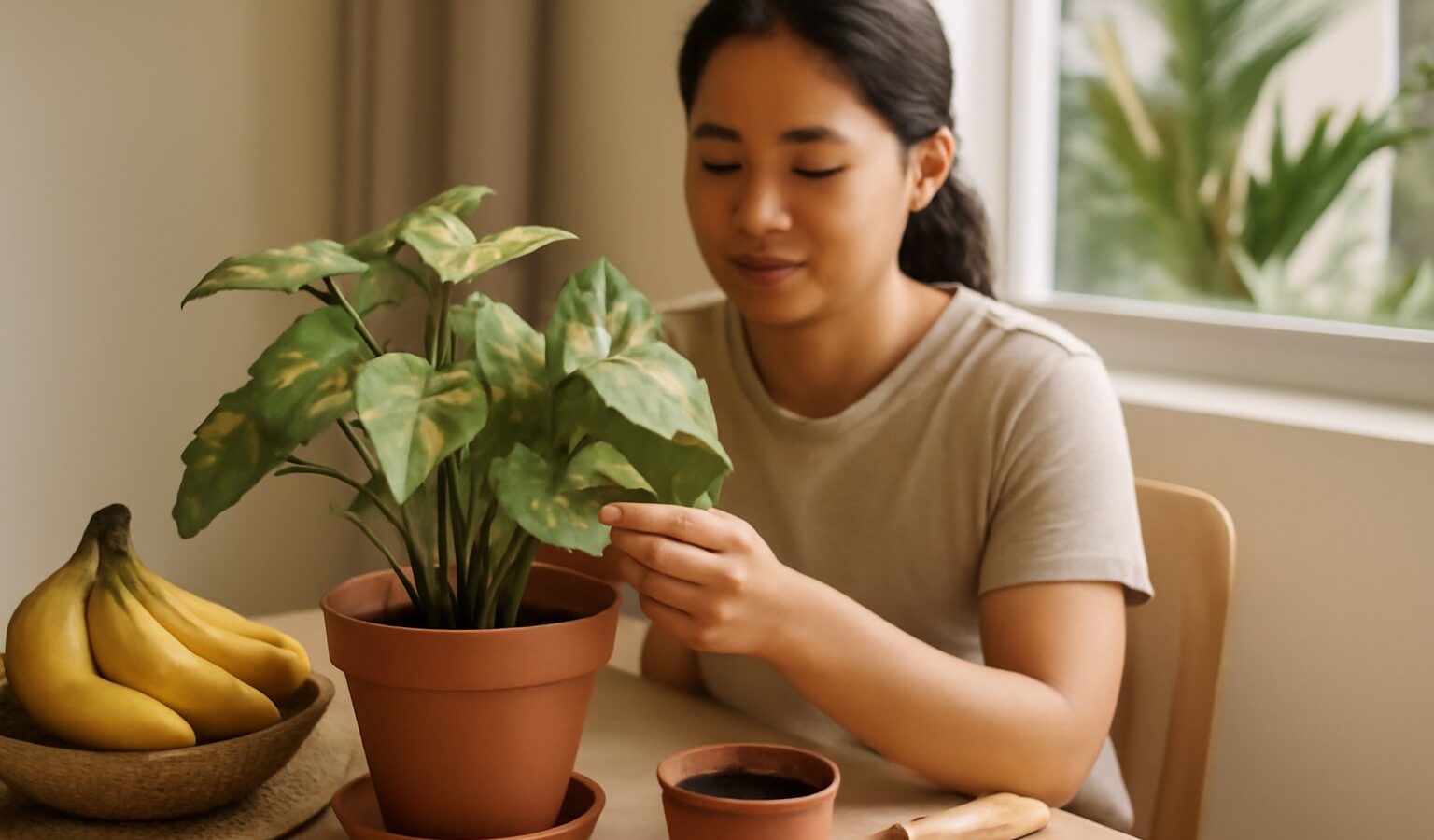
The syngonium arrowhead plant is one of the most rewarding houseplants for a Singapore home, fast-growing, forgiving and available in a lovely range of colours from creamy white to soft pink and deep green. Named for the arrow shape of its young leaves, and known botanically as Syngonium podophyllum, it works equally well as a bushy tabletop plant or a climbing vine. It is also a member of the aroid family, which means it is toxic if eaten, so this guide covers safe handling alongside light, water and propagation.
A Fast, Forgiving Aroid
Syngoniums grow quickly in our warm climate, which makes them satisfying for beginners who want visible progress. The leaves change shape as the plant matures, starting as neat arrowheads and becoming more lobed as the vine lengthens. Left to trail or climb, a single plant can fill a corner within a year.
They come in many varieties. The classic green-and-white forms are the toughest, while the pink and near-white types are prettier but need brighter light to hold their colour. Whatever the variety, the care is broadly the same.
Handle This Toxic Plant Safely
Like all aroids, including dieffenbachia, the dumb cane, the syngonium arrowhead plant contains sap that is toxic to people and pets. The sap can irritate skin and eyes, and eating any part can cause painful burning and swelling of the mouth and throat.
- Keep the plant well out of reach of young children and curious pets, and choose a hanging spot or high shelf in homes with either.
- Wear gloves when cutting stems or taking cuttings, and wash your hands afterwards. Keep the sap away from your eyes and mouth.
- If a person or pet swallows any part, seek medical or vet help promptly.
If yours is a household with a determined toddler or a leaf-nibbling cat, a non-toxic plant such as a pilea chinese money plant may be the safer choice.
Light and Position
The arrowhead plant is adaptable, which is part of its charm, but light still shapes how it looks.
- Bright, indirect light: the sweet spot. Near an HDB window with sheer curtains, the colours stay vivid and growth stays compact.
- Medium light: tolerated well. Green forms cope with a spot a little way from the window, though growth slows.
- Low light: the plainest green types survive a dim corridor, but pink and variegated forms fade and revert towards green.
- Direct sun: avoid harsh afternoon glare through glass, which scorches the thin leaves.
Rotate the pot every week or so for even growth, and if a variegated plant starts losing its markings, move it closer to a bright window.
Watering and Humidity in Our Climate
Syngoniums like to stay lightly moist but never waterlogged. In Singapore’s humidity, soil dries more slowly than the plant tag suggests, so always check before watering rather than sticking to a fixed day.
- Feel the soil and water when the top two to three centimetres have dried.
- Water thoroughly until it drains from the bottom, then empty the saucer.
- In an air-conditioned room the mix dries faster, so check more often there.
Drooping leaves that perk up after watering signal thirst, while yellowing lower leaves usually mean the soil has stayed too wet. Never leave the pot standing in a filled saucer. Beyond harming the roots, any tray of stagnant water can breed Aedes mosquitoes and dengue, so tip out saucers after watering and after rain, following NEA and Mozzie Wipeout habits.
Humidity is one thing you rarely need to add here, as our air is naturally moist. The exception is a room with the aircon running for long stretches, where leaf tips may brown. Grouping plants together or using a tray of damp pebbles lifts the local humidity without any misting.
Feeding, Pruning and Training
Feed during the main growing period, which for us runs most of the year, with a balanced liquid fertiliser at the strength on the label, roughly once a month. Ease off if growth slows during a long wet, gloomy monsoon stretch when light is low.
Pruning keeps the plant looking its best and is where you decide its final shape.
- For a bushy plant: pinch or cut the growing tips regularly. This encourages side shoots and a fuller, mounded form.
- For a climber: give it a moss pole or trellis to climb, and the leaves will grow larger and more mature-looking as it ascends.
- For a trailer: let it spill from a hanging pot or high shelf, well away from pets and children.
Every cut you take is a potential new plant, so pruning and propagating go hand in hand.
Propagating Your Arrowhead Plant
Syngoniums are among the easiest plants to propagate, rooting readily from stem cuttings. Wearing gloves, cut a healthy section of stem just below a node, the small bump where a leaf meets the stem and where new roots emerge.
| Method | How it works | Speed | Notes |
|---|---|---|---|
| Water propagation | Root the cutting in a glass of water | Fast, roots in one to two weeks | Change water often so it stays fresh |
| Soil propagation | Plant the cutting straight into moist mix | Steady | Keep lightly moist, out of harsh sun |
| Layering on soil | Pin a trailing node onto the soil to root | Reliable | Good for thickening the parent |
For water propagation, change the water every couple of days so it does not stagnate, then pot up once the roots are a few centimetres long. Wash your hands after handling the cut stems. Within a month or two a single plant can give you several new ones to fill a shelf or share.
With bright, indirect light, sensible watering and careful, gloved handling, growing a syngonium arrowhead plant is genuinely beginner-friendly, even in a compact flat. If you enjoy its easy pace, other colourful aroids such as the aglaonema Chinese evergreen grow much the same way. Remember this is general guidance for home gardeners rather than professional horticultural, medical or veterinary advice, so watch how your plant responds and keep the safety points in mind.