
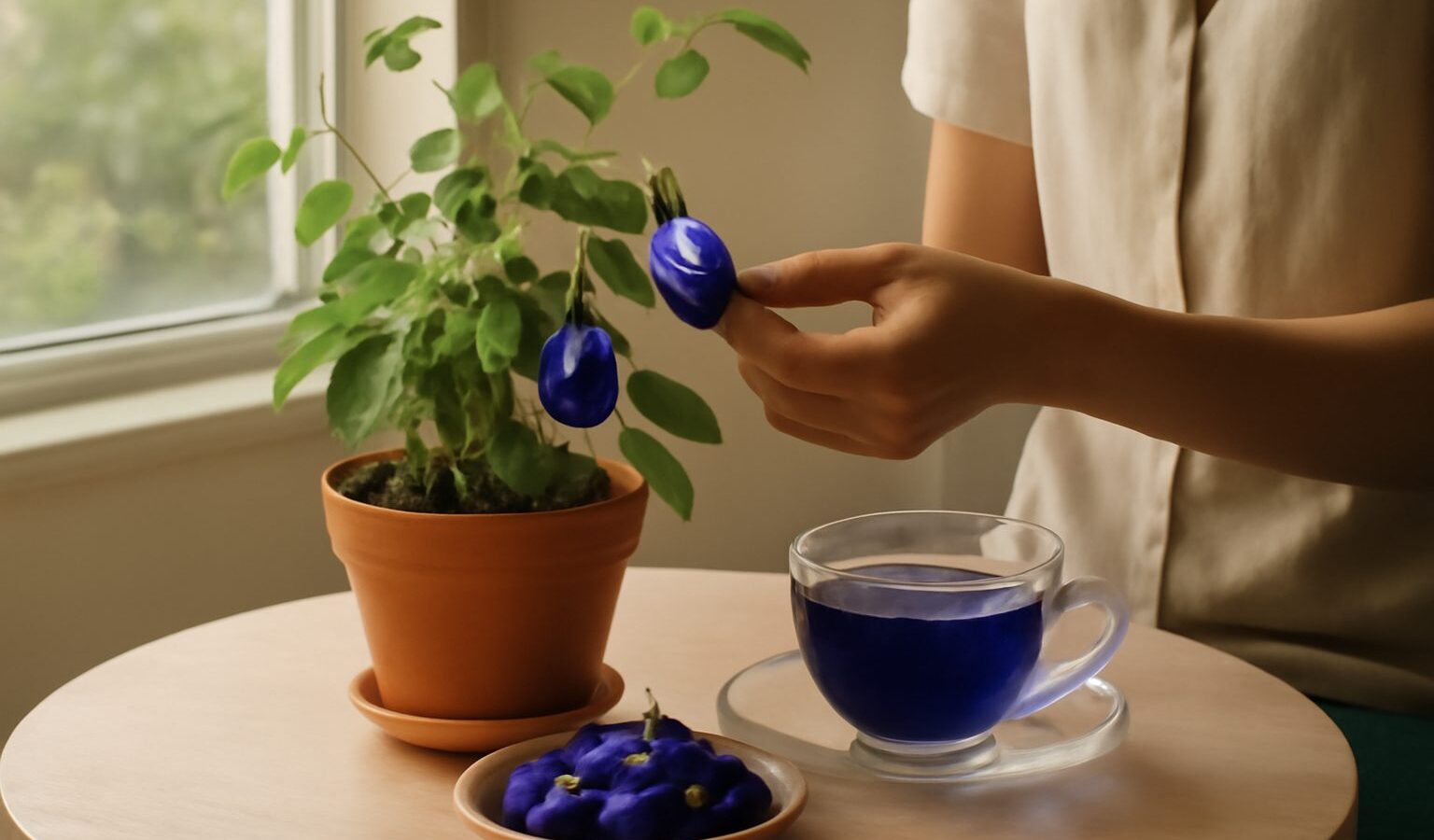
Few plants pay you back as quickly as the butterfly pea. Sow a handful of seeds against a sunny railing, wait a couple of months, and you get a steady flush of deep blue butterfly pea flowers that you can steep into that famous colour changing tea. Known locally as bunga telang and botanically as Clitoria ternatea, this climbing vine is a member of the pea family, thrives in year round heat, and asks for very little once it is settled. It is one of the most forgiving edible climbers you can grow on an HDB or condo balcony, which makes it a lovely starting point for anyone nervous about keeping plants alive.
This guide walks you through sowing, supporting, feeding and harvesting the vine, and how to enjoy the blooms safely. It is general information for home gardeners, not medical advice.
Why Butterfly Pea Suits Singapore Balconies
Butterfly pea is native to tropical Asia, so our climate is exactly what it wants. There is no cold season to stall it, and the intense sun that scorches fussier plants only pushes it to flower harder. The vine climbs by twining, reaching two to three metres if you let it, but it stays perfectly happy scrambling up a small trellis or a length of netting on a breezy corridor.
As a legume, it fixes some of its own nitrogen through its roots, which means it needs less feeding than most flowering plants. It also draws bees and the odd butterfly, adding a bit of life to a high rise ledge. If you have grown other climbing edibles such as long beans and winged beans, you will find the habit and the support needs very similar, so the skills carry straight over.
A quick word on space and rules: keep the vine on your own balcony or supported frame rather than letting it wander into a common corridor, and check your town council guidelines before fixing anything to shared walls or railings.
Sowing and Growing From Seed
Butterfly pea grows readily from seed, and seed is by far the cheapest way to start. The hard coated seeds germinate faster if you help them along.
- Soak the seeds in room temperature water for six to twelve hours, or nick the hard coat lightly with a nail file, so water can get in.
- Fill small pots or a seed tray with a free draining potting mix. Sow each seed about one to two centimetres deep.
- Keep the mix lightly moist, not soggy, and place the tray in bright light. Seedlings usually appear within one to two weeks.
- When the seedlings have a few true leaves and a couple of pairs of leaflets, move each into its final pot, ideally a container of twenty five centimetres or wider.
- Set up the trellis or netting at planting time so the young vine can grab on early.
Use a pot with drainage holes and a saucer, and empty the saucer after watering or rain so it does not sit full. Stagnant water in saucers is a classic Aedes mosquito breeding spot in Singapore, so keep to the Mozzie Wipeout habit of tipping saucers out. If you like saving your own supply for the next round, our notes on saving and storing seeds apply neatly, since the vine produces flat pods full of ready seeds.
Daily Care, Feeding and Support
Once established, butterfly pea is genuinely low maintenance. The main jobs are sun, water, a little feeding and gentle training.
- Light: Give it the sunniest spot you have, at least four to six hours of direct sun. A west or south facing balcony is ideal. Too little light means lots of leaf and few flowers.
- Water: Water when the top few centimetres of mix feel dry. In our heat that may be daily for pots in full sun. The vine tolerates the odd missed day better than it tolerates soggy roots.
- Feeding: Because it fixes nitrogen, go easy. A balanced fertiliser now and then is plenty. Too much nitrogen gives you a lush green vine and stingy flowering. A homemade option from our guide to DIY organic fertilisers from kitchen waste works well here.
- Support and pruning: Guide new shoots onto the trellis. Pinch the growing tips once the vine is established to encourage bushier, more branched growth and more flowering points. Trim back any straggly stems.
Watch for aphids on soft new tips and the odd caterpillar. A firm jet of water or squashing by hand usually settles small outbreaks. If you resort to any spray, test it on a few leaves first, spray in the cooler hours out of direct sun, and remember these are edible flowers, so keep sprays off the buds and observe any interval on the label.
Single Versus Double Flowered, and What to Grow
There are a couple of common forms, plus a rarer white. This quick comparison helps you choose.
| Type | Look | Best for | Notes |
|---|---|---|---|
| Single blue | One layer of petals, classic bright blue | Tea and colouring | Most common, sets seed freely |
| Double blue | Full, ruffled many petalled bloom | Show and garnish | Fewer seeds, striking on the vine |
| White form | Pale ivory flowers | Novelty and mixed planting | Harder to find, no blue pigment |
For everyday tea and cooking colour, the single blue is the workhorse and the easiest to keep going from your own saved seed. The double is prettier on the plant and as a garnish but sets less seed. Any of them grows the same way.
Harvesting and Using the Blooms Safely
Pick flowers in the morning once they are fully open, pinching them off with the little green base attached. Regular picking actually encourages more buds, so harvest often. Use them fresh, or dry them on a tray in a warm, airy spot out of direct sun until crisp, then store in an airtight jar.
The classic use is blue pea tea: steep a few fresh or dried flowers in hot water and watch it turn a deep blue, then add a squeeze of lime to shift it to purple. The flowers also tint rice, kaya and desserts the familiar blue seen in Peranakan and Malay kitchens. The taste is mild and earthy, so the flowers are mostly about colour.
Safety matters even with a friendly plant like this:
- Eat only flowers you have positively identified and grown yourself without pesticides. Butterfly pea flowers are widely eaten, but never eat a flower, seed or berry you are not certain is edible, as toxic lookalikes exist among ornamental plants.
- Wash the flowers before use.
- The first time, try a small amount in case of an allergy.
- Use the flowers, not the seeds or pods. The mature seeds of many legumes are not for eating, so keep them for sowing.
- This is general information, not medical advice. If you have a health condition, are pregnant or take medication, check with a doctor before making any plant part a regular part of your diet.
Butterfly pea is a rewarding, quick and cheerful climber that turns a hot balcony into a small source of colour and tea. Once you have the hang of it, it almost grows itself, and the seeds it hands you mean you need never buy another packet.
Explore more: growing edible flowers and growing a tea and tisane garden.