
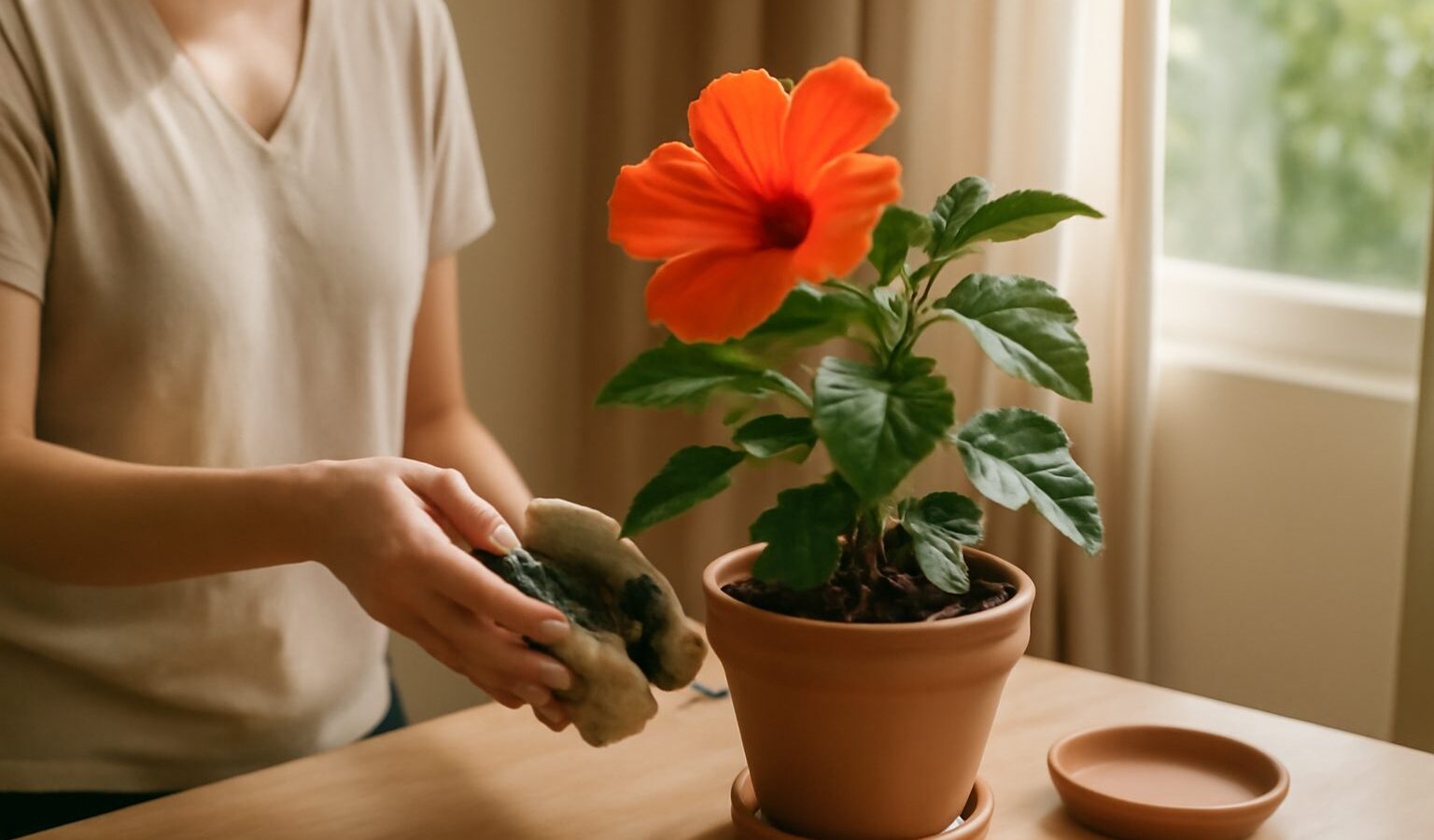
The hibiscus is one of the most recognisable flowers in the tropics, its wide trumpet blooms and long central column instantly familiar across our region. Loved as bunga raya in the wider Malay world and a common sight in gardens, parks and roadside hedges here, it flowers freely in Singapore’s heat when given a sunny spot. Each bloom lasts only a day or two, but a healthy plant keeps producing them almost continuously, so there is always fresh colour. Best of all, growing hibiscus is well within reach of a beginner, whether you have a landed garden bed or a single large pot on an HDB balcony. This guide is general advice for home gardeners, not professional horticultural instruction.
Why Hibiscus Thrives Here
Hibiscus is a true tropical shrub, so our climate is close to ideal. It wants exactly what Singapore delivers year-round: warmth, strong light and no cold snaps to interrupt its flowering. Where gardeners in temperate countries treat it as a fussy seasonal plant, we can enjoy blooms in every month of the year.
The plant is also versatile. You can grow it as a free-standing shrub in the ground, keep it trimmed as a low hedge, or contain it in a large pot on a balcony or ledge. Compact and dwarf varieties suit pots and small spaces, while vigorous types can grow into a substantial bush if you have the room. For flat dwellers, a single well-fed plant in a generous container can flower beautifully, provided it gets enough sun.
If you enjoy attracting life to your garden, hibiscus flowers are a magnet for sunbirds and butterflies, adding movement and interest to a balcony or garden. It sits naturally alongside other sun-loving bloomers, and pairs well with the plants covered in our guide to growing bougainvillea in Singapore for a layered, colourful display.
Sun, Soil and Planting
Sun is the first requirement. Hibiscus needs a good six hours or more of direct light a day to flower well, so give it your brightest position. In too much shade it grows leggy and stingy with blooms, however healthy the leaves look.
Set it up for success from the start:
- Choose a bright, sunny spot on a balcony, ledge or open garden bed.
- Use rich, free-draining soil. Hibiscus likes more moisture than bougainvillea, but still hates waterlogging, so a good potting mix with some compost and added grit works well.
- Pick a large enough pot with proper drainage holes if you are growing in a container, since a cramped root system limits the plant.
- Never leave the saucer full of water. Empty it after watering and after rain to protect the roots and to stop Aedes mosquitoes breeding, in line with NEA and Mozzie Wipeout guidance.
- Shelter from the strongest wind on a high, exposed balcony, which can shred the large soft leaves and knock off buds.
Check your town council rules before placing anything along a shared corridor, and make sure heavy pots are stable and cannot be blown or knocked over.
Watering, Feeding and Pruning
Unlike drought-loving bougainvillea, hibiscus is a thirstier plant that likes steady moisture, especially when flowering hard in the heat. Keep the soil evenly damp but not soggy, watering when the top of the soil begins to dry. A plant in a pot on a hot balcony may need daily watering in dry spells, while you should ease off during long monsoon downpours when the soil stays wet on its own.
Feeding makes a real difference to flowering. Hibiscus is a hungry plant that benefits from regular, modest feeding through the year. Use a balanced fertiliser, or one formulated to encourage blooms, and follow the product label rather than overdoing it. Steady light feeding beats occasional heavy doses. Our guide on how to get your plants to flower in Singapore explains the wider principles if you want more blooms across your collection.
Pruning keeps the plant bushy and productive. Because hibiscus flowers on new growth, a trim encourages fresh flowering shoots and stops the shrub becoming a bare, woody tangle. Cut back leggy stems, remove weak or crossing branches, and shape the plant after a heavy flush. A harder prune once in a while rejuvenates an old, tired plant. Always use clean, sharp tools and avoid pruning in the fierce midday sun.
Common Problems and How to Solve Them
Most hibiscus troubles come down to light, water or pests, and pests in particular love the soft new growth. The table below matches the usual symptoms to their causes and fixes.
| Problem | Likely cause | What to do |
|---|---|---|
| Buds drop before opening | Stress from irregular watering or pests | Water steadily; check buds for insects |
| Yellowing leaves | Overwatering, poor drainage or hunger | Adjust watering; improve drainage; feed lightly |
| Few flowers, lots of leaves | Too little sun or too much nitrogen | Move to full sun; use a bloom-friendly feed |
| Sticky leaves or curled tips | Aphids, mealybugs or whitefly | Rinse the plant; treat gently; encourage airflow |
| Leggy, sparse shape | No pruning or low light | Prune to shape; give more sun |
For pests, a firm spray of water and wiping the leaves often does the job on a small plant. If you use any spray, even a natural one, test it on a few leaves first, apply in the cooler hours out of direct sun, and keep it away from children, pets and food. Do not treat home mixes as approved pesticides, and follow the label on anything you buy.
Year-Round Colour for Little Effort
Hibiscus rewards a beginner generously. Give it full sun, steady water, light regular feeding and an occasional prune, and it will hand you fresh trumpet blooms week after week with none of the seasonal fuss that gardeners elsewhere endure. Whether you grow a single dwarf plant in a pot or a flowering hedge along a garden fence, it is one of the most dependable ways to bring true tropical colour into a Singapore home.
Explore more: for more sun-loving flowering plants, see our guides to growing bougainvillea in Singapore and growing frangipani plumeria in Singapore, both happy in the same bright, warm spots.