
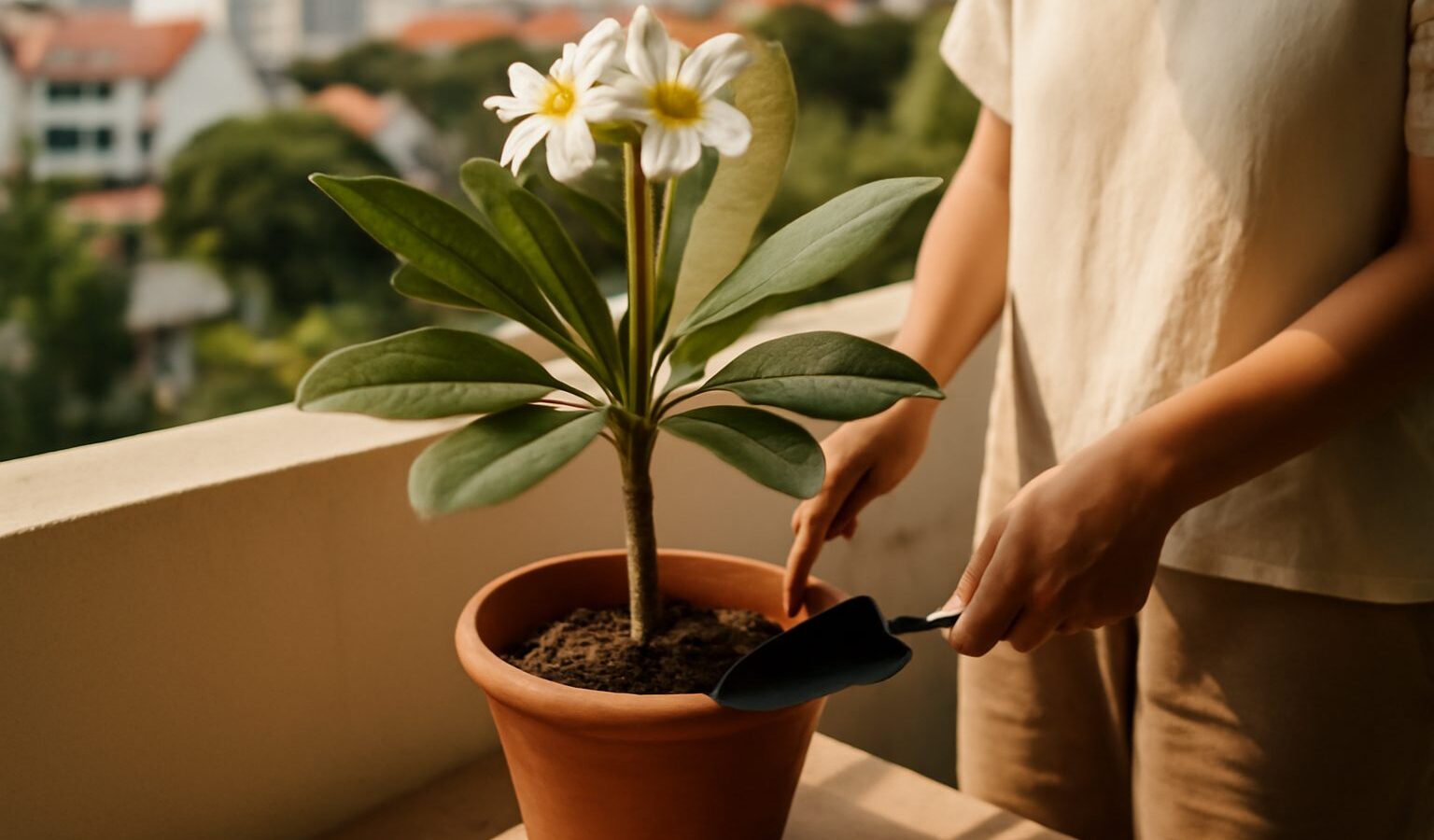
Few scents capture the tropics like frangipani. The waxy, five-petalled blooms in white, yellow, pink and deep sunset shades perfume gardens, temples and hotel driveways across the region, and the tree itself, with its sculptural bare branches and clusters of leaves at the tips, is as striking as its flowers. Known botanically as Plumeria, frangipani is beautifully suited to Singapore’s heat and sun, and it is more forgiving than its exotic looks suggest. Whether you grow a full tree in a landed garden or a compact plant in a large pot on a balcony, growing frangipani plumeria is a genuinely achievable project. This guide is general advice for home gardeners, not professional horticultural instruction, and it includes an important note on the plant’s sap.
Why Frangipani Suits Singapore
Frangipani is built for our climate. It loves heat, thrives in strong sun and copes well with dry spells, so the conditions that stress other plants suit it perfectly. In many countries it drops all its leaves and stops flowering through a cold winter, but in Singapore’s steady warmth it can hold its leaves and bloom over a long stretch of the year, giving you fragrant flowers with little drama.
It is also a plant of many sizes. Left in the ground with room to grow, it becomes a small tree with a lovely spreading shape. Kept in a large pot and pruned, it stays a manageable balcony plant, and dwarf types are more compact still. This flexibility makes frangipani realistic even for flat dwellers, as long as you can offer a bright, hot, sunny position and a sturdy, stable container.
The perfume is the real draw. Frangipani flowers release their scent most strongly in the evening to attract moths, so a plant near a window or seating area fills the air beautifully after dark. It sits naturally among other fragrant plants, and pairs well with the climbers in our guide to growing jasmine and fragrant climbers in Singapore for an evening-scented corner.
A Note on Frangipani Sap and Safety
Before you plant or prune, know this: frangipani sap is a mild irritant. When you cut a stem the plant bleeds a milky white sap, and this latex can irritate skin and eyes and is best kept away from the mouth. It is not a plant to fear, but it is a plant to handle sensibly.
A few simple precautions cover it:
- Wear gloves when cutting or pruning, and avoid getting the milky sap on your skin.
- Keep the sap away from your eyes and mouth, and wash your hands well after handling cut stems.
- Take care around young children and pets, who should not chew the leaves, stems or flowers.
- Wipe up drips of sap from floors or furniture, as it can be sticky and staining.
If sap gets in the eyes or someone swallows part of the plant and reacts, rinse the area and seek medical or vet advice. Treated with ordinary common sense, frangipani is a rewarding and safe garden plant.
Sun, Soil, Watering and Feeding
Sun is non-negotiable. Frangipani needs full, direct sun, ideally six hours or more a day, to flower well. In shade it grows soft and leggy and produces few blooms, so give it the brightest, hottest spot you have, such as a west-facing balcony or an open garden position.
For soil and watering, remember that frangipani stores water in its thick stems and dislikes wet feet:
- Use very free-draining soil. A gritty, sandy potting mix suits it far better than a rich, moisture-holding one, and prevents root rot.
- Water when the soil dries out, giving a good soak then letting it dry again. Frangipani tolerates drought far better than constant damp.
- Ease right off in the monsoon. During long wet spells the plant needs little or no extra water, and soggy roots are the main way to kill it.
- Empty pot saucers and outer pots after watering and rain, both to protect the roots and to deny Aedes mosquitoes any standing water, in line with NEA and Mozzie Wipeout guidance.
- Feed for flowers. A fertiliser higher in phosphorus and potassium supports blooming, applied modestly during active growth. Too much nitrogen gives leafy growth and few flowers.
Pruning and Growing New Plants From Cuttings
Frangipani takes well to pruning, which keeps a potted plant compact and encourages branching, since flowers form at the tips of shoots. Prune when needed to shape the plant and control its size, always wearing gloves for the sap and using clean, sharp tools. Cut just above a junction, and never prune in the fierce midday heat.
One of the joys of frangipani is how easily it grows from cuttings, which is the usual way gardeners share it. The method is simple:
- Take a healthy stem cutting, ideally a good length of firm branch, using clean secateurs and gloves.
- Let the cut end dry and callus in a shaded, airy spot for several days, so the wound seals and resists rot.
- Plant the callused end into gritty, free-draining mix, water sparingly, and keep it in bright light out of the harshest sun.
- Be patient, as roots take some weeks to form. Avoid overwatering, which rots an unrooted cutting faster than anything.
The table below compares the two common ways to start a frangipani so you can choose what suits you.
| Method | Speed to flower | Effort | Best for |
|---|---|---|---|
| Cutting from an existing plant | Faster, often flowers sooner | Low, very reliable | Most home growers |
| Growing from seed | Slower, takes years | Higher, results vary | Patient hobbyists who like surprises |
For most people a cutting from a friend’s plant or a nursery specimen is the easiest and most predictable route.
A Fragrant Tree Worth Growing
Frangipani plumeria offers a rare combination: a sculptural, easygoing plant that also delivers one of the great scents of the tropics. Give it full sun, sharp drainage and restraint with the watering can, handle its milky sap with gloves and care, and prune it to keep the shape you want, and it will reward you with fragrant blooms across much of the year. Whether as a garden tree or a potted balcony feature, it is one of the most evocative plants a Singapore gardener can grow.
Explore more: for more sun-loving colour and scent, see our guides to growing hibiscus in Singapore and growing bougainvillea in Singapore.