
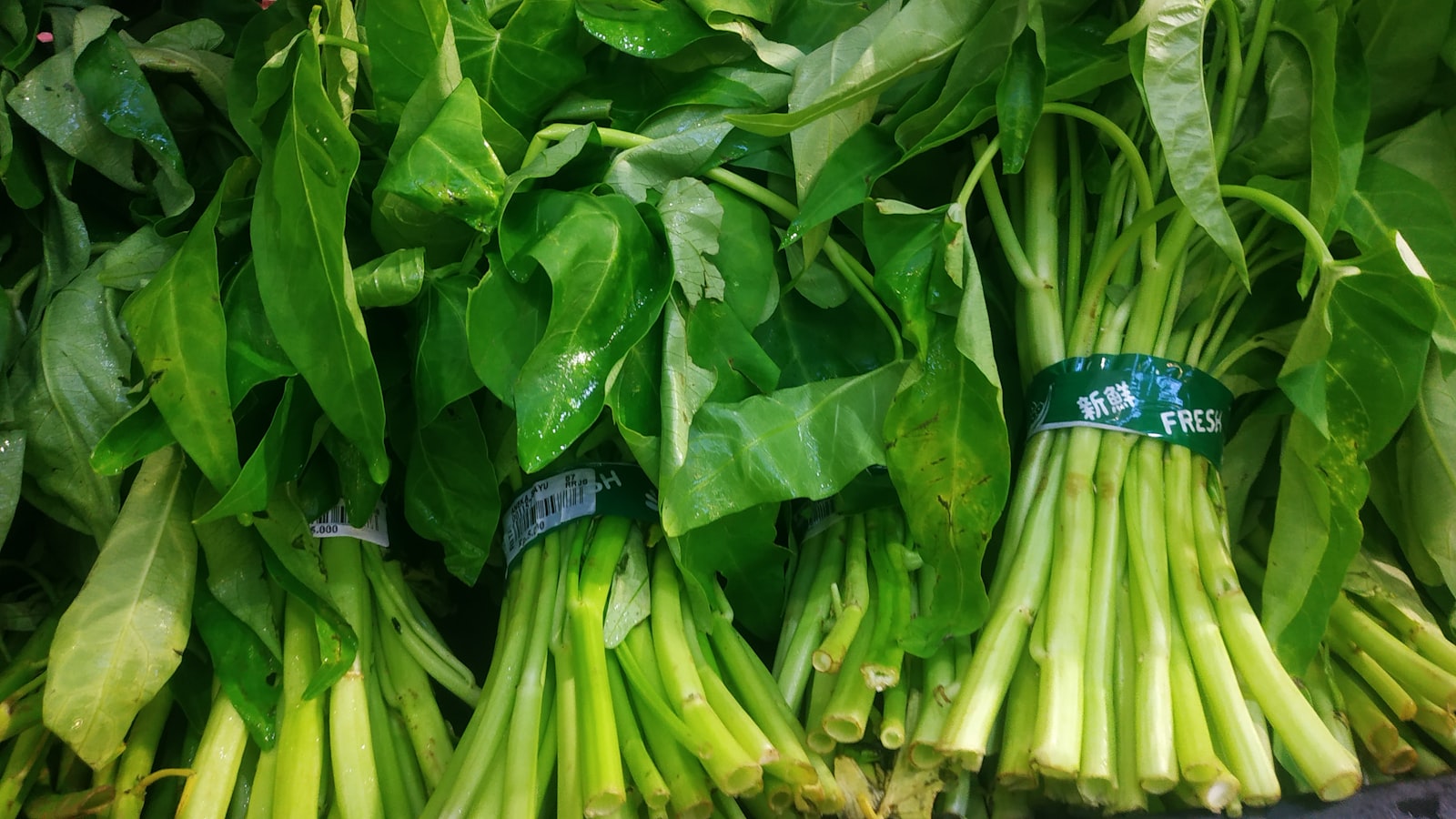
If you want a fast, forgiving, tropical vegetable that practically grows itself, kangkong Singapore gardeners will tell you is the one to start with. Known variously as water spinach, water convolvulus or by its botanical name Ipomoea aquatica, this leafy green thrives in exactly the hot, humid, sun-drenched conditions our island offers year round. It sprouts quickly, regrows after every harvest, and rewards even the most casual grower with tender stems and leaves for stir-fries. This guide covers everything from seed and cuttings to watering, harvesting and, importantly, how to enjoy its love of water without creating a mosquito problem.
Kangkong is a Southeast Asian staple for good reason. Few edibles are as generous or as effortless in the tropics, which makes it an ideal confidence-builder for anyone new to growing their own food.
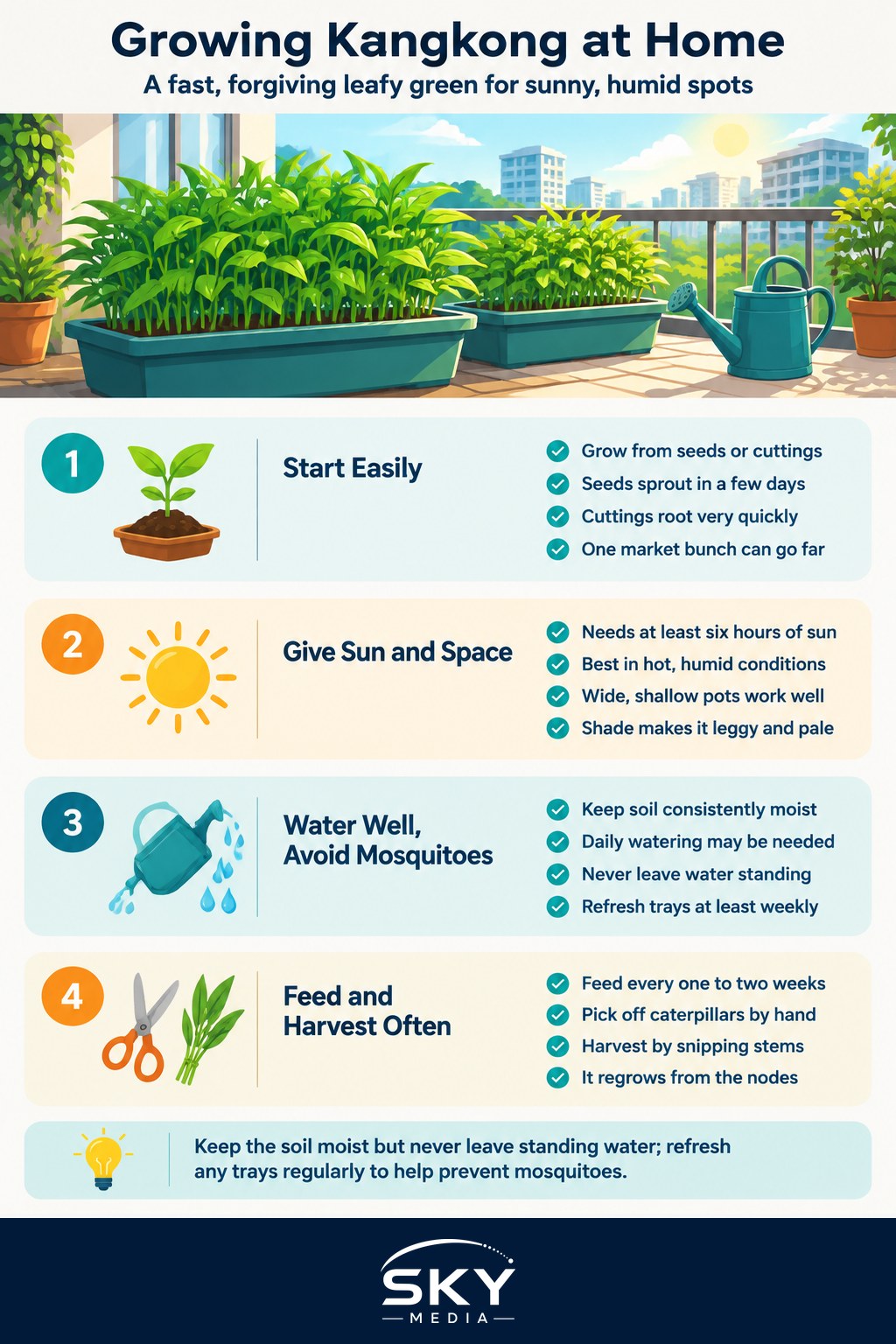
Two Ways to Grow: Land and Water
Kangkong comes in two loose types, and it helps to know the difference. The upland or dryland type is grown in soil or potting mix like an ordinary leafy vegetable, while the aquatic type trails along the surface of ponds and waterlogged beds. For most home growers on a balcony or in a small yard, the soil-grown approach is simplest and tidiest, so that is where I would begin.
You can start from seed or from cuttings, and both are easy. Seeds germinate within a few days in warm, moist mix. Cuttings are even quicker: take a healthy stem from a bunch bought at the market, strip the lower leaves, and pop the bottom few centimetres into water or straight into damp potting mix. Roots appear within days, and you are away. This is one of the cheapest, most satisfying vegetables to propagate, since a single supermarket bunch can seed an entire crop.
Give kangkong a big, sunny spot. It is a sun-lover that wants at least six hours of direct light, and it will grow leggy and pale in shade. A wide, shallow container holds more plants than a deep narrow one, since the roots are not fussy about depth.
Watering Without Breeding Mosquitoes
Kangkong genuinely loves water, and keeping the mix consistently moist is the single biggest factor in lush, tender growth. In our heat, a container can dry out fast, so daily watering is often needed, and the plant will not sulk if you overdo it a little.
That said, this is where local growers must be careful. Do not let trays, saucers or any standing container hold still water for days on end. Stagnant water is a breeding ground for the Aedes mosquito that spreads dengue, a serious and ongoing concern that the National Environment Agency (NEA) urges every household to guard against. If you grow kangkong in a water tray or semi-aquatic setup, refresh or empty the water regularly, at least once or twice a week, and never leave it sitting undisturbed. Keeping the water moving or changing it often removes the risk while still giving the plant what it wants.
For most people, growing in moist soil with good drainage sidesteps the issue entirely: water generously, let the excess drain away, and tip out anything that collects in the saucer beneath.
A Quick Growing Snapshot
Here is the crop at a glance for busy gardeners.
| Factor | What kangkong wants |
|---|---|
| Light | Full sun, six hours or more daily |
| Water | Plentiful and constant; never let it dry out |
| Propagation | Seeds or stem cuttings, both very fast |
| Time to first harvest | Roughly three to five weeks |
| Container | Wide and shallow, with drainage |
| Key caution | Refresh any standing water to stop mosquitoes |
Feeding and Everyday Care
Because kangkong grows so fast and you harvest it so often, it is a hungry plant. Feed every one to two weeks with a balanced liquid fertiliser diluted according to the label, and it will respond with a flush of fresh leaves. As with all edibles, store fertiliser well away from where food is kept and prepared, following the packaging instructions.
Pests are few, though you may spot leaf-eating caterpillars or the occasional cluster of aphids. Pick caterpillars off by hand and rinse aphids away with a jet of water or a wipe of diluted soap solution. Because the plant grows quickly, minor pest damage is rarely a disaster; the plant simply outgrows it. Good spacing and airflow help keep fungal leaf spots at bay in our humid air.
Kangkong will flower with pretty, morning-glory-like white or pale blooms if left unharvested, but regular cutting keeps it leafy and productive, which is what you want.
Harvesting for Endless Regrowth
The magic of kangkong is that it is a cut-and-come-again crop. Rather than pulling up the whole plant, snip the stems a few centimetres above the base, leaving the lower nodes intact. Within days, fresh side shoots push out from those nodes, and you can harvest again and again from the same plants for weeks. This is why a small patch keeps a household in greens with remarkably little effort.
Harvest in the cool of the morning when the stems are crisp, and wash your homegrown kangkong thoroughly before cooking, since soil and organic matter can cling to the stems and leaves. A good rinse under running water is essential. Kangkong is almost always eaten cooked here, stir-fried hard and fast with garlic, chilli and a savoury sauce, so it wilts down beautifully within minutes.
Why Kangkong Belongs in Every Tropical Garden
For sheer speed, reliability and yield, little beats this vegetable in our climate. Kangkong Singapore households can grow on the smallest balcony, from the cheapest cuttings, with nothing more than sun, water and the occasional feed. Just keep that watering generous but never stagnant, refresh any standing trays to keep mosquitoes away, and harvest little and often so the plants keep pushing new growth. Master this one crop and you will have a steady, homegrown supply of greens and the confidence to try more adventurous edibles next.
Explore more
How to Grow Leafy Greens
The Easiest Edibles to Grow
A Guide to Growing Vegetables
How to Start a Small Edible Garden
Frequently Asked Questions
Is it safe to pick wild kangkong from drains or ponds? It is best not to. Water in drains, canals and ponds can carry dirt and pollutants that cling to the plant, and it is often not clear who looks after those waters. Grow your own from a market cutting or seeds, and wash the harvest well before cooking.
Can kangkong grow with less than six hours of sun? It will grow, but it becomes leggy and pale, and the harvest is smaller. Kangkong is a sun-lover, so give it the sunniest spot you have. If your balcony only gets partial light, expect fewer and thinner shoots, and consider a leafy crop that tolerates shade.
What should I do when my kangkong starts to flower? Flowering is normal when plants are left uncut, and the pale blooms are pretty. For a leafy harvest, though, keep cutting the stems regularly, because that keeps it producing tender growth. If a plant looks tired and stringy, cut it back hard or start a fresh cutting.
How do I deal with caterpillars and aphids on kangkong? Pick caterpillars off by hand and rinse aphids away with a firm jet of water or a wipe of diluted soap solution. The plant grows so quickly that minor leaf damage is rarely a problem. Good spacing and airflow also help in our humid air.
How is kangkong different from ordinary spinach to grow? Kangkong is a hot-climate vine that loves heat, sun and constant moisture, while temperate spinach prefers cooler conditions. Kangkong regrows quickly after cutting and roots easily from a stem, so it suits our year-round warmth. It is also usually eaten cooked rather than raw.
Further reading: Growing Brazilian and Ceylon Spinach in Singapore · Growing Longevity Spinach (Gynura) in Singapore