
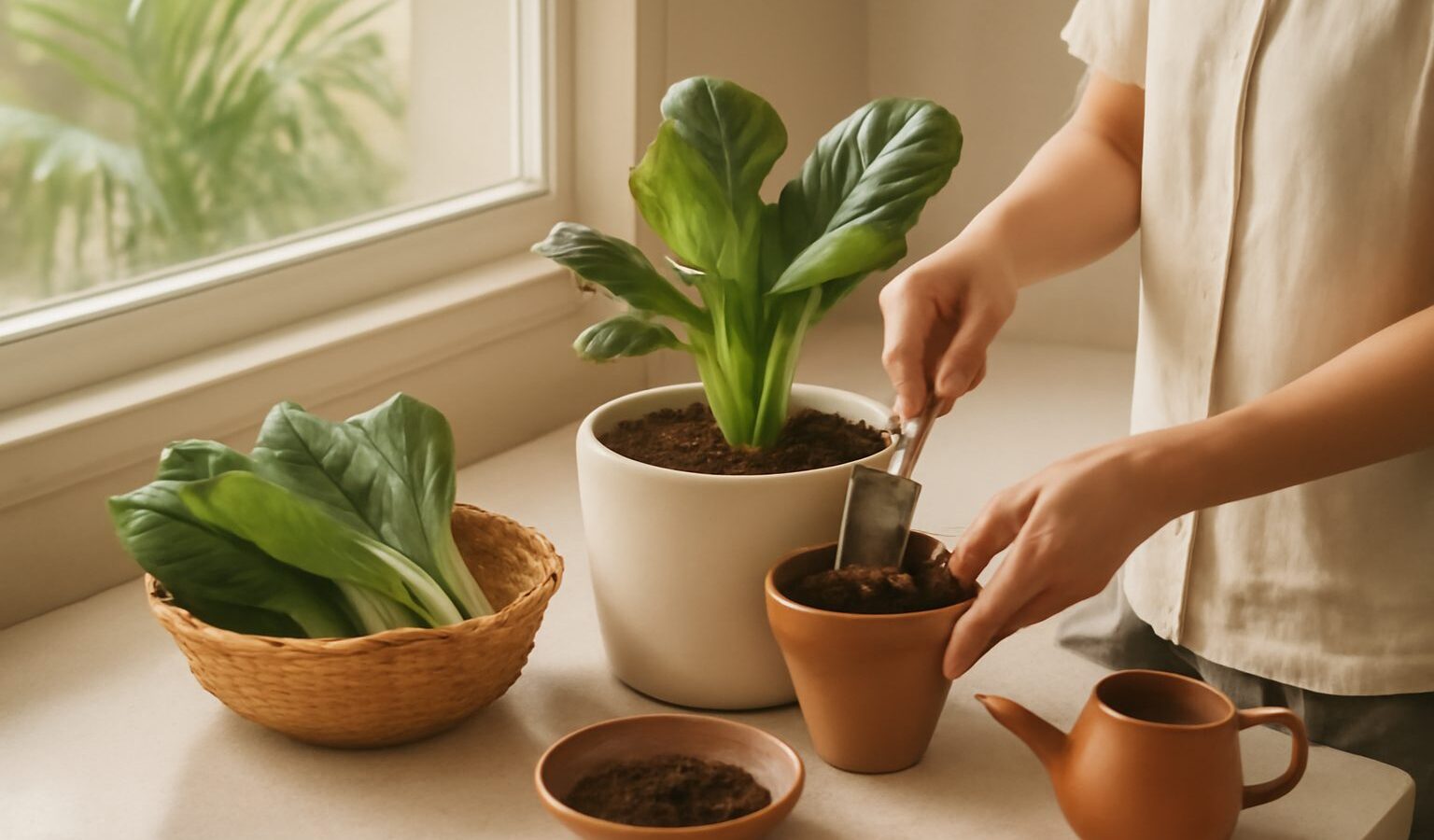
There is real satisfaction in snipping your own greens minutes before they hit the wok. Growing Chinese vegetables at home is one of the most rewarding things a beginner can try in Singapore, because the leafy kinds are fast, forgiving and perfectly suited to our warm, humid climate. Many of the greens you buy at the market, from kangkong to chye sim, will grow happily in a pot on a sunny balcony or corridor. This guide walks you through choosing the easiest types, giving them the light, soil and water they need, and harvesting in a way that keeps the plants producing for weeks.
The Easiest Chinese Vegetables to Start With
If this is your first crop, begin with the quick leafy greens rather than the slow, fussy ones. Kangkong, also called water spinach, is famously vigorous and shrugs off our heat. Xiao bai cai, the small pak choy or bok choy, is compact and matures in around a month. Chye sim, or choy sum, gives you tender flowering stems and leaves. Kai lan, the Chinese broccoli, is a little slower but still very doable, and Chinese lettuce grows fast in a bright, slightly cooler spot.
What these share is speed and a shallow root system, which is exactly what container growing on a balcony wants. Buy your seed from a garden centre or a reputable online seller, and choose named vegetable seed so you know what you are growing. Avoid sowing random seed saved from market produce, since you cannot be sure of the variety or that it is safe to eat. Starting with a couple of packets of fast greens builds confidence quickly.
Light, Pots and Soil for Small Spaces
Leafy Chinese vegetables want plenty of light but not relentless scorching. On most Singapore balconies, four to six hours of morning sun with some shade from the fierce midday glare produces tender, healthy leaves. A spot that gets bright light most of the day, shielded from the worst afternoon heat, is close to ideal. Too little light and the plants stretch, go pale and stay thin.
For pots, wider is better than deeper. A trough, a rectangular planter or a wide tub around fifteen to twenty centimetres deep suits leafy greens well and lets you grow a row you can harvest across. Every pot must have drainage holes, because our sudden monsoon downpours will drown roots that sit in water. Fill with a good quality potting mix, not garden soil, which packs down hard and drains poorly in a container. Mixing in some compost or well rotted organic matter feeds the fast growth these greens demand.
Set pots where they are secure against wind on higher floors, and follow your HDB, town council or MCST rules for corridors and shared ledges. Keep saucers from collecting rain, both to protect the roots and to deny Aedes mosquitoes anywhere to breed.
Watering and Feeding in the Tropics
Fast leafy greens are thirsty, and in our heat a shallow container can dry out within a day. Check the mix daily by pressing a finger into the surface; water thoroughly when the top centimetre feels dry, until it runs from the base. In the hottest stretch you may water every morning, easing off during a wet monsoon spell so the roots never stay waterlogged.
Kangkong is the exception that loves it wet and will even grow with its roots standing in a little water. If you grow it that way, change the water at least twice a week and never let it sit stagnant, as standing water is a prime breeding ground for the Aedes mosquito that spreads dengue. Emptying and refreshing it often keeps both the plant and your block safe, in line with current NEA and NParks guidance.
Leafy greens grow so quickly that they need steady feeding. A balanced liquid fertiliser at half the labelled strength every week or two keeps leaves lush and green. If growth slows or older leaves yellow, a gentle feed usually perks them up. Avoid overfeeding, which can scorch leaf edges and leave a salty build up in the mix.
Comparing Popular Leafy Choices
Different greens suit different corners of a balcony and different levels of patience. Use the table to pick what fits your space and how soon you want to harvest, then start with one or two before expanding your range.
| Vegetable | Time to harvest | Light and space needs |
|---|---|---|
| Kangkong | Around 4 weeks | Bright sun, tolerates very wet roots |
| Xiao bai cai | 4 to 6 weeks | Bright light, compact, great for troughs |
| Chye sim | 5 to 7 weeks | Bright sun, upright, harvest flowering stems |
| Kai lan | 7 to 9 weeks | Full morning sun, needs a slightly deeper pot |
| Chinese lettuce | 4 to 6 weeks | Bright but cooler spot, dislikes fierce heat |
Pests and Common Problems
The commonest nuisance on home grown greens is chewed leaves, usually from caterpillars, snails or leaf eating beetles. Check under leaves regularly and pick pests off by hand, which is the least toxic and often the most effective method on a small balcony. A firm spray of water dislodges aphids, and insecticidal soap or a neem based spray helps if an infestation takes hold. If you ever reach for a stronger product, follow the label exactly, keep it away from children, pets and other food crops as directed, and ventilate the area.
Yellowing leaves usually point to hungry plants or soggy roots, so check your feeding and drainage first. Pale, stretched, leggy growth means too little light, so move the pot somewhere brighter. Bitter or tough leaves often follow slow growth in poor light or after the plant bolts, meaning it rushes to flower in the heat; harvesting young and keeping plants well watered helps avoid this.
Harvesting and Keeping the Crop Going
The trick with leafy Chinese vegetables is to harvest little and often. For pak choy and lettuce, you can pick outer leaves as you need them and let the centre keep growing, giving you weeks of small pickings from one plant. For chye sim and kai lan, cut the main stem once buds appear and the plant will often push out tender side shoots for a second round. Kangkong regrows fast if you cut it a few centimetres above the base rather than pulling it up.
Always wash your harvest well before cooking or eating, and eat only the leaves and stems that are meant to be eaten. Most of these greens are best lightly cooked rather than raw. When a plant is finally spent, refresh the mix with more compost and sow again, since the beauty of these fast crops is that you can keep a steady, rolling supply going almost all year round in our climate. Start small, watch how each type responds on your particular balcony, and build from there.
Explore more
Once your greens are thriving, branch out with our guides to growing microgreens at home for even faster pickings and growing sweet potato and its leaves, another easy edible green. For a soil free approach to the same crops, try hydroponics at home for beginners next.