

A jar of jade-green stalks tied with red ribbon is a familiar sight in homes, offices and shops across the island. Growing lucky bamboo in Singapore is one of the easiest plant projects you can take on, because these tolerant stems will grow happily in nothing but a vase of water and a bright corner. Despite the name it is not bamboo at all, and it carries strong associations with good fortune and feng shui, which is why it is such a popular gift and desk companion. Get a few simple things right and it will stay green and glossy for years.
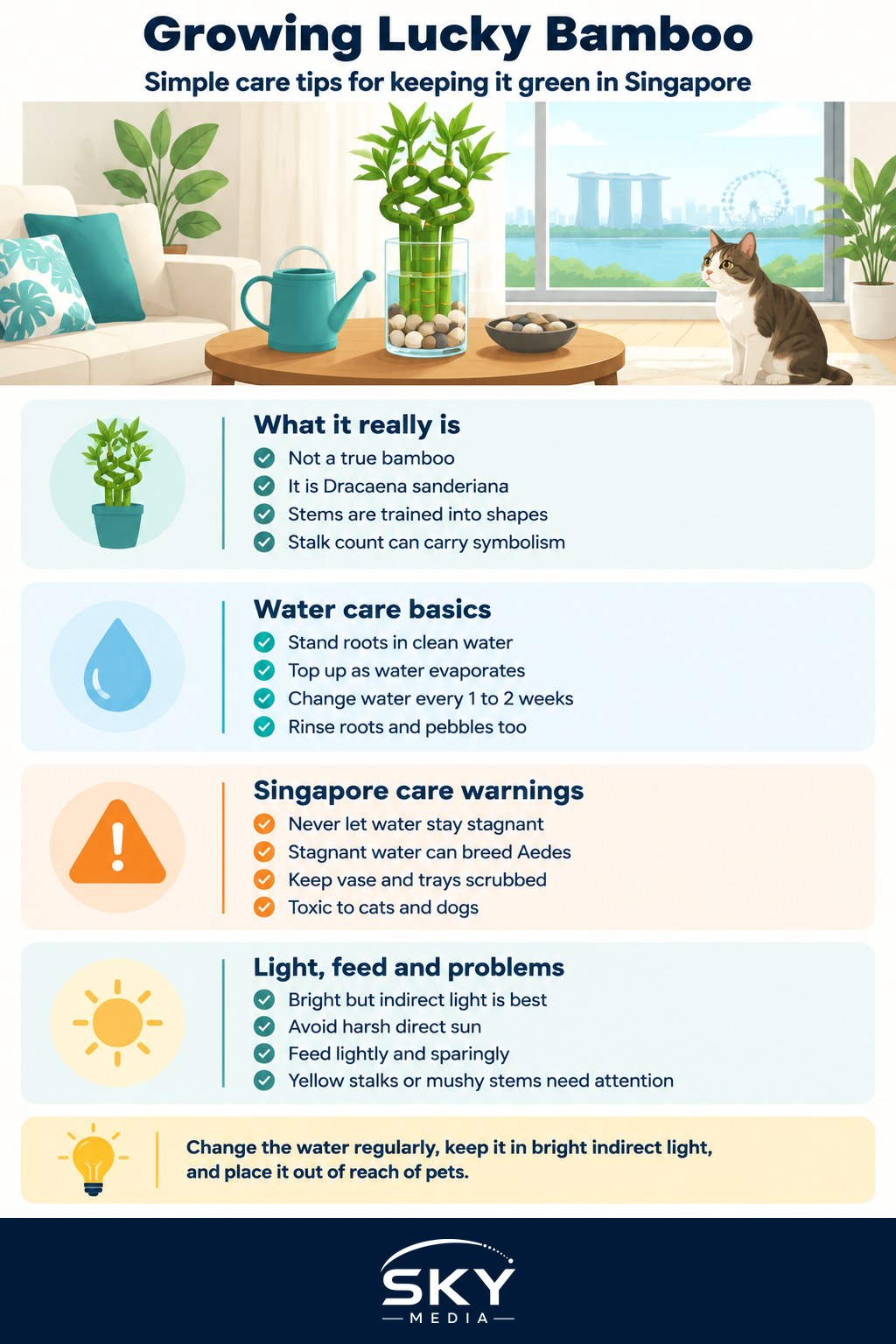
What Lucky Bamboo Really Is
Lucky bamboo is not a true bamboo. It is actually Dracaena sanderiana, a member of the dracaena family, the same group as many familiar leafy houseplants. The thick, jointed green stalks simply resemble bamboo canes, which is where the name comes from. Growers train the stems into straight poles, spirals, lattices and twists by rotating them near light as they grow, and the number of stalks is often chosen for its symbolic meaning in feng shui.
Because it is a dracaena, it comes with one important warning for households. Dracaenas are toxic to cats and dogs if chewed, so lucky bamboo should be kept well out of reach of curious pets, and you should discourage any nibbling. It is a decorative plant to look at, not one to leave where an animal or small child might chew the leaves.
Growing in Water: The Easy Way
Most people grow lucky bamboo in water, and it takes to this beautifully. Stand the stalks in a vase with enough clean water to cover the roots, usually a few centimetres deep, and top it up as it evaporates. Decorative pebbles or glass beads look attractive and help hold the stalks upright, though they are not essential.
The single most important habit is keeping the water fresh. Change it completely every week or two, rinse the roots and the pebbles, and refill. Stale, cloudy water starves the roots of oxygen and encourages algae and rot, which turns the stalks yellow and mushy. In our warm climate water can go off quickly, so if it starts to smell or discolour, change it sooner. Use filtered or previously boiled tap water that has stood overnight if you can, as lucky bamboo can be sensitive to the chlorine and fluoride in fresh tap water, which sometimes shows as brown leaf tips.
The Singapore Water Rule: Stop It Stagnating
Growing a plant in an open jar of standing water carries a specific local risk you must never ignore. Still water is a breeding ground for Aedes mosquitoes, and dengue is a serious, ongoing concern in Singapore. A neglected vase of lucky bamboo, left unchanged for weeks in a quiet corner, is exactly the kind of stagnant water NEA warns against.
The fix is simple and it is the same good habit that keeps the plant healthy: change the water regularly so it never sits stagnant, scrub the vase, and do not let a forgotten jar linger. If you also keep saucers or trays under any pebbles, empty them too. Following NEA’s guidance on removing stagnant water around the home protects both your plant and your household. This one rule matters more for lucky bamboo than for almost any other houseplant, precisely because it lives in open water.
Lucky Bamboo Care at a Glance
| Care factor | What lucky bamboo wants in Singapore |
|---|---|
| Light | Bright but indirect; never harsh direct sun |
| Water | Cover the roots; change it every one to two weeks |
| Water type | Filtered or stood-overnight tap water is safest |
| Warmth | Loves our year-round warmth; keep off cold aircon draughts |
| Pets | Toxic to cats and dogs; keep out of reach |
| Warning sign | Yellow stalks mean too much sun, old water or rot |
Light, Warmth and Feeding
Lucky bamboo wants bright but indirect light. A spot near a window with plenty of daylight but no scorching direct sun is ideal. Harsh direct sun, especially through hot glass, will scorch the leaves and yellow the stalks, so keep it out of blazing windowsills. It copes with fairly low light too, which is why it survives on so many office desks, though very dim conditions slow its growth and can make it look tired. Our year-round warmth suits it perfectly, but keep it out of the cold, drying blast of an air-conditioner, which can brown the leaf tips.
Growing in water, the plant gets almost no nutrients, so it feeds lightly. A single drop of specialist lucky bamboo feed, or a very dilute balanced liquid fertiliser, added every month or so is plenty. Too much fertiliser does more harm than good and encourages algae, so go sparingly and always follow the label. Keep any feed and pest treatments away from children and pets.
Common Problems and Growing in Soil
Yellowing is the usual complaint. Yellow leaves or stalks point to too much direct sun, stale water, cold draughts or overfeeding, so work through those first. If a stalk goes soft and mushy, it is rotting and should be removed before it spoils the others. Brown leaf tips usually mean chlorine, fluoride or dry aircon air rather than anything serious, and affected tips can be trimmed with scissors.
You can also grow lucky bamboo in soil, where it often grows more vigorously and lives longer. Move it into a well-draining potting mix, keep the soil lightly and evenly moist rather than soggy, and give it the same bright, indirect light. Whichever way you grow it, in a jar of water or a pot of compost, keep it bright, keep it fresh and keep it away from pets, and your lucky bamboo will stay a green, cheerful and long-lasting symbol of good fortune in your home.
Explore more
For more effortless greenery, see The Best Low-Maintenance Indoor Plants and A Beginner’s Guide to Houseplants. If you want to move it into soil, read Understanding Soil and Potting Mix, and for styling ideas see Styling Plants in Your Home.
Further reading: Growing Lucky and Fengshui Plants