
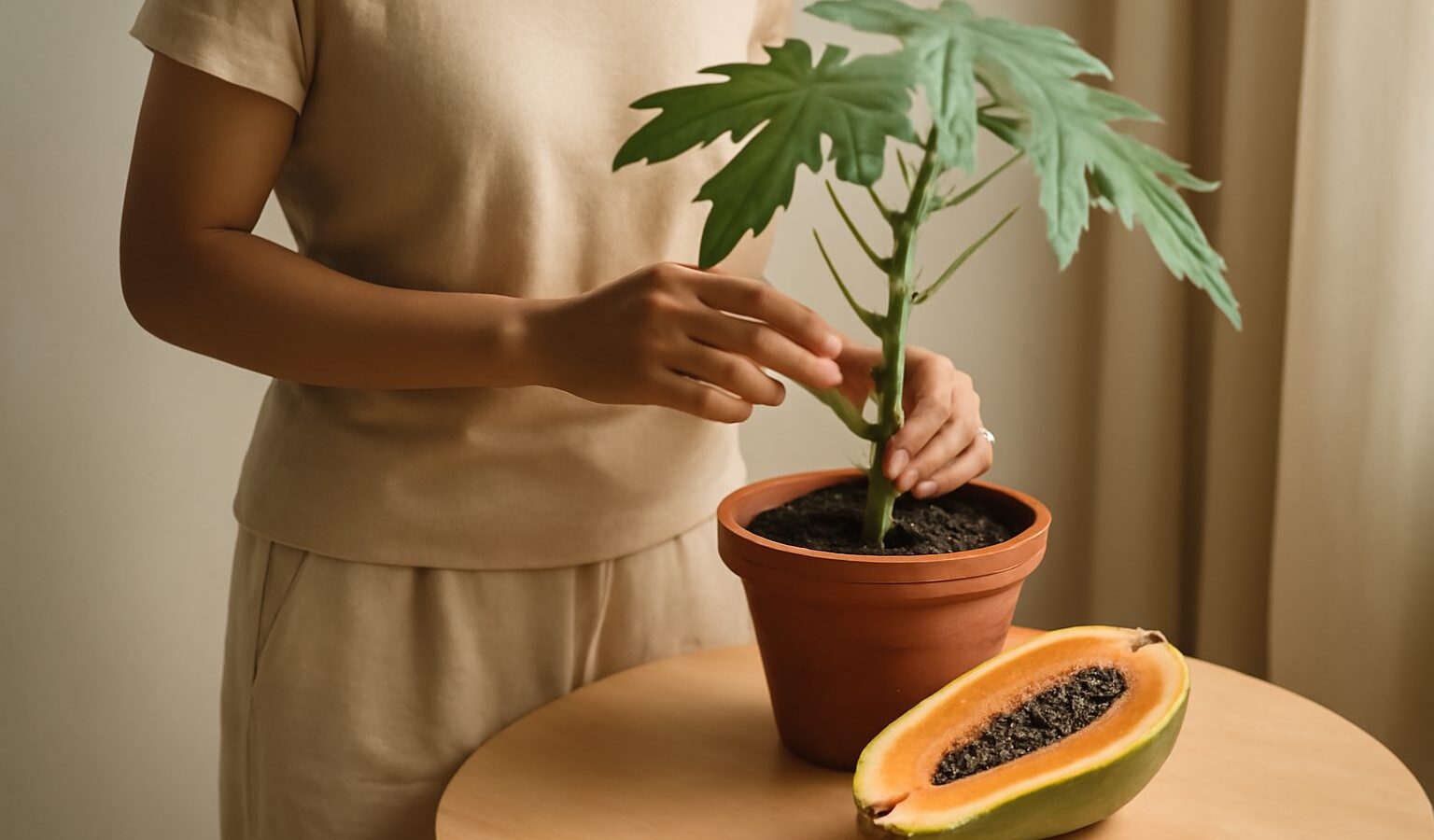
Papaya is one of the most rewarding tropical fruits a Singapore gardener can attempt, and also one that teaches patience. Growing papaya from a seed you scooped out of breakfast is genuinely possible here, because the plant loves our constant heat, humidity and rain. What it needs in return is space, strong sun and a little understanding of its unusual flowers. This guide gives you an honest picture: papaya is fast for a fruit tree, but it is still a tree, so it wants ground or a very large container and several months before the first harvest.
Everything here is general information for home gardeners, not professional horticultural advice.
Is There Room to Grow Papaya?
Be realistic about space first. A papaya is not a balcony pot plant in the way a chilli is. It grows as a single soft stemmed trunk that can reach three to five metres, topped by large umbrella leaves. It fruits along the trunk, so it needs height and a footprint of open sky.
The best homes for papaya in Singapore are:
- A landed garden bed or corner with full sun.
- A community or allotment plot through the Community in Bloom scene.
- A very large, deep container of at least 40 to 50cm on a bright rooftop or wide terrace, accepting that a potted papaya stays smaller and fruits less.
On a typical HDB balcony, papaya usually outgrows the space and lacks the light to fruit well. If your space is tight, a lower crop like long beans or cucumber will reward you sooner. If you do have a sunny plot, read on.
Starting From Seed
Papaya grows easily from fresh seed. Scoop seeds from a ripe fruit you enjoyed, rinse off the jelly like coating around each seed, and sow a few, since you will want to select the best later. Sow about 1cm deep in free draining mix. In our warmth they sprout within one to two weeks.
Because you cannot tell the sex of a seedling until it flowers, the traditional approach is to plant two or three together and remove the surplus once flowering reveals which to keep. If you want to understand seed handling more broadly, our guide to saving and storing seeds is a useful companion.
Give seedlings the sunniest spot available. Papaya wants at least six hours of direct sun; in shade it grows leggy and never fruits properly. Plant into well drained soil enriched with compost, and keep young plants sheltered from strong wind, as the hollow trunk can snap.
The Male, Female and Bisexual Flower Puzzle
Papaya flowers are the part that confuses new growers, so it helps to know the three types:
- Female plants carry large flowers close to the trunk and produce round fruit, but only if pollen reaches them.
- Male plants carry sprays of small flowers on long dangling stalks and produce no fruit; they only provide pollen.
- Bisexual (hermaphrodite) plants carry flowers with both parts and can self pollinate, giving the more elongated fruit often sold in shops.
If you grow a single female with no male or bisexual plant nearby, it may flower endlessly and never fruit. Growing several seedlings improves your odds of having a pollinator, and insects usually do the rest. Where fruit set is poor, you can transfer pollen from a male or bisexual flower to a female one by hand; our guide to hand pollinating fruiting plants covers the method.
Watering, Feeding and Pests
Papaya is thirsty but hates waterlogging. The soft trunk and roots rot quickly in soggy ground, which is a real risk during our monsoon downpours, so plant in a spot that drains freely and never in a dip where water pools. Water deeply in dry spells and ease off when the ground stays wet.
Feed regularly through the growing season with a balanced fertiliser, following the label, as the plant grows fast and fruits heavily for its size. Keep the area around the base free of collected water and empty any saucers, because stagnant water breeds Aedes mosquitoes and dengue. Follow NEA guidance and the Mozzie Wipeout habits.
Watch for these common issues:
- Aphids and whiteflies spread papaya viruses; control them early and remove badly virused plants.
- Fruit flies sting ripening fruit; bag developing fruit to protect it.
- Powdery mildew and leaf spots appear in humid, crowded conditions; give the plant space and airflow.
- Root rot from wet feet is often fatal; prevention through drainage is the only real cure.
If you spray anything, test on a few leaves first, spray in the cooler hours out of direct sun, keep it away from food, eyes, children and pets, and respect the pre harvest interval on any product.
What to Expect and When
| Stage | Rough timing in our climate | What you do |
|---|---|---|
| Germination | 1 to 2 weeks | Keep warm and moist |
| First flowers | Around 4 to 6 months | Identify plant sex, thin males |
| First ripe fruit | Often within a year of sowing | Ensure pollination, feed and water |
| Peak cropping | Second year | Support heavy fruit, watch pests |
Harvest and Realistic Expectations
Pick papaya when the skin begins turning from green to yellow and gives slightly to a gentle press; it ripens fully indoors over a few days. Cutting fruit a touch early also beats the birds and fruit flies to it. The green unripe fruit is a vegetable in its own right and features in many local dishes.
Set your expectations honestly. A papaya is a short lived, fast growing tree that gives its best in the first two years, then tends to grow too tall and less productive, at which point many gardeners start a fresh seedling to replace it. It needs sun, room and patience rather than fussy daily care. Give it those, ideally in a garden bed or generous container, and growing papaya can turn a sunny corner of your Singapore home into a genuine, if seasonally messy, orchard.
Explore more: growing bananas at home.