
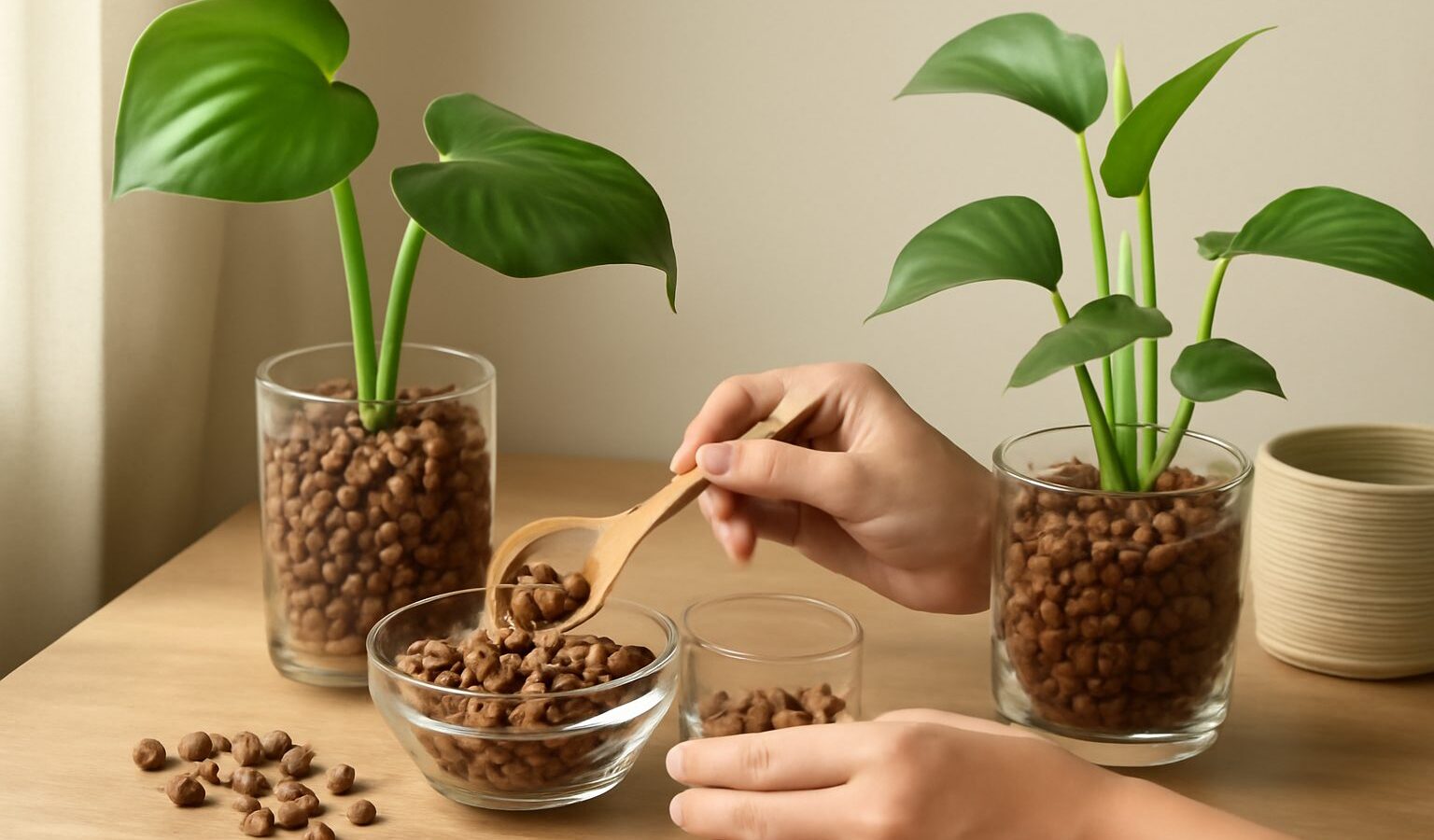
If you have ever drowned a plant with kindness or forgotten it for a fortnight, semi-hydro might feel like a small miracle. This method swaps messy potting soil for LECA, lightweight clay pebbles, and lets your plant sip from a shallow water reservoir at its own pace. Semi-hydro, short for semi-hydroponics, is a passive way to grow houseplants that suits Singapore flats beautifully, because it copes with our heat, dries out slowly, and keeps fungus gnats and soggy roots at bay. This guide walks a curious beginner through setting it up and keeping it healthy.
What Semi-Hydro Actually Is
Semi-hydro means growing a plant in an inert medium instead of soil, with a reservoir of nutrient-rich water at the bottom of the pot. The medium of choice is LECA, which stands for lightweight expanded clay aggregate, little baked-clay balls riddled with tiny pores. Those pores wick water upward from the reservoir toward the roots, so the plant draws moisture as it needs it rather than sitting in a puddle.
The clever part is the air gap. Only the lowest layer of LECA sits in water, while the roots higher up breathe freely in damp, airy pebbles. Roots need oxygen as much as water, and this is exactly where soil so often fails in our climate, staying wet and airless after a downpour or an over-enthusiastic watering. Semi-hydro gives roots both moisture and air at once, which is why converted plants frequently perk up.
It is worth being honest that this is not truly hydroponics with pumps and precise meters. It is a gentle, low-tech cousin, forgiving of beginners and happy on a windowsill with no electricity at all.
Why It Suits Singapore Homes
Our year-round heat and strong light make soil dry unpredictably, so watering by guesswork leads to swings between bone-dry and waterlogged. A semi-hydro reservoir smooths that out, holding a steady supply so you water far less often, which is a gift if you travel or simply forget. On a hot balcony or a bright HDB windowsill, that buffer keeps roots comfortable.
LECA is also clean and light. There is no soil to spill on the corridor floor, no compost smell, and the pebbles wash and reuse indefinitely. For flat dwellers short on space and wary of mess, that tidiness is a genuine draw. Fungus gnats, which breed in moist soil, lose their nursery entirely, so you sidestep one of the most annoying indoor pests.
Because you can see the water level in a clear outer pot, you also learn to read your plant. Watching roots reach for the reservoir teaches you more about how plants drink than any soil pot ever will.
Setting Up Your First Semi-Hydro Plant
Start with a tough, water-tolerant plant rather than a fussy prize. Pothos, philodendron, syngonium, and many aroids transition readily, and a rooted cutting is the easiest of all. You will need LECA, a net pot or a pot with drainage holes, a taller outer pot or jar to hold water, and a hydroponic nutrient solution.
Rinse the LECA thoroughly to wash off clay dust, then soak it for several hours so the pebbles start out saturated. Gently remove your plant from its soil and rinse the roots clean under a tap, teasing away every clump, because leftover soil rots in water. Settle the plant into the inner pot, pack LECA around the roots to hold it upright, and lower it into the outer pot. Fill with water and diluted nutrients until the level sits about a fifth of the way up, never touching the main root ball. Then place it in bright, indirect light and let the plant adjust over a few weeks as it grows new water roots.
Feeding, Water and Ongoing Care
Because LECA is inert and gives no nutrients of its own, you must add them. Use a proper hydroponic fertiliser diluted per the label, as ordinary soil feed is not balanced for a water reservoir. Keep the solution weak and consistent rather than strong and occasional. Top up the reservoir as it drops, and once a month or so tip the whole thing out, rinse the pebbles, and refill with fresh solution to stop salts building up and stubborn residue forming.
Roots and pebbles can accumulate mineral crust over time. A periodic flush with plain water, then fresh nutrients, keeps everything sweet. If the water ever smells sour or turns cloudy, empty it, rinse thoroughly, and start again; that odour signals rot or stagnation, not healthy growth.
A vital mosquito warning. The water reservoir must never become stagnant standing water, because still water is exactly where Aedes mosquitoes breed and spread dengue. Change or flush the water at least weekly, do not let a saucer or outer pot collect forgotten water, and keep the reservoir low and regularly refreshed. Following current NEA and NParks guidance on preventing mosquito breeding is not optional in Singapore; treat every water feature in your home, this one included, as something to inspect and empty routinely.
LECA and Semi-Hydro Compared With Soil
Neither method is simply better; each suits different plants and habits. The table below sets the two side by side so you can choose with open eyes.
| Consideration | LECA / semi-hydro | Traditional soil |
|---|---|---|
| Watering rhythm | Reservoir buffers you, top up occasionally | Frequent, easy to over or under do |
| Pests | No fungus gnats; watch for mosquitoes in water | Fungus gnats common in damp soil |
| Feeding | You must add hydroponic nutrients every time | Soil and compost hold some nutrients |
| Mess and reuse | Clean, light, pebbles reuse forever | Spills, smell, compost needs replacing |
| Root oxygen | Excellent, airy pebbles above water | Can go airless and soggy in our heat |
Safety and Common Snags
Many favourite semi-hydro plants, including pothos, philodendron, syngonium, and other aroids, are toxic if eaten and their sap can irritate skin and mouths. Keep them well away from young children and curious pets, and wear gloves when rinsing roots, since the sap can leave skin itchy. These are ornamental plants, never food.
The commonest beginner snags are leaving old soil on the roots, which rots the water, and setting the water level too high so the whole root ball sits drowned. Keep the reservoir shallow, be patient while new water roots form, and resist fiddling daily. If you grow on a balcony, secure pots against wind and falls and follow your HDB, town council, or MCST rules so nothing tips onto a neighbour below. Start with one hardy plant, watch how it drinks, and you will soon trust the method.
Explore more
Once semi-hydro clicks, it pairs well with a lush, layered display. See creating an indoor jungle for grouping ideas, and grouping plants to boost humidity to keep that greenery thriving under aircon. For a trailing plant to convert, growing string of pearls and hanging plants is a lovely next step.