
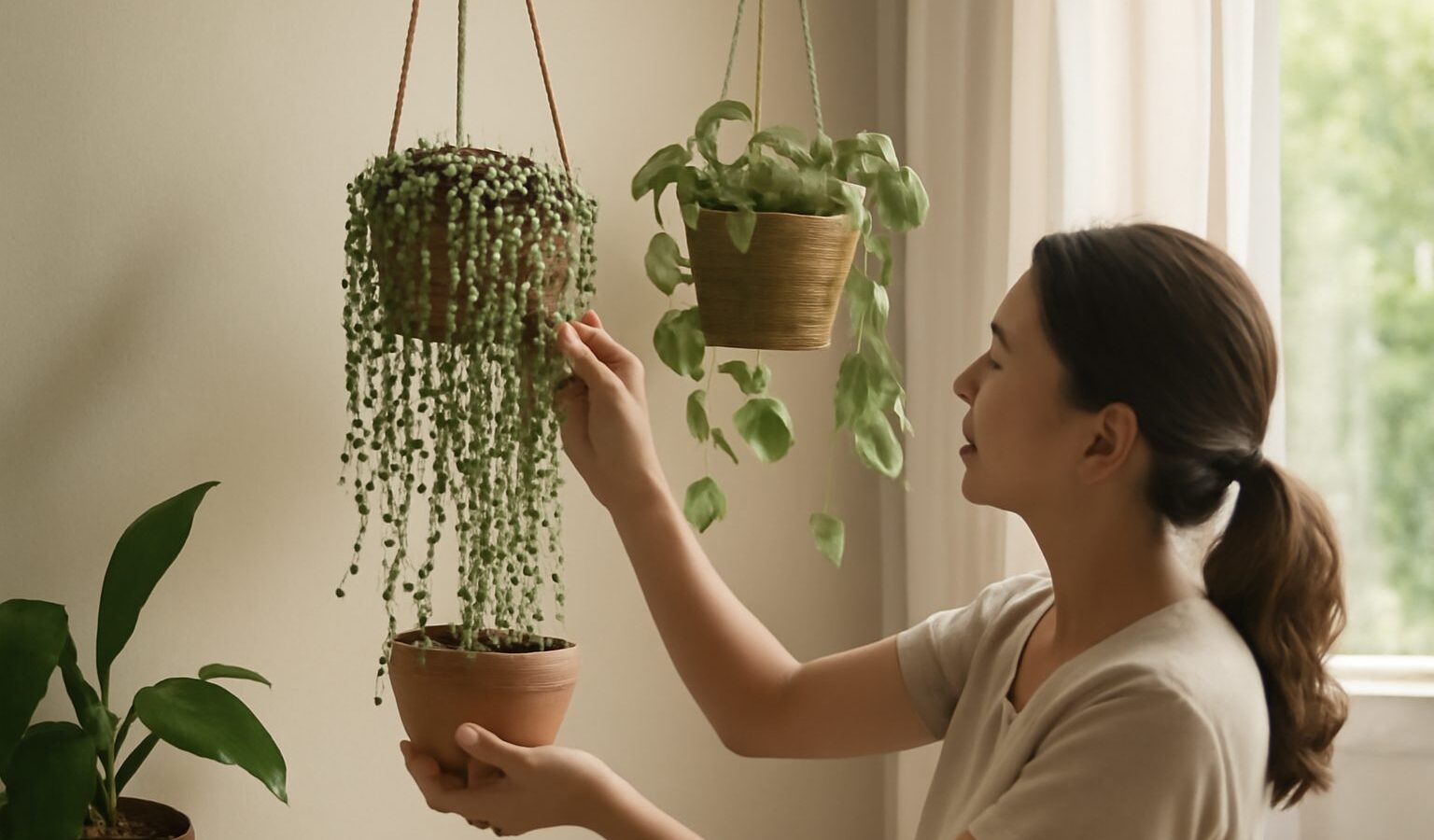
When floor space runs out, look up. Hanging plants let you grow a cascade of greenery from a hook or a railing without giving up a single square metre, which makes them perfect for compact HDB flats and condo balconies. A trailing string of pearls spilling over a shelf, or a lush basket of pothos framing a window, adds instant softness and life. The plants are easy to find and easy to love, but growing them well up high in our climate means paying attention to light, watering and, above all, keeping everything safely secured against the wind.
Best Hanging Plants for Our Climate
Some trailers thrive in Singapore’s heat and humidity with almost no fuss, while others need a more careful hand. Here are reliable choices to start with.
- String of pearls is a succulent with bead-like leaves that trail in long strands. It loves bright light and dislikes wet feet, making it a striking but slightly demanding pick.
- Pothos and heartleaf philodendron are the workhorses: fast, forgiving and happy in bright, indirect light.
- Spider plant throws out arching leaves and baby plantlets, tolerating a range of conditions.
- String of hearts trails delicate heart-shaped leaves and, like string of pearls, prefers to dry out between drinks.
- Boston fern loves our humidity and makes a full, feathery basket for a shaded corner.
If you are new to hanging plants, begin with a pothos or spider plant. They forgive missed waterings and grow quickly, so you see rewarding results while you learn the rhythm of watering plants overhead.
Growing String of Pearls Successfully
String of pearls earns its own section because it trips up many beginners. It is a succulent, so it stores water in those little beads and rots fast in soggy soil. Give it the brightest indirect light you can, such as a spot just inside a sunny window or under a shaded balcony overhang, but shield it from harsh direct afternoon sun, which scorches the pearls.
Plant it in a gritty, free-draining mix made for succulents and cacti, in a pot with drainage holes. Water only when the soil is fully dry, then water thoroughly and let it drain completely. In practice that might be once every week or two, less if the spot is cool and shaded. Shrivelled, flat pearls mean it is thirsty; mushy, translucent pearls mean it has had too much. When in doubt, wait another few days before watering.
Light, Watering and Feeding Up High
Hanging plants sit closer to the ceiling or higher on a wall, where light and air behave differently. Near a bright window they may catch more sun than plants on the floor, so watch for scorched or bleached leaves and move the basket if needed. Deeper in the room, a trailing plant can slowly stretch and thin out; rotate the basket every week or two so it grows evenly on all sides.
Watering overhead plants is the practical challenge. Baskets dry out faster because warm air rises and airflow is greater up high. Take the plant down to water it at the sink where you can, letting it drain fully before rehanging, so drips do not fall onto the floor or, worse, onto a neighbour below. Never let a hanging pot sit in a water-filled saucer or cover: trapped water rots roots and breeds Aedes mosquitoes. Empty any drip tray within minutes and change or tip out standing water at least weekly, following current NParks and NEA guidance to prevent mosquito breeding. Feed lightly with a balanced liquid fertiliser at half strength during active growth, roughly monthly, and ease off when growth slows.
Hanging Safely on HDB and Condo Balconies
This is the part that matters most, because a falling pot from height can seriously injure someone below. Before you hang anything, think about weight, wind and rules.
A well-watered basket is surprisingly heavy, so use hooks and brackets rated to hold far more than the pot’s soaked weight, fixed into a solid structure rather than a flimsy panel. On a breezy high floor, wind can swing and dislodge a poorly hung pot, so choose secure fixings and check them regularly for rust or loosening. Never hang pots on the outer side of a balcony railing or parapet where they overhang the space below; keep them inside the balcony line. Follow HDB, town council and MCST rules on what you may fix and where, and be considerate of neighbours by preventing water runoff, falling leaves and pests from drifting onto their space. When you water, make sure nothing drips or blows downstairs.
Choosing the Right Trailer for Your Spot
Matching the plant to the light and humidity of your chosen spot saves a lot of trouble. This table lines up popular hanging plants against what they need.
| Plant | Light it likes | Watering habit | Best for |
|---|---|---|---|
| String of pearls | Very bright, indirect | Dry out fully between | Bright, sheltered window |
| Pothos | Bright to moderate indirect | When top soil dries | Beginners, most spots |
| Spider plant | Bright, indirect | Keep lightly moist | Forgiving, airy corners |
| String of hearts | Bright, indirect | Dry out between | Sunny shelf or hook |
| Boston fern | Shaded, indirect | Keep consistently moist | Humid, shaded balcony |
Use this as a starting point, then adjust to how your own plant responds over a few weeks.
Propagating and Safety Notes
Trailing plants are wonderfully easy to multiply, which is how many people fill a whole corner cheaply. Pothos, philodendron and spider plants root from stem cuttings or plantlets in moist mix or a jar of water; if you use water, change it often and never leave it standing to breed mosquitoes. String of pearls and string of hearts root simply by laying a strand on damp succulent mix and letting the nodes take hold.
A quick safety note: string of pearls, string of hearts, pothos and philodendron are ornamental and not edible. Their sap can irritate skin and the mouth, so keep them away from young children and pets, and wear gloves when trimming or taking cuttings if your skin is sensitive. With secure fixings and a light hand on the watering can, your hanging plants will trail happily for years.
Explore more
Want to turn your trailers into a lush display? Learn how to layer levels of green in creating an indoor jungle in Singapore, and group your baskets so they thrive together in our guide to grouping plants to boost humidity. For ideas on arranging pots and trailers around your home, see styling plants in your home.