

Every pot you empty leaves behind a heap of spent mix, and it feels wasteful to bin it all. The good news is that reusing old potting soil in Singapore is easy once you know what to keep, what to fix, and what to throw away. Our hot, humid climate breaks organic matter down fast, so old mix is usually tired rather than ruined. With a little care you can bring it back to life and save money on your next planting, whether you garden on a balcony, along a corridor, or on a windowsill.
When to Reuse and When to Bin It
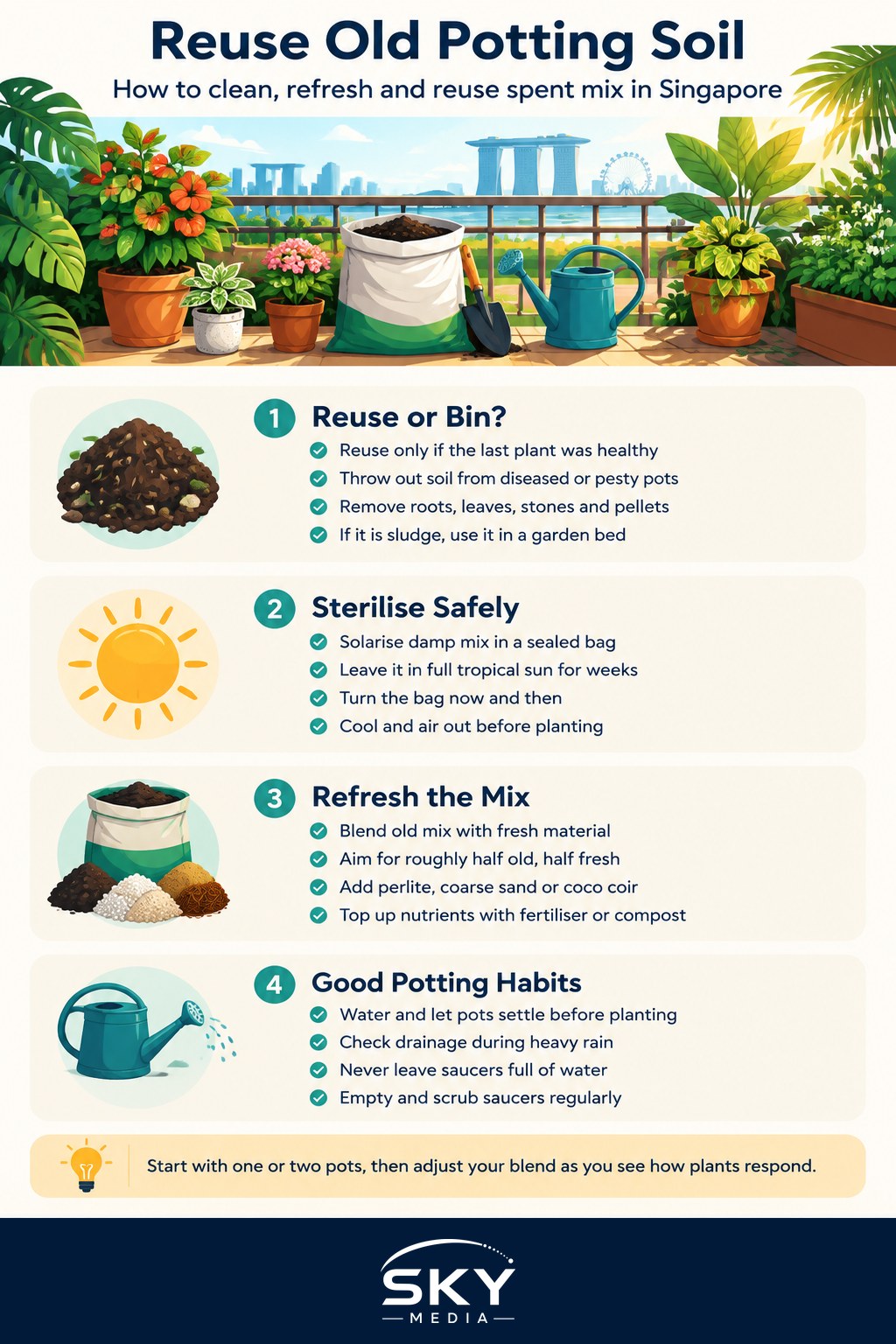
Not all old soil deserves a second life. The single most important question is whether the last plant was healthy. If your plant grew well and simply finished its run, the mix is a good candidate for reuse. If the plant died from root rot, wilt, or any disease, or if you saw a lot of pests in the pot, it is safer to throw that soil out with your general waste rather than risk spreading trouble to healthy plants.
Give the mix a quick check. Tip it out onto a tray or an old sheet and pull out old roots, dead leaves, stones, and any slow-release fertiliser pellets. If the whole lot has collapsed into a fine, dense, water-logged sludge that no longer drains, it has lost its structure and is better used as a soil improver in a garden bed than as pot mix again. Mix that still feels crumbly and open is ready to be refreshed.
Sterilising Tired Mix Safely
Reused soil can carry fungus gnat larvae, weed seeds, and disease spores. A gentle sterilising step gives you a cleaner start. The simplest method for a small-space gardener is solarising: spread the damp mix in a thin layer inside a clear or black plastic bag, seal it, and leave it in full tropical sun for a couple of weeks. Our strong equatorial heat does the work, warming the mix enough to knock back many pests and pathogens. Turn the bag now and then so everything heats evenly.
If you prefer, you can bake small batches in an oven on a low heat until the mix is hot through, though this smells earthy and is best done only when you have good ventilation. Whichever method you choose, let the mix cool fully and air out before planting. For a wider look at what makes a healthy growing medium, our guide on understanding soil and potting mix is a helpful companion.
Refreshing and Re-Amending the Mix
Sterilised old soil is clean but hungry. Heat and watering strip out nutrients and helpful structure, so you need to rebuild both. Aim to blend your old mix with fresh material at roughly half and half. Add fresh potting mix or compost to restore body, and mix in something to open up drainage, such as perlite, coarse sand, or coco coir, since compacted mix is the fastest way to drown roots in our wet weather.
Nutrients matter too. Old soil has usually given up most of its feed, so work in a balanced slow-release fertiliser or a scoop of well-rotted compost, and always read the label for the right amount. If you make your own compost, this is a perfect place to use it. Our guides on how to make compost at home and making your own potting mix both pair well with soil reuse, since the same ingredients that build a good fresh mix will revive an old one.
A few practical habits help. Water your refreshed pots and let them settle for a day before planting, so you can top up any mix that sinks. Keep an eye on drainage in the first weeks, especially through heavy rain, and never let saucers sit full of standing water, since that both rots roots and gives mosquitoes a place to breed. Empty and scrub saucers regularly.
A Little Goes a Long Way
Reusing old potting soil is one of the most satisfying budget habits a tropical gardener can build. You keep good material out of the bin, you spend less on new bags, and you get a steady supply of medium for repotting and propagating. Start with one or two pots, watch how your plants respond, and refine your blend over time. Before long, refreshing spent mix will feel like second nature, and your small-space garden will keep growing without the waste.
Frequently Asked Questions
Can I reuse soil from a plant that died of root rot? It is safer not to. If the plant died from root rot, wilt or any disease, or the pot had lots of pests, throw that soil out with general waste rather than risk spreading trouble to healthy plants.
How long does solarising old potting soil take? Spread the damp mix thinly in a sealed clear or black plastic bag and leave it in full sun for a couple of weeks. Turn the bag now and then so the mix heats evenly, then let it cool and air out before planting.
What should I add to old soil to make it good again? Blend it with fresh material at roughly half and half. Add fresh potting mix or compost for body, perlite, coarse sand or coco coir for drainage, and a balanced slow-release fertiliser or well-rotted compost, following the label.
What do I do with soil that has turned into dense sludge? If it no longer drains, it has lost its structure and is better used as a soil improver in a garden bed than as pot mix again. Crumbly, open mix is ready to be refreshed.
Is it okay to bake old potting mix in the oven? You can bake small batches on a low heat until hot through, but it smells earthy and needs good ventilation. Solarising in the sun is the simpler method for most small-space gardeners.
Further reading: How to Sterilise Soil for Potted Plants Safely · Using a Soil Moisture Meter